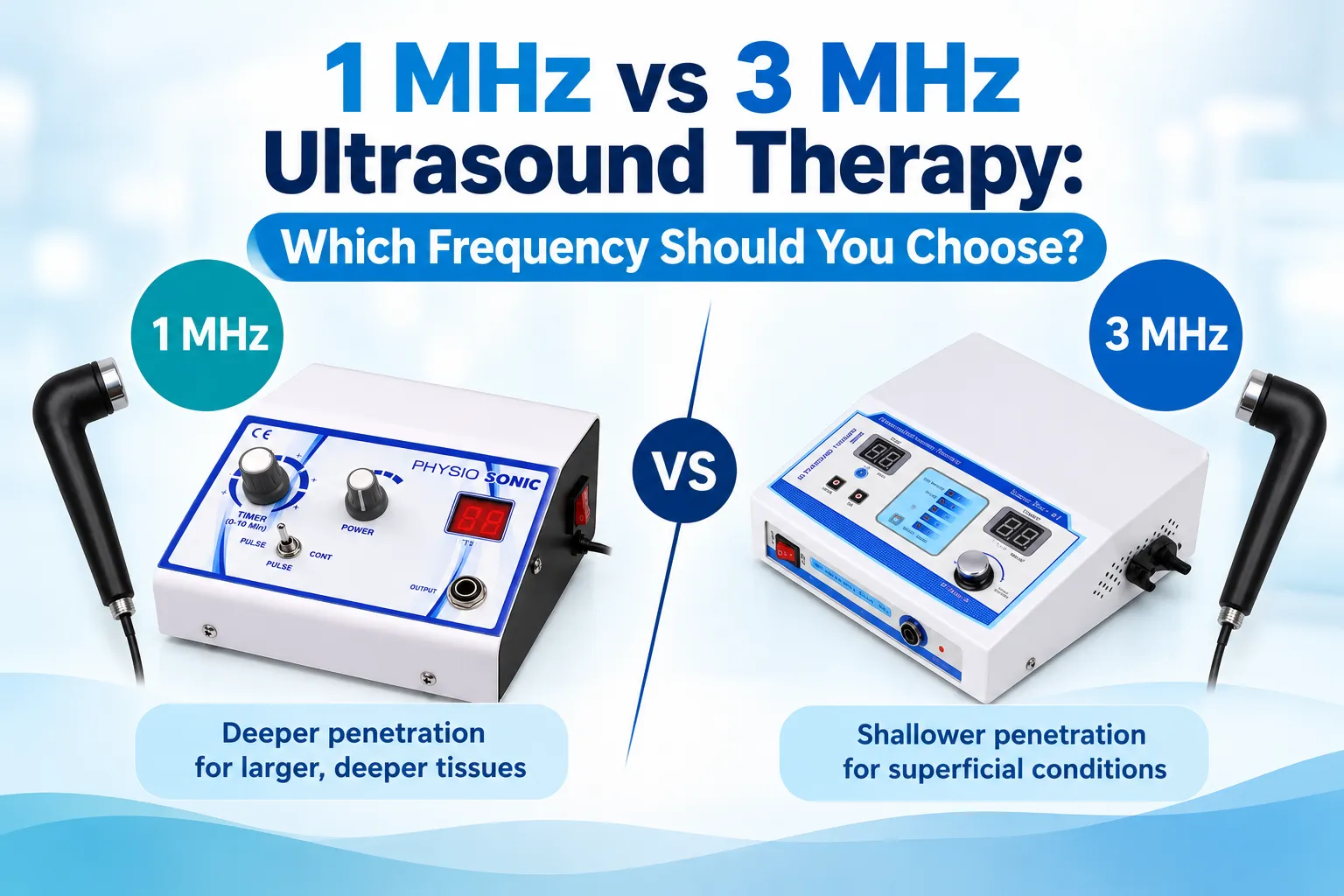


Ultrasound therapy is a widely used modality in physiotherapy and rehabilitation settings. It uses high-frequency sound waves to deliver therapeutic energy to targeted areas of the body. When choosing an ultrasound therapy machine, frequency is one of the important factors to consider.
The two commonly used frequencies are 1 MHz and 3 MHz ultrasound. While both frequencies are used for therapeutic applications, they differ in their typical tissue penetration characteristics. Understanding Ultrasound 3 MHz vs 1 MHz can help physiotherapists and healthcare professionals select a suitable frequency based on the intended treatment area and professional requirements.
What Is Ultrasound Therapy?
Ultrasound therapy uses sound waves at frequencies above the range of human hearing. During treatment, an ultrasound transducer is applied to the treatment area with an appropriate coupling medium to transmit the sound waves into the tissues.
The selected frequency can influence how deeply ultrasound energy penetrates. This is why understanding the difference between Ultrasound 1 MHz and 3 MHz ultrasound is important when comparing therapy machines.
Understanding Ultrasound 1 MHz
Ultrasound 1 MHz operates at a lower frequency than 3 MHz. Lower-frequency ultrasound is generally associated with greater penetration into tissues.
This makes 1 MHz a frequency commonly considered when the intended treatment area involves tissues located deeper beneath the skin.
Key Characteristics of 1 MHz Ultrasound
- Lower operating frequency
- Generally greater tissue penetration
- Commonly considered for deeper treatment areas
- Suitable for applications where deeper tissues are the focus
- Available in professional physiotherapy and rehabilitation equipment
Understanding 1 MHz Ultrasound Depth
One of the most important considerations when comparing frequencies is 1 MHz ultrasound depth. In general, 1 MHz ultrasound is associated with deeper penetration than 3 MHz ultrasound.
The actual penetration and treatment effect can vary depending on factors such as tissue characteristics, treatment parameters, applicator design, and the professional application of the device.
For physiotherapy practices that regularly work with deeper treatment areas, a 1 MHz ultrasound therapy machine may be considered according to professional requirements.
Understanding 3 MHz Ultrasound
3 MHz ultrasound operates at a higher frequency than 1 MHz. Higher-frequency ultrasound is generally associated with more superficial penetration.
This makes 3 MHz a frequency commonly considered when the intended treatment area involves tissues closer to the surface of the body.
Key Characteristics of 3 MHz Ultrasound
- Higher operating frequency
- Generally more superficial tissue penetration
- Commonly considered for shallower treatment areas
- Suitable for applications where more superficial tissues are the focus
- Available in various physiotherapy and rehabilitation ultrasound systems
A 3 MHz ultrasound machine can therefore be considered when the intended treatment area involves relatively superficial tissues.
Ultrasound 3 MHz vs 1 MHz: Key Differences
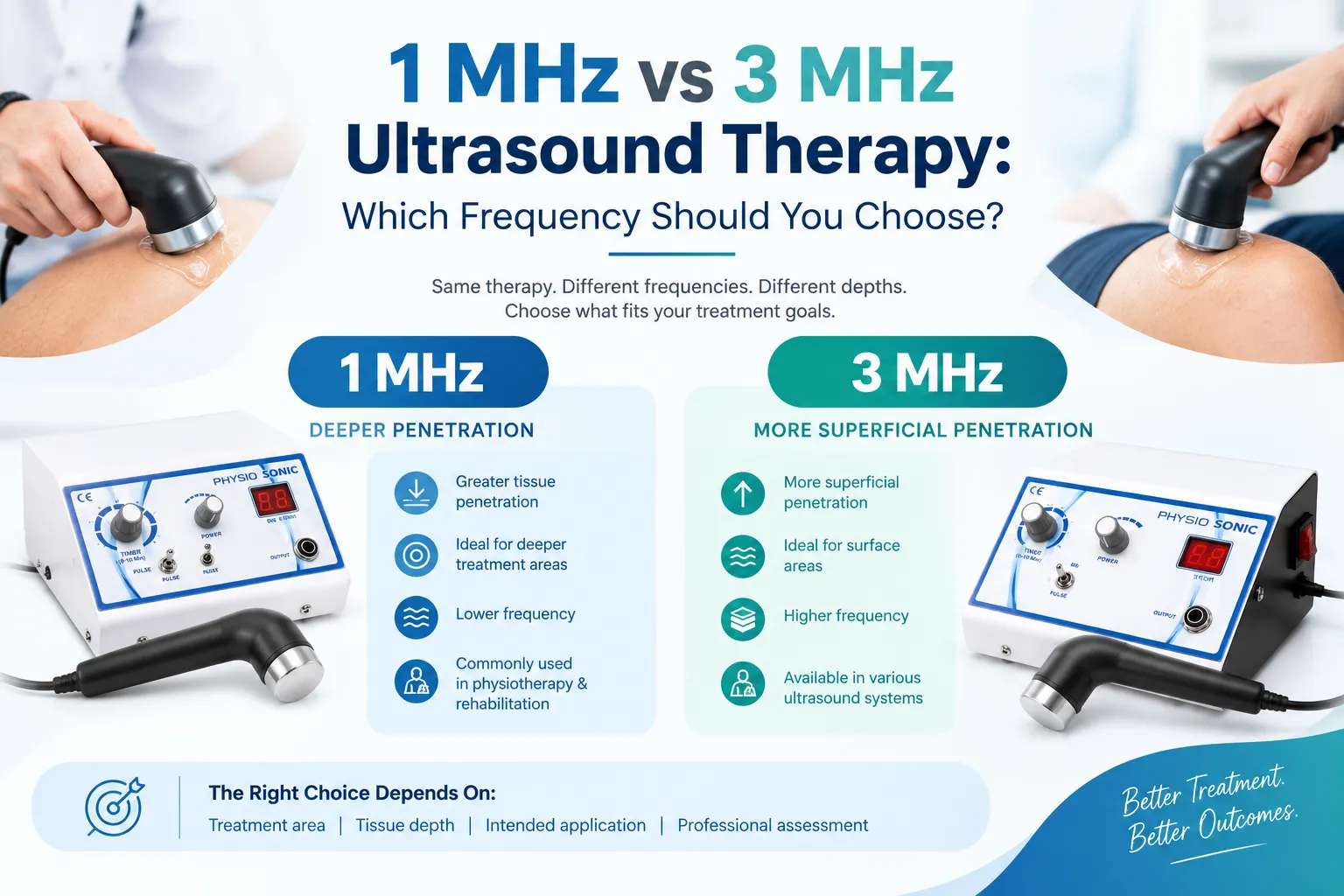
The primary difference between Ultrasound 3 MHz vs 1 MHz is their typical penetration characteristics.
| Feature | 1 MHz Ultrasound | 3 MHz Ultrasound |
|---|---|---|
| Frequency | 1 MHz | 3 MHz |
| Typical penetration | Deeper | More superficial |
| Common consideration | Deeper treatment areas | Superficial treatment areas |
| Frequency level | Lower | Higher |
| Typical selection | Based on treatment area and tissue depth | Based on treatment area and tissue depth |
In simple terms, 1 vs 3 MHz ultrasound machines comes down largely to the intended treatment depth. A lower frequency such as 1 MHz is generally associated with deeper penetration, while a higher frequency such as 3 MHz is generally associated with more superficial penetration.
Neither frequency should be considered universally better. The appropriate choice depends on the treatment area, tissue depth, intended application, and professional assessment.
1 vs 3 MHz Ultrasound: Which Frequency Should You Choose?
Choosing between 1 MHz and 3 MHz ultrasound depends primarily on the depth of the target area.
Choose 1 MHz When Deeper Tissue Is the Focus
A 1 MHz frequency is generally considered when the intended treatment area involves deeper tissues. Its lower frequency is associated with greater penetration compared with 3 MHz.
For physiotherapy and rehabilitation practices that regularly work with deeper treatment areas, a 1 MHz ultrasound therapy machine may be an appropriate equipment option based on professional requirements.
Choose 3 MHz When Superficial Tissue Is the Focus
A 3 MHz frequency is generally considered when the target area is closer to the body's surface. Its higher frequency is associated with more superficial penetration.
For practices where superficial treatment areas are frequently addressed, a 3 MHz ultrasound machine may be considered.
Can One Ultrasound Therapy Machine Offer Both Frequencies?
Yes. Some ultrasound therapy machines are designed to provide multiple operating frequencies, including both 1 MHz and 3 MHz.
A dual-frequency system can provide greater flexibility because the professional can select the appropriate frequency according to the treatment area and intended application.
However, if a machine is designed specifically around one frequency, the choice between a 1 MHz and 3 MHz model should be based on the typical requirements of the physiotherapy or rehabilitation practice.
Factors to Consider When Choosing an Ultrasound Therapy Machine
Frequency is an important consideration, but it should not be the only factor when comparing ultrasound therapy machines.
1. Operating Frequency
Check whether the machine provides 1 MHz, 3 MHz, or both frequencies according to your intended applications.
2. Treatment Area
Consider whether the equipment will primarily be used for deeper or more superficial treatment areas.
3. Intensity and Output Controls
Adjustable settings can provide greater control over treatment parameters. Always follow the manufacturer's specifications and applicable professional treatment protocols.
4. Applicator and Transducer Design
The size and design of the ultrasound applicator can affect how the device is used across different treatment areas.
5. Ease of Operation
A clear interface and straightforward controls can make equipment easier to operate in a busy physiotherapy or rehabilitation setting.
6. Professional Requirements
The machine should match the requirements of the physiotherapy clinic, rehabilitation centre, sports therapy facility, or other professional healthcare environment where it will be used.
1 MHz vs 3 MHz Ultrasound: A Simple Guide
If you're comparing Ultrasound 3 MHz vs 1 MHz, the basic distinction can be summarized simply:
1 MHz → generally associated with deeper tissue penetration
3 MHz → generally associated with more superficial tissue penetration
The appropriate frequency depends on the target area, treatment objectives, equipment specifications, and professional assessment.
Why Frequency Selection Matters
Choosing an appropriate ultrasound frequency helps align the equipment with the intended treatment area. A lower frequency such as 1 MHz is generally selected when greater penetration is required, while a higher frequency such as 3 MHz is generally considered for more superficial applications.
Understanding 1 MHz ultrasound depth and the typical penetration characteristics of 3 MHz ultrasound can make it easier for physiotherapy and rehabilitation professionals to compare different ultrasound therapy machines.
Explore Ultrasound Therapy Machines
If you're looking for professional ultrasound therapy equipment, explore our available 1 MHz ultrasound therapy machine and 3 MHz ultrasound machine options.
Whether you are considering a single-frequency system or comparing different models, evaluate the frequency, treatment parameters, applicator specifications, controls, and intended applications before making a selection.
Frequently Asked Questions
Is 1 MHz or 3 MHz better for ultrasound therapy?
Neither frequency is universally better. 1 MHz ultrasound is generally associated with deeper penetration, while 3 MHz ultrasound is generally associated with more superficial penetration. The appropriate frequency depends on the intended treatment area and professional assessment.
What is the difference between 1 vs 3 MHz ultrasound?
The main difference between 1 vs 3 MHz ultrasound is their typical penetration characteristics. 1 MHz is generally associated with deeper penetration, whereas 3 MHz is generally associated with more superficial penetration.
What is the typical 1 MHz ultrasound depth?
1 MHz ultrasound depth is generally greater than that associated with 3 MHz because lower-frequency ultrasound tends to penetrate further into tissue. Actual penetration can vary according to tissue characteristics and treatment parameters.
When is 3 MHz ultrasound considered?
3 MHz ultrasound is generally considered when the target area involves more superficial tissues. The appropriate application depends on the treatment requirements and professional assessment.
What should I look for in a 3 MHz ultrasound machine?
When comparing a 3 MHz ultrasound machine, consider its frequency specifications, intensity controls, transducer design, treatment parameters, ease of operation, and suitability for your professional requirements.
Can an ultrasound therapy machine have both 1 MHz and 3 MHz?
Yes. Some ultrasound therapy machines offer both frequencies, allowing professionals to select between 1 MHz and 3 MHz according to the intended treatment area and application.


















Sign in to leave a comment.