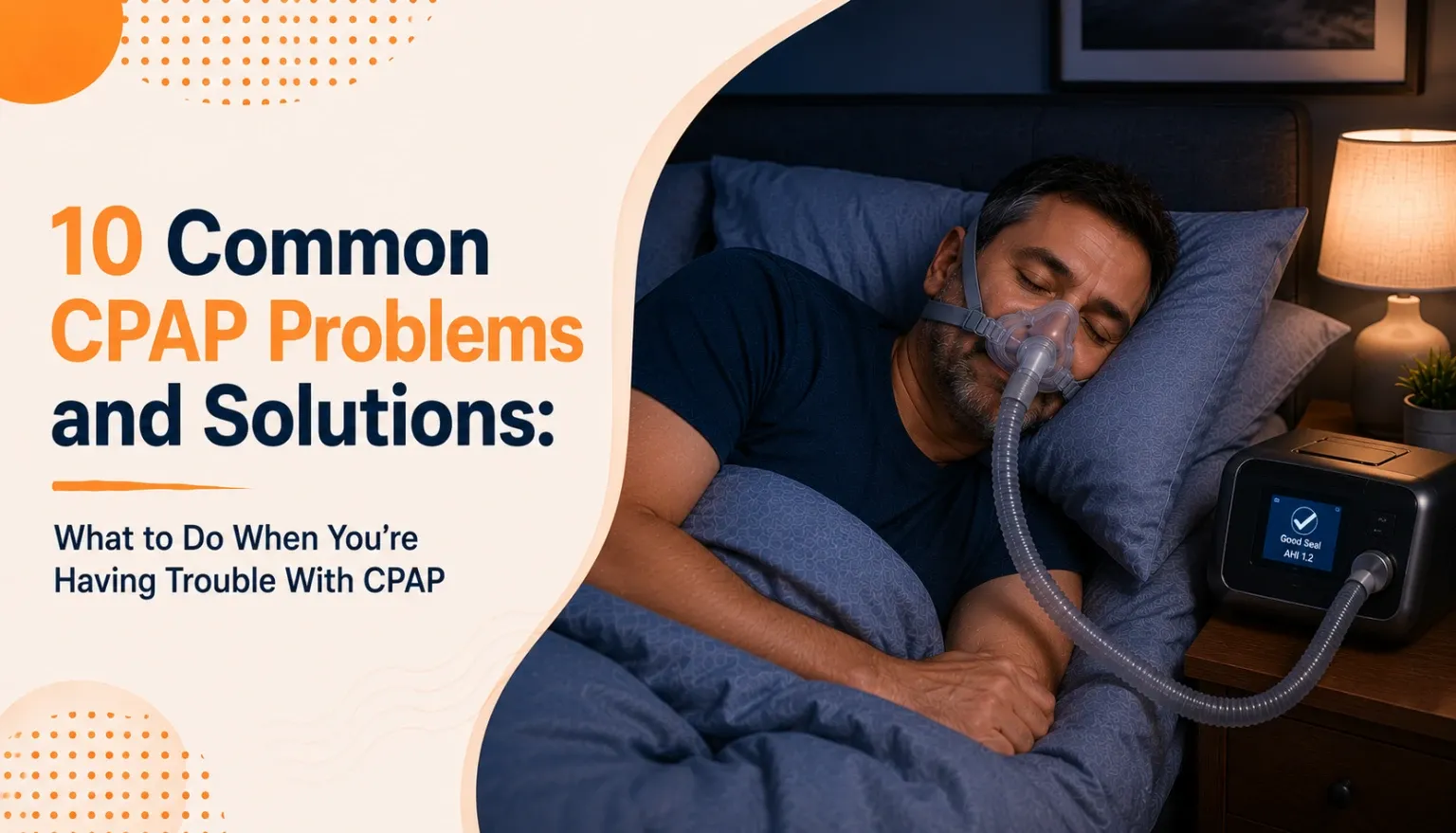

Sometimes the machine is doing its job and the experience around it is still miserable. Air whistles out the side of the mask. Your mouth is a desert by six. There is water in the tube and a groove across your nose.
None of that means your treatment is failing. Many CPAP problems are practical or equipment-related, and most have an identifiable cause and a solution.
What follows is the list I work through in the office: the ten complaints I hear most, what causes each, and what to do.
1. My CPAP Mask Keeps Leaking
The usual cause is a cushion that has aged out. Silicone softens with skin oils and body heat, and a cushion that sealed beautifully in March will not seal in July. Stretched headgear does the same. Replace cushions on your supplier’s schedule rather than when they fail.
Two other causes. The mask was fitted while you sat upright, and your face changes shape against a pillow. A leak on one side only is usually position, not size.
When a leak starts mid-night, do not tighten. Pull the mask away from your face, let it settle back down, and let the pressure reseat the cushion.
2. Air From My CPAP Is Blowing Into My Eyes
This is a leak at the top of the mask, where the seal crosses the bridge of your nose. It is the least tolerable of the CPAP air leaks because the air is dry and aimed at your cornea. Gritty or watery eyes in the morning are the tell, even if you slept through the leak.
The mask may be too large, poorly positioned or overtightened, so the cushion sits high and cannot conform to the bridge. Sometimes the top straps were tightened to close the leak, which levers the bottom of the mask off your face.
Loosen everything, reposition slightly lower, then tighten the lower straps first and the upper last, just to contact. If it persists, ask about a smaller cushion or a nasal pillow style that avoids the bridge.
3. CPAP Is Giving Me a Dry Mouth
Dry mouth on a nasal mask often means air is going in through your nose and out through your mouth all night. It dries every surface it crosses and drops the pressure reaching your airway.
Start with the humidifier. Many people run it well below what they need, and a heated hose lets you raise it without condensation.
If air escapes through your mouth, a chin strap keeps the jaw closed for some patients and a full face mask solves it for others. Know the trade-off. Pooled across thirteen studies and more than four thousand patients, full face masks called for more pressure, left more residual events, and came off about forty eight minutes earlier each night [2]. A separate study found three quarters of full face mask users could move back to a nasal mask and preferred it [3]. Which suits you is a question for your sleep team.
Two more causes to rule out. A blocked nose forces mouth breathing, so fixing the nose often fixes the mouth. And if dryness persists on a well-humidified full face mask, check your medications, since many reduce saliva.
4. My Nose Is Dry, Blocked or Irritated With CPAP
Moving air over nasal tissue for seven hours provokes it. Some CPAP nasal congestion in the first weeks is the tissue responding to airflow, and it settles for most people.
What helps: humidification turned up, a saline spray or gel at bedtime, a heated tube in a cold room, and control of any allergies.
What to avoid is the over-the-counter decongestant spray. Past about three days it causes rebound swelling, and I have met patients who spent a year blaming CPAP for congestion the spray caused.
Persistent blockage deserves a look from your physician. A steroid spray may be appropriate, and structural obstruction is worth identifying: in pooled data, patients who had it corrected surgically needed nearly three centimeters of water less pressure afterward and tolerated therapy better [4].
5. My CPAP Mask Is Hurting My Skin
Marks that fade within half an hour of waking are normal. Marks still there at lunchtime mean the mask is too tight, and so does broken skin.
The cycle usually runs like this. Skin oils build up on the cushion, the seal degrades, you tighten the straps to compensate, and pressure points appear. Wash your face before bed and wipe the cushion daily with mild soap and water, and the seal holds at a looser setting.
If the same spot keeps breaking down, mask liners can protect it while you sort out the fit. A sore that is not healing is a call to your team.
Read More About 10 Common CPAP Problems and Solutions























Sign in to leave a comment.