

Divorce is rarely only about signing paperwork or making legal decisions. It can affect your emotions, finances, family relationships, communication, routines, and plans for the future. Even when both spouses understand that separation is the right decision, the process can still feel uncertain and overwhelming.
Some people struggle with difficult conversations. Others feel stuck when making decisions, managing conflict, organizing financial information, or thinking about what life will look like after the marriage ends. When children, businesses, shared property, or complicated financial matters are involved, the process can become even more difficult to manage.
These are some of the most common divorce challenges people may encounter and why working with an experienced divorce coach can provide practical structure and support.
Divorce coaching is different from legal representation or therapy. A coach can help with preparation, organization, communication, decision-making, and navigating the practical and emotional aspects of the transition. A lawyer handles legal advice and representation, while a qualified mental health professional can provide therapeutic care when needed.
1. Feeling Overwhelmed by Everything Happening at Once
One of the first difficulties people experience is simply trying to process everything at the same time.
You may have questions about housing, finances, children, communication with your spouse, legal processes, work, and your future. At the same time, you may be dealing with grief, anger, fear, disappointment, or uncertainty.
When too many decisions appear at once, it can become difficult to determine what needs attention immediately and what can wait.
How coaching can help
Divorce coaching can provide a structured place to organize your thoughts and concerns. Instead of attempting to solve everything in one day, you can identify priorities and separate immediate decisions from longer-term questions.
Better Divorce Academy describes its coaching approach as helping clients clarify priorities, concerns, communication needs, and available support resources while becoming more organized and prepared.
This kind of structure can make the process feel more manageable without pretending that divorce itself is simple.
2. Managing Difficult Conversations With Your Spouse
Communication can become particularly challenging when emotions are high.
A conversation that begins with one practical question can quickly turn into an argument about the past. Anger, resentment, fear, or frustration may make it harder for either person to listen carefully or communicate what they actually need.
This can be especially difficult when conversations involve children, finances, property, schedules, or other important decisions.
How coaching can help
A divorce coach can help you prepare for difficult conversations before they happen. This may involve identifying what you want to communicate, deciding which questions need answers, and thinking through how you can communicate more clearly.
The goal isn't to control the other person's reaction. Instead, preparation can help you approach the conversation with greater awareness and structure.
Better Divorce Academy specifically describes its coaching as providing communication and preparation tools designed to help clients approach difficult conversations with more clarity, calm, and structure.
3. Making Important Decisions While Under Emotional Stress
Divorce often requires decisions at a time when you may not feel emotionally prepared to make them.
You may be thinking about your home, finances, parenting arrangements, career, or future plans while simultaneously processing the end of a relationship.
Strong emotions can make it harder to step back and consider your priorities.
How coaching can help
A coach can provide a structured environment where you can slow down, identify your concerns, and organize questions that may need to be discussed with your attorney, financial professional, tax professional, therapist, or other appropriate expert.
This is one of the important distinctions between coaching and legal advice. A coach does not replace an attorney. Instead, coaching can help you become more organized and prepared for conversations with the professionals who are responsible for specific areas of your divorce.
Better Divorce Academy's preparation services focus on helping clients organize concerns and identify questions they may want to discuss with appropriate professionals.
4. Dealing With Financial Uncertainty
Money is one of the areas that can create significant stress during divorce.
You may have questions about income, household expenses, property, retirement accounts, investments, debts, business interests, or future financial stability. If financial information is complicated or incomplete, uncertainty can increase.
The important thing is not to make financial decisions based on assumptions.
How coaching can help
Coaching can help you organize financial questions and documents so you can have more productive conversations with qualified legal, financial, and tax professionals.
For example, you might create a list of:
- Assets and liabilities
- Monthly household expenses
- Questions about property
- Retirement-related concerns
- Business interests
- Important financial documents
- Questions for your attorney or financial advisor
Better Divorce Academy notes that divorce-related decisions may involve retirement, real estate, business interests, and family wealth, making preparation and appropriate professional guidance important.
A coach does not replace a financial advisor or attorney. Instead, coaching can help you approach those professional conversations better prepared.
5. Protecting Children From Unnecessary Conflict
When children are involved, divorce can create another layer of concern.
Parents may worry about how to explain the separation, manage changes in routines, communicate about parenting responsibilities, or prevent children from becoming caught between parental disagreements.
Even when parents are struggling with each other, children still need consistency, reassurance, and age-appropriate communication.
How coaching can help
A coach can help parents think through communication strategies and practical questions before difficult conversations take place.
This may include considering:
- How to communicate important changes to children
- How to keep adult disagreements away from children
- How to establish practical communication boundaries
- How to prepare for co-parenting discussions
- How to identify areas where professional support may be appropriate
Coaching cannot resolve every parenting disagreement, and legal or therapeutic support may be necessary depending on the circumstances. But preparation can help parents approach important conversations more thoughtfully.
6. Navigating High-Conflict Situations
Not every divorce is cooperative.
Some people experience ongoing arguments, hostile communication, repeated disagreements, or complicated family dynamics. In these situations, ordinary communication strategies may not feel sufficient.
High-conflict situations can also make it difficult to stay focused on practical issues.
How coaching can help
Specialized divorce coaching can provide preparation and organizational support for people dealing with particularly difficult circumstances.
Better Divorce Academy offers high-conflict divorce coaching designed to help clients become more organized, grounded, and prepared during challenging divorce-related transitions. Its services also include longer-term coaching programs for complex and prolonged situations.
However, safety should always come first. If abuse, coercion, threats, or significant power imbalances are present, mediation may not be appropriate, and individuals should seek appropriate legal, therapeutic, or safety-focused support.
7. Preparing for Divorce Mediation
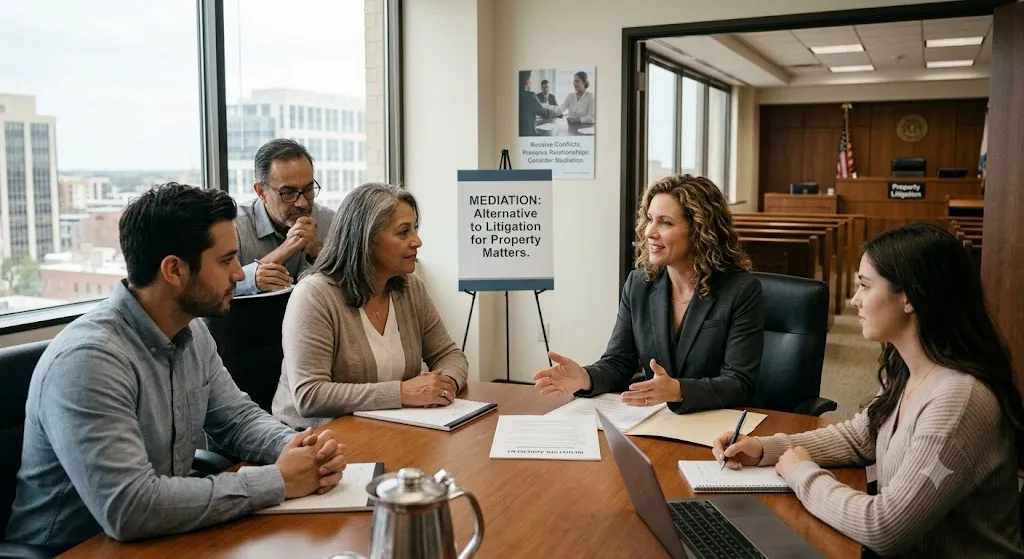
For couples who are able to participate safely and productively, divorce mediation can provide a structured setting for discussing divorce-related concerns.
Mediation involves a neutral mediator helping participants communicate and explore possible areas of agreement when appropriate. It is different from having a lawyer represent one side against the other.
Better Divorce Academy describes its mediation service as a private, structured process designed to support communication and explore possible areas of agreement. The Academy also encourages participants to obtain independent legal, financial, and tax advice before making final decisions or signing agreements.
How coaching can help
Coaching can be useful before mediation by helping you organize your thoughts, identify concerns, prepare questions, and think through what you need to communicate.
You might prepare:
- A list of issues you need to discuss
- Questions for your attorney
- Financial information
- Parenting-related concerns
- Communication boundaries
- Personal priorities
- Questions about the mediation process
The purpose isn't to “win” mediation. It is to enter the process informed and prepared.
8. Feeling Isolated During the Process
Divorce can sometimes feel surprisingly lonely.
Even when friends and family are supportive, they may not understand the details of your situation. You may also hesitate to talk openly because the circumstances feel private or complicated.
Some people try to handle everything independently because they don't want to burden others.
How coaching can help
A professional coach can provide another source of structured support during the transition.
Better Divorce Academy describes its coaching as private and collaborative, with support focused on helping clients feel heard, organized, grounded, and prepared.
That support does not have to replace your personal relationships, therapist, attorney, or other professionals. Instead, it can become one part of a broader support system.
The right combination of professional and personal support will vary from person to person.
9. Losing Sight of Your Own Needs
During a difficult divorce, it can be easy to spend all your energy reacting to what is happening.
You may become focused on emails, conversations, paperwork, disagreements, appointments, and other immediate issues. Over time, your own needs may become secondary.
This can make it harder to think about the person you want to become after the divorce.
How coaching can help
Coaching can encourage you to step back and consider both the immediate process and your longer-term direction.
That could mean identifying personal priorities, creating healthier routines, considering career goals, rebuilding confidence, or thinking about what stability looks like for you.
Better Divorce Academy's educational and coaching resources emphasize clarity, preparation, emotional resilience, and moving toward the next chapter with greater structure and support.
Divorce does not have to become your entire identity. It is a significant life transition, but it is still only one part of your larger life.
10. Wondering What to Do Next
Perhaps the most difficult question is also the simplest:
“Where do I begin?”
You may not know whether you should start with an attorney, mediator, financial professional, therapist, coach, or another source of support.
You may also be unsure whether you are ready to make major decisions.
How coaching can help
A preparation-focused coaching conversation can help you organize what you already know, identify what you don't know, and determine which questions should be directed to the appropriate professionals.
Better Divorce Academy offers preparation and coaching consultations designed around understanding a client's concerns, organizing priorities, and identifying questions for appropriate professional guidance.
Starting with preparation does not mean you have to know exactly how your divorce will unfold. It simply gives you a more structured place to begin.
How to Choose the Right Support During Divorce
There is no single type of professional support that works for every situation.
A lawyer can provide legal advice and representation. A financial professional can help with financial analysis and planning. A therapist or qualified mental health professional can provide mental health support. A mediator can facilitate discussions between participants when mediation is appropriate. A divorce coach can focus on preparation, organization, communication, and the practical and emotional aspects of navigating the transition.
Understanding these differences can help you build the right support system.
Better Divorce Academy combines Certified Divorce Coaching with private ADR mediation and educational resources. Its approach is designed around preparation, communication, informed decision-making, and structured support.
Get Support From Better Divorce Academy
You don't have to figure out every part of divorce at the same time.
If you're feeling overwhelmed, uncertain about your next step, or preparing for difficult conversations, Better Divorce Academy offers confidential divorce coaching and private mediation services designed to provide structure and support during challenging transitions.
The Academy offers 1:1 coaching, high-conflict divorce guidance, preparation support, and private mediation when appropriate.
Whether you are still trying to understand your options or preparing for the next stage of the process, getting organized can be a useful first step.
Frequently Asked Questions
1. What are some common divorce challenges?
Common difficulties can include emotional stress, communication problems, financial uncertainty, parenting concerns, high-conflict interactions, decision-making, and adjusting to major changes in daily life.
2. What does a divorce coach do?
A divorce coach provides practical and emotional support around the divorce process. Coaching may help clients organize their thoughts, clarify priorities, prepare for difficult conversations, and identify questions for appropriate professionals.
3. Is a divorce coach the same as a divorce lawyer?
No. A divorce coach does not replace a lawyer. A lawyer provides legal advice and representation, while a coach generally focuses on preparation, organization, communication, and practical support.
4. Can coaching help with divorce mediation?
Yes. Coaching can help someone prepare for mediation by organizing concerns, clarifying priorities, preparing questions, and thinking through communication. Better Divorce Academy specifically offers coaching and mediation services.
5. Is mediation appropriate for every divorce?
No. Mediation may not be appropriate when there are safety concerns, abuse, coercion, or significant power imbalances. In those circumstances, appropriate legal, therapeutic, or safety-focused support should be considered.
6. Can coaching replace therapy?
No. Coaching and therapy serve different purposes. A divorce coach may provide practical and process-related support, while a qualified mental health professional can address mental health and therapeutic needs.
7. What should I prepare before speaking with a divorce coach?
You don't need to have everything figured out. It can help to bring your main concerns, questions, important deadlines, communication difficulties, financial questions, parenting concerns, or anything else you feel needs attention.
8. When should I seek professional support during divorce?
You can seek support whenever you feel uncertain, overwhelmed, or unsure how to approach the next step. Legal, financial, therapeutic, mediation, and coaching support may each be useful depending on your circumstances.


























Sign in to leave a comment.