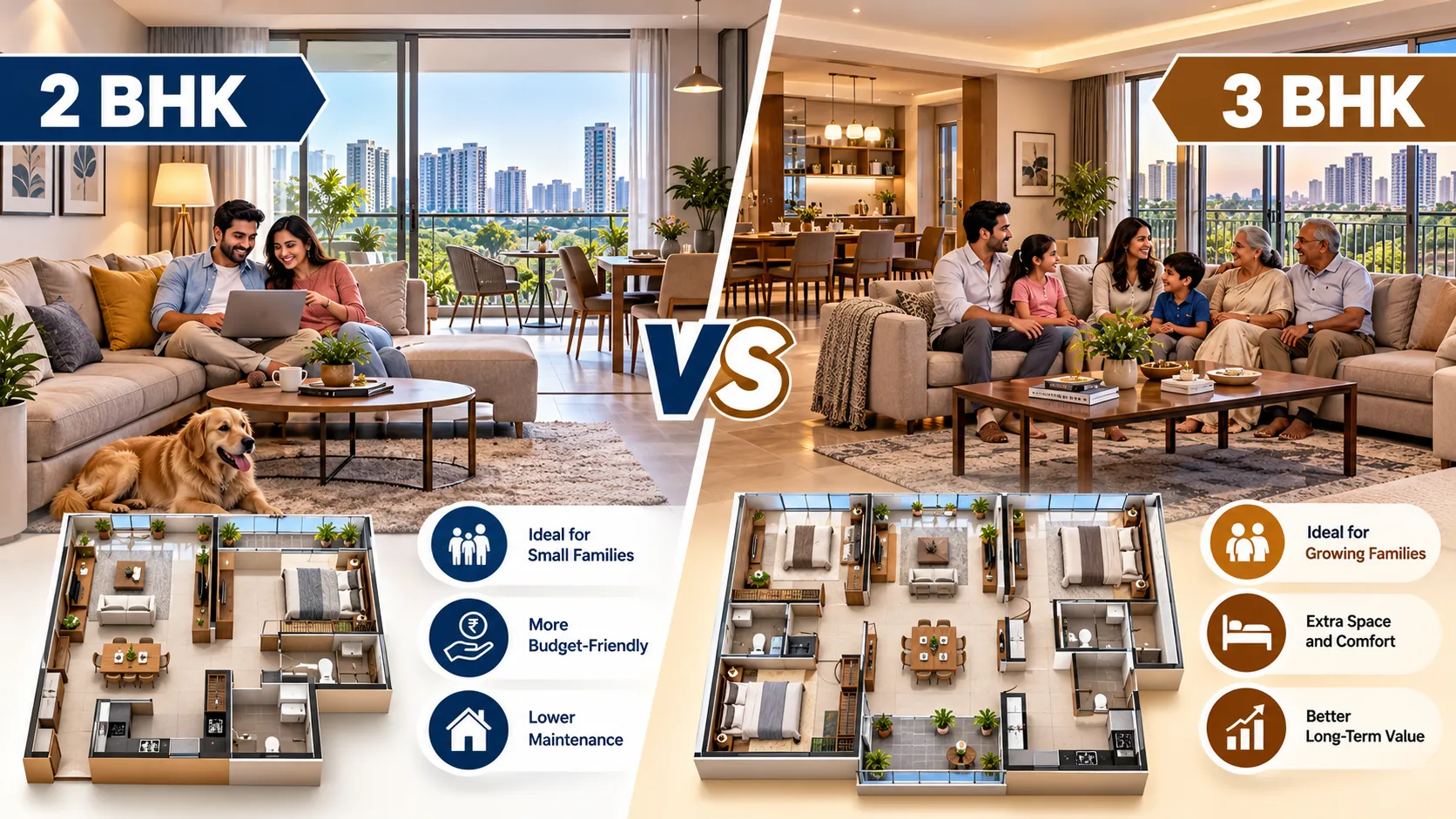

Stepping into the real estate market presents buyers with a series of critical, high-stakes decisions, but none is quite as universally debated as choosing the right apartment configuration. The classic dilemma of selecting between a 2 BHK (Two Bedroom, Hall, Kitchen) and a 3 BHK layout is far more complex than a simple calculation of square footage. This foundational choice dictates your family's daily comfort, influences your long-term financial stability, and determines how well your property will adapt to your evolving lifestyle over the next decade.
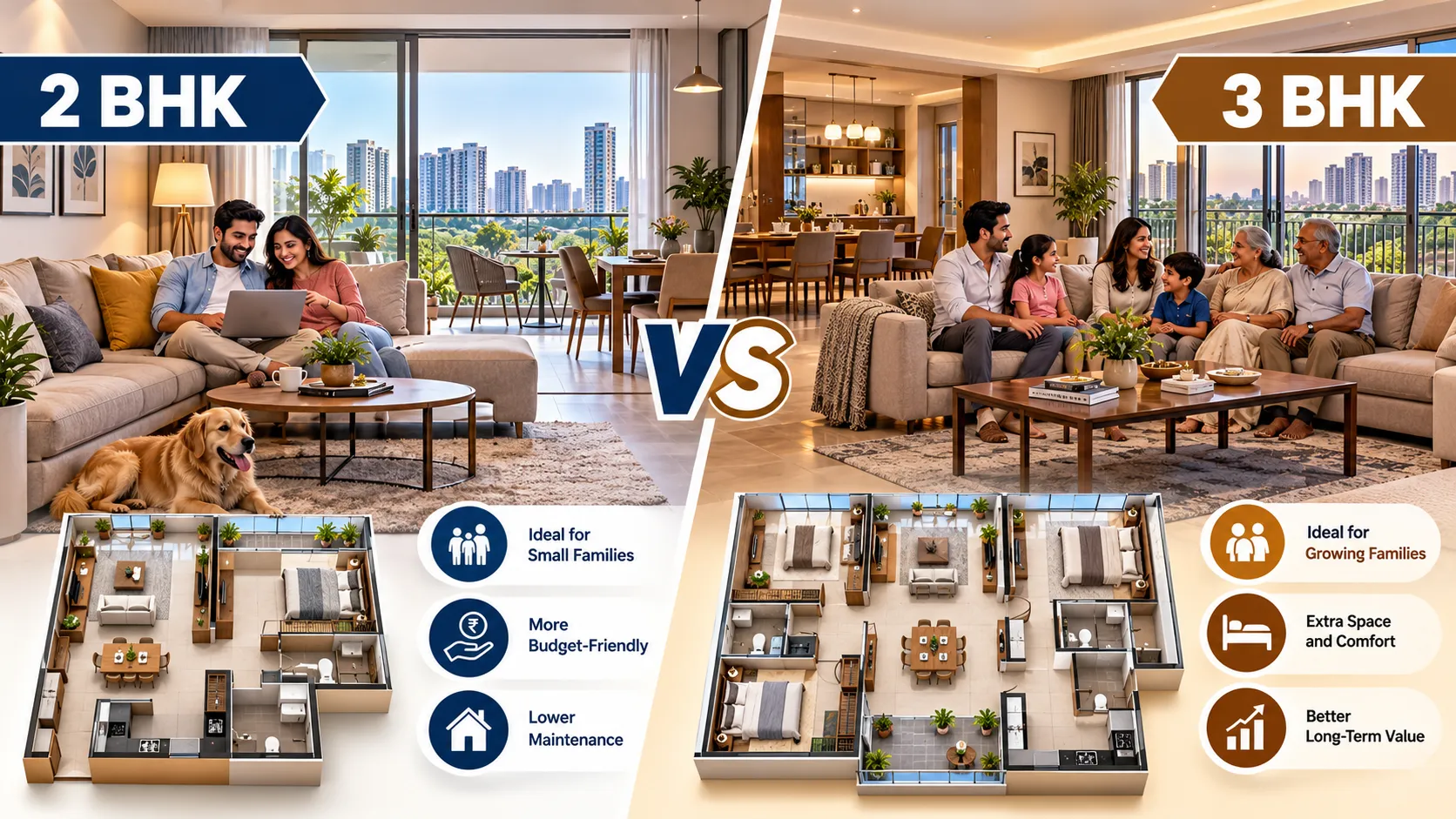
Many first-time homebuyers mistakenly base this decision entirely on their current, immediate circumstances, failing to account for how rapidly family dynamics and professional requirements can shift. A home is a deeply long-term asset, and its physical layout must be capable of accommodating life's inevitable milestones. Understanding the distinct advantages, financial implications, and lifestyle suitability of both 2 BHK and 3 BHK configurations is absolutely essential for making a secure, future-proof property investment on platforms like PropTiger.
The 2 BHK Advantage: Compact, Cost-Effective, and Convenient
The 2 BHK apartment remains the undisputed powerhouse of the Indian real estate market, historically dominating sales volumes across major metropolitan hubs. Its primary allure lies in its exceptional financial accessibility. For young buyers entering the property market, a 2 BHK offers a highly manageable entry point, allowing them to transition from paying rent to building personal equity without completely exhausting their savings. The lower base price translates directly into a smaller upfront down payment and vastly more comfortable monthly home loan EMIs.
Beyond the initial purchase price, the ongoing cost of homeownership is significantly lower for a 2 BHK unit. Because society maintenance fees, property taxes, and home insurance premiums are universally calculated on a per-square-foot basis, a smaller apartment yields substantial, recurring monthly savings. Additionally, furnishing and internally maintaining a 2 BHK requires a fraction of the budget compared to a larger home. This configuration encourages a minimalist, highly efficient lifestyle, making daily cleaning and upkeep far less time-consuming for busy urban residents.
From an investment and liquidity standpoint, 2 BHK apartments are remarkably resilient. They enjoy the highest, most consistent rental demand across almost all tenant demographics, from young corporate employees to small nuclear families. If you ever need to relocate and liquidate the asset, a well-maintained 2 BHK in a decent location will generally sell much faster than a premium 3 BHK, simply because it falls within the budget of a much larger pool of prospective buyers.
The 3 BHK Advantage: Space, Privacy, and Future-Proofing
While the 2 BHK champions immediate affordability, the 3 BHK layout is the ultimate symbol of long-term domestic stability and spatial luxury. The primary catalyst driving the modern demand for 3 BHK homes is the overwhelming need for future-proofing. Upgrading from a smaller apartment to a larger one in a few years involves massive friction costs, including new stamp duty charges, dual shifting expenses, and heavy broker fees. Purchasing a 3 BHK straight away bypasses this expensive relocation cycle, providing a permanent sanctuary that will comfortably serve your family for decades.
The extra bedroom in a 3 BHK fundamentally transforms the livability of the home. It introduces a vital layer of privacy and multi-functional utility that compact layouts simply cannot match. This third room acts as a flexible buffer—it can serve as a dedicated nursery for a newborn, a quiet, professional home office for remote work, a private sanctuary for aging parents, or a comfortable guest room for visiting relatives. As children grow older and demand their own independent space, this extra room transitions from a luxury to an absolute necessity.
Furthermore, post-pandemic real estate trends have shown a massive, structural shift toward larger living spaces. Buyers are spending significantly more time indoors, blurring the lines between their professional and personal lives. A 3 BHK provides the necessary square footage to establish distinct, separate zones for relaxation, work, and family bonding. While the initial financial outlay is higher, the compounding value of daily comfort, spatial harmony, and psychological peace of mind makes the 3 BHK an incredibly compelling proposition for growing families.
Aligning Configurations with Specific Family Archetypes
To make an objective decision, you must strictly evaluate your household against common family archetypes. Matching your specific demographic profile and lifestyle trajectory to the right layout prevents both financial over-extension and spatial frustration.
The Young, Single Professional or DINK Couple For Double Income, No Kids (DINK) couples or ambitious single professionals, a 2 BHK is usually the perfect fit. This demographic prioritizes location, rapid commute times, and vibrant social infrastructure over sprawling indoor space. A 2 BHK provides a comfortable primary bedroom and a secondary room that can easily function as a hybrid home office or a small guest room. This configuration allows young buyers to live in premium, centrally located neighborhoods while keeping their finances highly fluid for travel, investments, and lifestyle experiences.

The Expanding Nuclear Family Couples who currently have a toddler, or are actively planning to expand their family in the next three to five years, should strongly lean toward a 3 BHK. While a 2 BHK might feel sufficient when a child is an infant, the spatial dynamics change rapidly as they grow, accumulate belongings, and require private study areas. A 3 BHK ensures that parents maintain their private master suite, children have their own dedicated bedrooms, and there is still breathing room for daily family activities without the home feeling perpetually cluttered.
The Multi-Generational Household In India, multi-generational living remains a cornerstone of the cultural fabric. If you are living with aging parents, a 3 BHK is not merely a luxury; it is a strict functional requirement. Elderly family members require privacy, quiet spaces, and immediate, unobstructed access to washrooms. A 3 BHK ensures that the generational living experience is harmonious, offering enough distinct zones so that the disparate routines of young children, working adults, and retired seniors do not constantly collide.
The Remote-Working Professionals The normalization of permanent or hybrid remote work has drastically altered layout preferences. If one or both partners work entirely from home, trying to squeeze a professional workspace into the corner of a primary bedroom or a noisy living room quickly leads to burnout. A 3 BHK allows for the conversion of the third bedroom into a strict, sound-isolated home office. This physical separation between the "workspace" and the "rest space" is crucial for maintaining long-term mental health and professional productivity.
The Crucial "Location vs. Size" Trade-off
One of the most intense conflicts buyers face is navigating the trade-off between the size of the home and its geographical location. Due to strict budget constraints, buyers often realize that the exact sum of money required to purchase a compact 2 BHK in a highly established, premium city center is identical to the price of a spacious 3 BHK in an emerging, peripheral suburb.
Resolving this conflict requires a harsh prioritization of your daily routine. If your career demands long, exhausting hours at a central corporate office, sacrificing some square footage for a centrally located 2 BHK will drastically improve your daily quality of life by eliminating hours of brutal traffic. Conversely, if your family spends the vast majority of their time at home, or if you work remotely, prioritizing the massive indoor space of a suburban 3 BHK is a far more logical investment. Suburban micro-markets are rapidly developing their own robust social infrastructure, making the compromise on central location highly palatable for space-hungry buyers.
Evaluating the choice between a 2 BHK and a 3 BHK is a highly personalized journey that merges hard financial mathematics with intimate lifestyle planning. A 2 BHK offers unmatched financial agility, ease of maintenance, and investment liquidity, making it an ideal launchpad for early-stage professionals and small couples. On the other hand, a 3 BHK serves as an uncompromising, permanent family anchor, offering the essential space, privacy, and adaptability required to navigate decades of family milestones. By rigorously mapping out your five-year life plan, calculating your true affordability, and utilizing verified digital platforms to compare real-time market inventory, you can confidently secure a configuration that effortlessly supports your family’s unique narrative.
Frequently Asked Questions (FAQs)
1. Which configuration offers a better rental yield, a 2 BHK or a 3 BHK?
Historically, 2 BHK apartments generate a slightly higher percentage of rental yield compared to 3 BHK units. Because the absolute rent amount for a 2 BHK is lower, it attracts a much larger, highly liquid pool of potential tenants, including young professionals, students, and small families. This high demand ensures minimal vacancy periods between tenants, maximizing the investor's annual cash flow.
2. Is a 2 BHK sufficient for a family of four?
A 2 BHK can accommodate a family of four, but it usually requires significant compromises in privacy and space optimization, especially as children grow into their teenage years. If the children are of different genders, or require separate, quiet spaces for studying, a 2 BHK will quickly feel severely cramped. For a family of four looking for long-term comfort, a 3 BHK is highly recommended to avoid an expensive future upgrade.
3. How much higher are the maintenance costs for a 3 BHK?
Housing societies calculate monthly maintenance charges on a strict per-square-foot basis. If the society charges ₹4 per square foot, and your 3 BHK is 500 square feet larger than a comparable 2 BHK, you will pay an additional ₹2,000 every single month, or ₹24,000 annually, just in base maintenance. Buyers must explicitly factor these permanent recurring costs into their long-term affordability calculations.




























Sign in to leave a comment.