
Look at how most schools talk about smart classes. They install a screen on a wall, take a photo for a brochure, and call it a revolution. But if you walk into a real classroom halfway through the term, you often see that shiny screen switched off, covered in dust, while the teacher goes right back to dictating thirty lines off a textbook onto a blackboard. Putting gadgets in a room doesn't automatically make kids smarter. Technology only works when it actually helps a child understand a hard topic faster than a piece of chalk ever could. When parents look into Smart Class Education in Gorakhpur UP, they shouldn't care about flashy sales talk. They need to know if these tools actually help a kid figure out a tough physics numerical or visualize a biology diagram without getting bored to death.
Interactive Visual Displays That Bring Dry Topics to Life
Trying to explain how an engine works or how blood flows through the heart using a flat, dusty drawing on a blackboard is tough. Half the class gets lost, gets bored, and starts looking out the window.
Interactive digital displays change that by bringing real movement into the room:
- Instead of drawing a messy circle for a solar eclipse, teachers play a 30-second 3D animation showing the exact movement of the moon and earth.
- Complex organic chemistry structures can be rotated on screen so kids see how molecules actually fit together from every angle.
- Geography lessons zoom straight into real mountain ranges and river paths, turning dry maps into interactive visual journeys.
When kids can actually see a concept moving right in front of them, they don't have to spend hours at home trying to imagine it out of a dry textbook.
Digital Question Banks That Build Instant Test Stamina
In a regular classroom, a teacher writes one math problem on the board, waits ten minutes for everyone to copy it down, and then solves it line by line. By the time two problems are finished, the bell rings.
Smart Class Education in Gorakhpur UP uses connected digital repositories to speed up practice:
- Teachers pull up thirty different variations of a single algebra problem in two clicks, giving students instant practice during class.
- Step-by-step solutions are projected clearly, showing kids exactly where a calculation went wrong without wasting twenty minutes writing out steps.
- Daily quick quizzes give immediate feedback, showing the teacher right away which concept half the class failed to grasp.
Spending less time copying questions off a board leaves way more time for actual solving, practice, and clearing doubts.
Integrated Audio Systems for Clear Listening and Pronunciation
Here is something people rarely think about when they hear the word "smart class": sound. If a student sits on the back bench of a crowded sixty-kid classroom, half the teacher's words get lost in ambient noise, ceiling fan hums, and street traffic outside.
Modern smart rooms use clean audio integration to fix this completely:
- Balanced classroom speakers distribute the teacher's voice evenly, so a kid on the very last bench hears as clearly as the kid on the first bench.
- Audio clips of native speakers help students catch proper English pronunciation, speech cadence, and listening comprehension naturally.
- Science lectures use clear audio commentary alongside animations, keeping kids attentive throughout the entire lesson.
- When children don't have to strain their ears just to hear what the teacher is saying, their attention span stays sharp right until the last period.
Keeping Technology Practical Without Ditching Pen and Paper
A lot of schools go overboard with tech, replacing physical notebooks entirely with tablets. That is a massive mistake. If a child spends all day clicking options on a screen, their handwriting turns into a mess and their ability to sit quietly through a 3-hour written board exam vanishes. Technology should support basic learning habits, not destroy them. Smart screens are great for showing a 3-minute video or working through a complex diagram together. But when it comes to solving a geometry problem, writing an essay, or taking revision notes, kids need pen, paper, and physical practice. Keeping that balance keeps writing speed sharp and prevents screen fatigue.
Simple Tech Means Zero Wasted Class Time
The best technology in a classroom is the kind that gets out of the way. If a teacher spends fifteen minutes struggling with wires, looking for a remote, or waiting for a system to boot up, the whole momentum of the period is ruined and kids start chatting. Smart tools need to be dead simple. A teacher walks in, taps one button, pulls up the day's chapter, and starts teaching immediately. When tech is simple, reliable, and quick, every single minute of the school hour goes straight into real teaching instead of troubleshooting hardware.
Giving Local Students a Real Edge
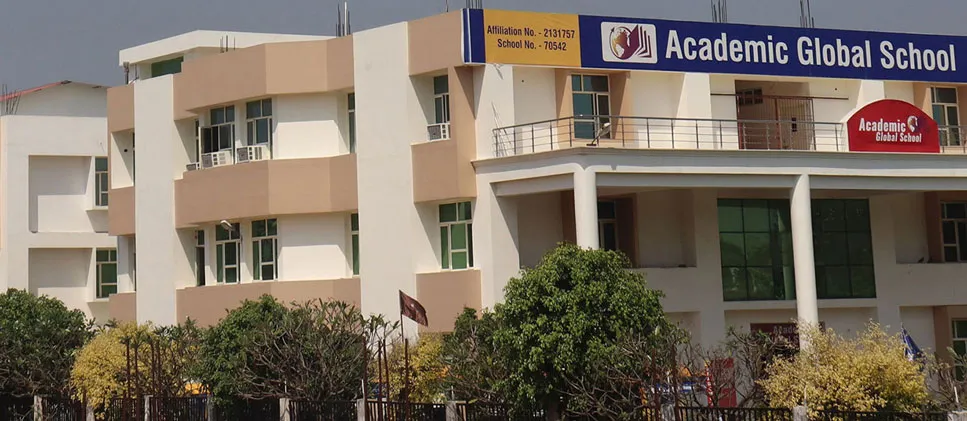
At the end of the day, digital tools aren't magic wands that replace good teachers. They are just sharp tools in the hands of patient educators who know how to explain things simply. If you are curious about how Smart Class Education in Gorakhpur UP actually helps students in daily life, visit Academic Global School. Come see our classrooms in action, talk to our teachers, and see how simple, practical technology helps kids learn faster, remember better, and enjoy coming to school every day.
























Sign in to leave a comment.