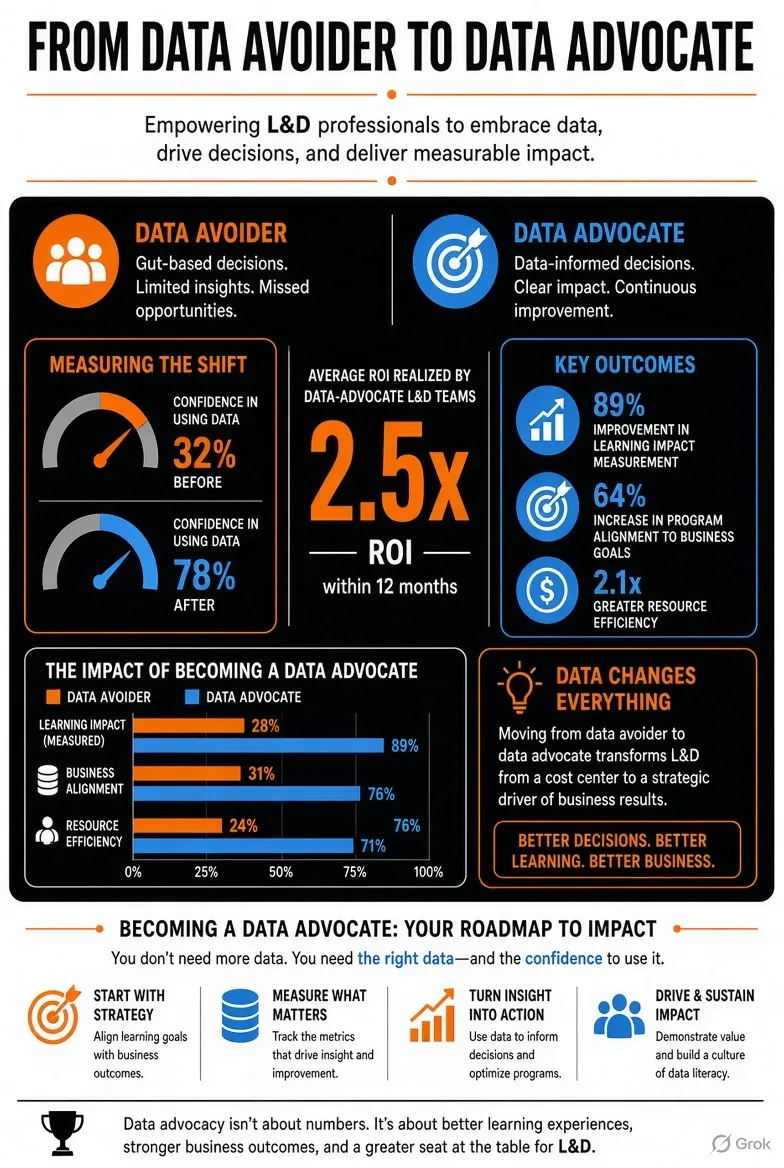

I used to be a proud data avoider. Give me a room full of people, and I came alive. Give me a spreadsheet, and I looked for the nearest exit. I told myself numbers weren’t my strength. My strength was connection, coaching, and creating moments that mattered.
Then the person who quietly handled all our reports moved on. No warning. No transition plan. Suddenly every request for “the numbers” landed on my desk. I felt exposed.
What happened next surprised me. Once I stopped fighting the data and started using it as a storytelling tool, my work got stronger. Engagement trends showed me where culture needed attention. Skill gaps became clear signals instead of vague worries. Leaders who used to nod politely started asking for more of our programs because now they could see the impact in language they understood.
2026 has made this shift even more urgent. Learning teams are expected to show predictive insight, not just completion rates. AI tools now let regular humans ask questions in normal words and get answers linked to real business results. Staying data-shy is no longer a quirky personality trait. It’s a career risk.
One number that matters: Teams that lean into advanced analytics are 2.5 times more likely to prove their ROI.
“In God we trust; all others must bring data.”
— Widely attributed to W. Edwards Deming
Here’s what I learned the hard way:
- Avoiding discomfort keeps you stuck.
- Data doesn’t cancel empathy; it focuses it.
- A good story opens the door. Evidence keeps it open.
- Anyone can learn this. It is a skill, not a gift.
Your Most Common Questions
Q.1 What does becoming a data advocate actually look like?
It means using simple numbers to protect the people work you already care about.
Q.2 I’m scared of looking stupid with data. Advice?
Start ridiculously small. One metric. One program. Progress beats perfection.
Q.3 Which numbers should I track right now?
How fast people become productive, whether they actually use the skills, whether they stay longer, and any clear business link.
Q.4 Our systems are a mess.
Begin with the data you already own. Clean one corner. Share one useful insight. Support grows from there.
Q.5 Will this change make training feel less human?
Only if you let numbers replace people. Used well, numbers help you serve people better.
Q.6 Do I need fancy AI tools?
They help a lot, but the mindset shift matters more than any tool.
I’m glad the data dragon showed up when it did. It made me a better professional and gave me a stronger voice. The learning leaders who will thrive are the ones who can hold both the human story and the clear evidence at the same time.
You already care about people. Adding data simply protects that care. The next step is smaller than you think. Take it.

























Sign in to leave a comment.