
Who wants a clumpy coffee powder or spoiled coffee?
Probably nobody.
Hence, coffee packaging is vital for preserving your coffee’s freshness and flavour so that oxygen, light, and moisture don’t enter it. If your roasted coffee beans are exposed to air, they oxidize instantly, lose vibrant aromas, and turn stale.
Using aluminium foil or high-barrier plastics, which are high-quality packaging, has a one-way degassing valve. This lets freshly roasted beans safely release carbon dioxide that’s trapped in them. This way, your coffee’s flavour will be retained from the roaster to your kitchen.
Coffee packaging design is not only for preservation but a critical tool for convenience, brand identity, and environmental sustainability.
Modern coffee bags feature resealable zippers and flat-bottom designs that store your beans easily and keep the contents fresh even after opening the package.
Roasters keep the exterior space to display details like origin, roast date, and flavour profile, which helps make informed choices. Moreover, the industry is shifting to eco-friendly materials that are recyclable, compostable, or plant-based plastics that reduce waste by maintaining coffee protection.
2026 Coffee Design Trends
- Substrate-Forward Tactility: Away from polished plastics and into tactile substrates that engage more senses. Soft touch, natural-looking Kraft finishes, and luxurious matte films are all the rage in this space.
- Flavour Notes Typography: Gone are the days of generic typefaces, as custom-made or hand-written typography is used to highlight taste notes right there on the front panel.
- Apothecary VS Neo-Minimalism: Clean design layouts with grids, clinical typography, and metallic tones are very common. This design gives coffee the appearance of an exclusive and artisan product.
Flat Bottom Geometry: The eight-seed flat bottom bag is undoubtedly the main character bag. It is cleaner and offers more flat surfaces to design on.
Eco-friendly Packaging Visual
- Mono-Material Messaging: The industry has abandoned the use of aluminium foil. Ensuring call-outs and/or customized icons for communicating your product uses “100% Recyclable PE Mono-Material” or “Compostable Substrates”.
- Eco-Friendly Inks: Use water-based or soy-based printing inks. Your product should clearly mention it on the reverse side of the bottom gusset of the packaging.
- FSC-Certified Badges: Display the FSC certification badge without making it dirty. The integration of the Forest Stewardship Council badge in your typography design adds value to its ethical nature.
- Transparency: Be honest with your words. No greenwashing here, just concise and clear statements telling how to dispose of the bag.
Label Hierarchy
Structure the layout with a three-tier system to attract consumers within three seconds.
Tier 1: The main focus is on brand identity and product type, where the large coffee logo is placed in the centre of the package with a description of whole bean or ground.
Tier 2: The focus is on roast level, blend name, and flavour notes with a colour-coded section, stylish font, and flavour markers highlighted,d for example, blueberry, chocolate, etc.
Tier 3: The focus is on the origin, farm, altitude, and process with small, structural technical text at the bottom or back and also a scannable QR code link for farm traceability.
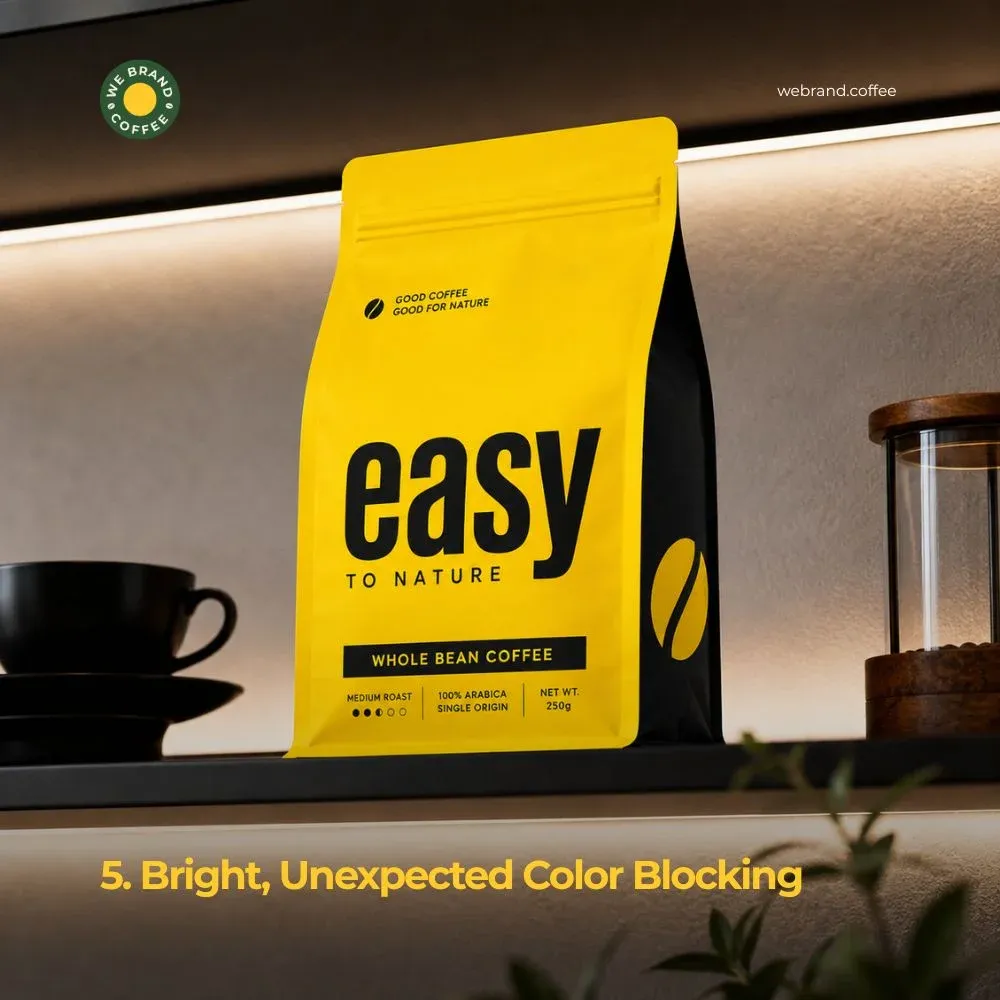
A mockup of the shelf standout
The front panel is made for maximum visual impact with flavour recognition and a matte finish. The back panel is designed for building trust, sharing proof, and meeting retail regulatory requirements.
The side gussets are a hidden space in flat-bottom bags to strengthen brand identity and eco-credentials. The left gusset helps with freshness and storage, and it consists of a resealable zipper track indicator with the text ‘tear here’; the visual here will be minimalist. The right gusset has the FSC-certified badge with the text ‘eco-friendly, or we care for the planet’.
Conclusion
Every coffee has its own unique story that catches the attention of people; hence, a package that speaks the coffee language, which is the origin, farm, flavours, etc., is the best kind of specialty coffee. Sometimes your coffee might taste heavenly, but the way it’s perceived by people in the form of packaging coffee design needs to play the magic. Using eco-friendly materials will assist you in aligning with environmental sustainability.























Sign in to leave a comment.