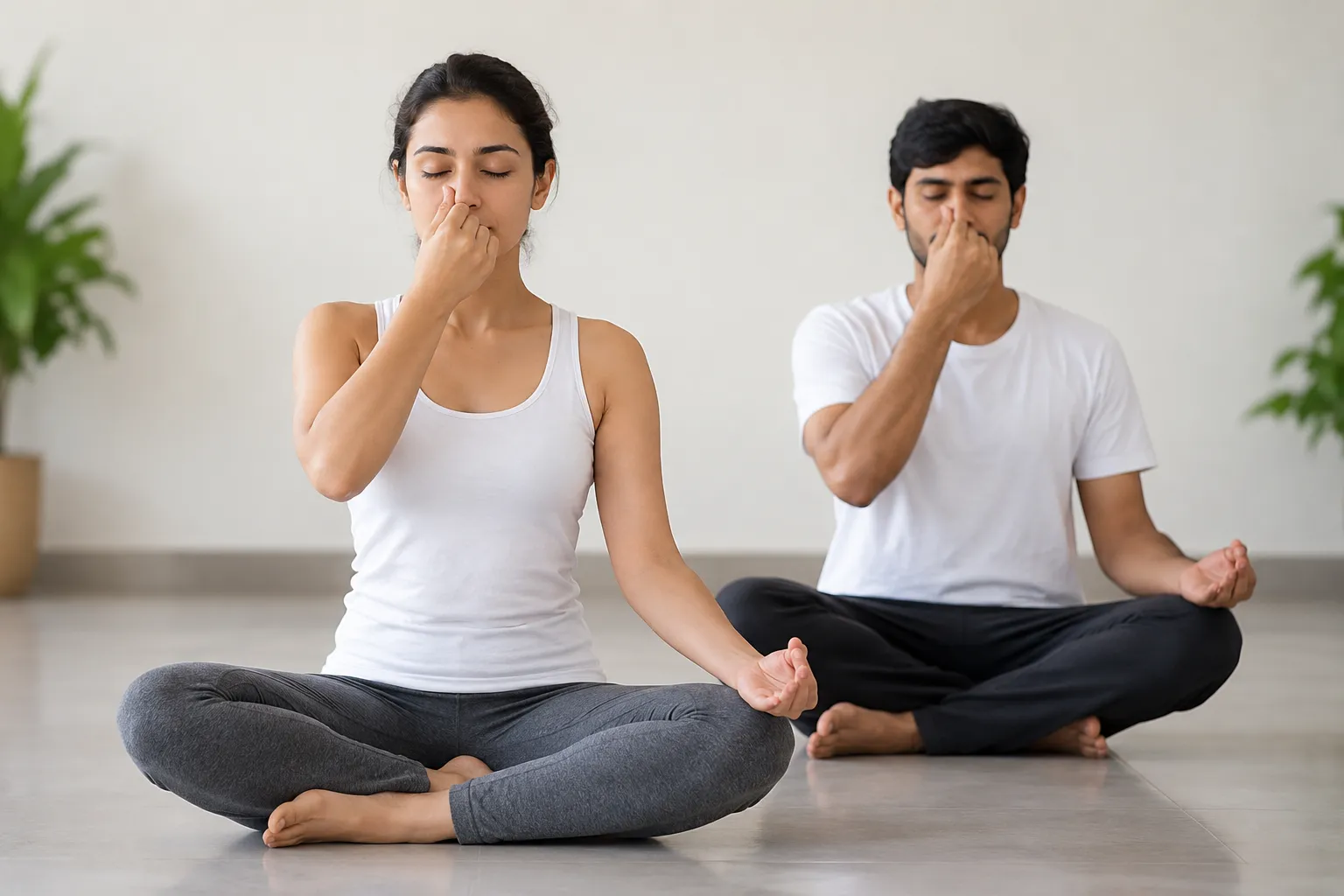

Stress can quickly change the way we breathe, often making each breath faster and shallower. Simple breathing practices can help interrupt that pattern and create a calmer state. Slow belly breathing, extended-exhale breathing, alternate nostril breathing, box breathing, and mindful breath awareness are practical options that can be practiced almost anywhere, often within just a few minutes.
Why Breathing Matters When You Feel Stressed

Think about what happens when you receive an unexpected message, rush into a meeting, or face a difficult conversation. Your shoulders may tighten, your heart may beat faster, and your breathing may become quick and shallow.
This is part of the body's normal stress response. Breathing is useful because it is one of the few automatic body functions that we can also consciously influence.
Slow, controlled breathing may support the body's relaxation response, while regular practice can make these techniques easier to use when stress appears. Research reviewing controlled breathing studies has found that many breathing interventions can reduce measures of stress or anxiety, with slow breathing among the most commonly studied approaches.
The goal is not to force yourself to "stop stressing." Instead, use your breath as an anchor that gives your body and attention a chance to settle.
1. Slow Belly Breathing
Belly breathing, also called diaphragmatic breathing, is one of the simplest places to begin.
Sit comfortably with your shoulders relaxed. Place one hand over your abdomen and notice its natural movement. Slowly breathe in through your nose and allow your belly to expand. Then breathe out gently without forcing the air away.
Try:
- Inhale slowly through the nose.
- Allow the abdomen to expand naturally.
- Exhale slowly and comfortably.
- Repeat for 5–10 rounds.
- Keep your face and shoulders relaxed.
The movement should feel comfortable rather than exaggerated. Harvard Health describes slow, deep breathing as a practical way to encourage relaxation during stressful moments.
If you want to explore more breathing techniques for stress relief, there are several traditional yoga-based approaches that can be added to a regular wellness routine.
2. Extended-Exhale Breathing
When your mind feels busy, giving slightly more time to the exhale can make the practice feel grounding.
Start with an easy breath rather than taking very large breaths. Inhale for about four counts, then exhale for about six. There is no need to hold your breath.
Repeat for several comfortable rounds.
A simple pattern:
Inhale: 4 counts
Exhale: 6 counts
Repeat: 5–10 rounds
The numbers are only a guide. If counting makes you tense, forget the numbers and simply make the exhale a little longer than the inhale.
This approach is useful before:
- A presentation
- A difficult conversation
- An important phone call
- A busy commute
- Returning to work after a stressful event
The practice should feel smooth. If you feel lightheaded or uncomfortable, return to normal breathing.
3. Box Breathing for a Busy Mind
Box breathing uses four equal phases: inhale, pause, exhale, pause. It gives the mind something specific to follow, which can be helpful when thoughts are jumping from one concern to another.
A beginner-friendly version is:
- Inhale for 4 counts.
- Pause gently for 4 counts.
- Exhale for 4 counts.
- Pause for 4 counts.
- Repeat for a few rounds.
Harvard Health includes box breathing among simple techniques that can help activate the relaxation response.
Do not force the pauses. People with certain breathing or cardiovascular conditions may need individualized guidance before practicing breath-holding techniques. If holding the breath feels uncomfortable, use slow breathing without pauses instead.
4. Alternate Nostril Breathing
Alternate nostril breathing is a traditional yoga breathing practice often used to settle attention and create a more measured breathing rhythm.
For a simple version, sit comfortably and breathe naturally first. Close one nostril gently, inhale through the other, then switch sides and exhale. Continue alternating sides at a slow, comfortable pace.
The important point for beginners is ease.
Avoid turning the practice into a competition over how deeply or slowly you can breathe. The purpose is steady attention, not maximum breath volume.
This can work well as a short transition between activities—for example, after finishing work and before beginning an evening routine.
5. Mindful Breath Awareness
Sometimes the best breathing exercise is not changing your breath at all.
Sit comfortably and notice:
- Where you feel the breath moving
- Whether the inhale or exhale feels longer
- The temperature of the air
- Movement around your ribs or abdomen
- The moment one breath ends and another begins
When your attention wanders, simply bring it back to the next breath.
This is a simple form of breath meditation. Harvard Health describes breath-focused meditation as an accessible way to bring attention away from distracting thoughts and back to the present moment.
You don't have to empty your mind. You are simply practicing returning your attention.
Which Breathing Practice Should You Choose?
You don't need to practice all five every time you feel stressed. Choose according to what you need at that moment.
| Situation | Practice to Try |
|---|---|
| Feeling physically tense | Slow belly breathing |
| Mind feels rushed | Extended-exhale breathing |
| Need a structured focus | Box breathing |
| Want a traditional yoga practice | Alternate nostril breathing |
| Thoughts keep wandering | Mindful breath awareness |
A two-minute practice that you actually use can be more useful than a complicated routine that you rarely practice.
How to Make Breathing Practice Part of Your Day
Breathing exercises work best when they become familiar before you need them.
Try attaching a short practice to something you already do:
- Take five slow breaths before opening your email.
- Practice for two minutes after lunch.
- Use mindful breathing before a meeting.
- Take several slow breaths before responding to a frustrating message.
- Practice for five minutes before bedtime.
Research on breathing interventions suggests that repeated practice may be more useful than relying only on a single session when stress becomes intense.
The aim is simple: make calm breathing familiar enough that it is available when your day becomes demanding.
Common Mistakes to Avoid
Breathing exercises should feel supportive, not like another task to perform perfectly.
Avoid:
- Taking unusually large breaths repeatedly
- Holding your breath when it feels uncomfortable
- Breathing so slowly that you become dizzy
- Forcing a particular rhythm
- Expecting one session to remove all stress
- Ignoring persistent anxiety or physical symptoms
If a breathing practice causes dizziness, chest discomfort, significant shortness of breath, or distress, stop and return to normal breathing. People with respiratory, cardiovascular, or other medical conditions should seek appropriate professional guidance about which breathing exercises are suitable for them.
Breathing practices can support stress management, but they are not a substitute for medical or mental-health treatment when that care is needed.
A Five-Minute Reset You Can Try Today
If you have only five minutes, keep things simple.
Minute 1: Sit comfortably and notice your natural breathing.
Minutes 2–3: Practice slow belly breathing.
Minute 4: Try a slightly longer exhale.
Minute 5: Return to natural breathing and notice how you feel.
Don't judge whether you did it "correctly." Notice whether your shoulders feel different, whether your thoughts have slowed, or whether you simply feel a little more present.
That small shift can be enough to create space between a stressful moment and your next response.
Frequently Asked Questions
1. What is the best breathing exercise for stress?
There is no single best technique for everyone. Slow belly breathing is a practical starting point because it is simple and does not require special equipment. If counting helps your concentration, box breathing may suit you.
2. How long should I practice breathing exercises?
Start with two to five minutes. You can gradually practice for longer if it feels comfortable. Regular short sessions can be easier to maintain than occasional long sessions.
3. Can breathing exercises calm anxiety immediately?
A few slow breaths may help you feel calmer during an acute stressful moment, but the response varies from person to person. Breathing practice should be viewed as one tool for managing stress rather than a guaranteed immediate solution.
4. Should I breathe through my nose or mouth?
For many slow breathing practices, gentle nasal breathing is commonly used when it feels comfortable. There are situations where mouth breathing may be necessary, so don't force nasal breathing if you cannot breathe comfortably that way.
5. Can beginners practice pranayama?
Yes, beginners can learn simple breathing practices, but it is wise to start with gentle techniques. More demanding pranayama involving prolonged breath retention or rapid breathing is better learned with qualified instruction.
6. Can breathing exercises help with sleep?
Slow breathing may help create a calmer state before bedtime. A 2026 systematic review examined slow breathing practiced before sleep and found evidence worth considering for sleep-related outcomes, although more research is needed.
7. How often should I practice breathing exercises?
A practical approach is to practice for a few minutes once or twice a day, then use the technique during stressful moments when needed. Consistency matters more than making every session long.
Final Thoughts
A stressful day does not always require a complicated solution. Sometimes the first useful step is to stop for a moment and notice how you are breathing.
Slow belly breathing, extended-exhale breathing, box breathing, alternate nostril breathing, and mindful breath awareness each offer a different way to work with attention and breathing. Start with one technique, keep it comfortable, and practice it regularly.
With time, a few quiet breaths can become a practical pause between feeling overwhelmed and choosing how you want to respond.
Related References
- Harvard Health – Stress and Relaxation Techniques
- National Center for Biotechnology Information – Breathing Practices for Stress and Anxiety
- Cleveland Clinic – Stress: Symptoms, Management & Prevention





















Sign in to leave a comment.