

5 Signs Your Business Needs a Bookkeeper

There's a particular kind of dread that hits small business owners around the middle of every month the moment you open QuickBooks (or worse, a shoebox of receipts) and realize you have no real idea what your numbers actually say. You know revenue came in. You know bills went out. But the gap between "the business feels busy" and "the business is actually profitable" is exactly where bookkeeping either saves you or quietly lets you down.
Having sat across the table from dozens of business owners going through this exact reckoning some mid-growth-spurt, some mid-crisis a pattern shows up again and again. The businesses that wait too long to bring in professional bookkeeping services in USA almost always wish they'd made the call three to six months earlier. The ones who move early tend to scale with far less financial whiplash. Here are the five signs that, in practice, consistently mean it's time.
1. You Can't Answer "Are We Actually Profitable?" Without a Long Pause
This is the single most reliable early warning sign. If someone asks how your business did last month and your honest answer involves opening three different apps, guessing at a number, or saying "I think we're okay," that's not a minor inconvenience that's a structural blind spot.
What's usually happening behind the scenes: revenue is tracked in one place (maybe Stripe or a POS system), expenses are scattered across personal and business cards, and nothing is being reconciled against a chart of accounts on a consistent cadence. The result is a business owner making six-figure decisions hiring, inventory orders, marketing spend based on gut feel and bank balance, which is a dangerous proxy for actual profitability. A bank balance tells you cash on hand; it says nothing about outstanding payables, upcoming tax liability, or margin erosion that's already happened and just hasn't been felt yet.
2. Tax Season Feels Like an Emergency, Not a Formality
If every January through April brings a scramble to reconstruct a year's worth of transactions, categorize expenses retroactively, and hunt down missing receipts, this is one of the clearest signals that bookkeeping has been an afterthought rather than an ongoing discipline.
The businesses that handle tax season calmly share one thing in common: their books are closed monthly, categorized correctly against IRS-compliant expense categories, and reconciled against bank and credit card statements as they go unreconstructed after the fact. This isn't just about convenience. Messy, retroactively-built books are also where the most costly errors creep in: misclassified expenses, missed deductions, and in the worst cases figures that don't hold up if the return is ever questioned. CPAs consistently charge more, and take longer, when they receive a shoebox instead of clean monthly financials, which is often the first moment business owners realize bookkeeping and tax prep are two different disciplines that need to work together, not one substituting for the other.
3. Cash Flow Surprises Keep Happening Despite "Good" Sales
This is the sign that catches growing businesses off guard the most. Revenue is up. The pipeline looks healthy. And yet, payroll timing feels tight, or a big vendor payment lands at the worst possible moment. Growing sales and healthy cash flow are not the same thing, and without a bookkeeper actively tracking accounts receivable aging, accounts payable timing, and cash conversion cycles, that gap becomes invisible until it's urgent.
A properly maintained set of books doesn't just record what happens, it surfaces patterns: which clients chronically pay late, which expense categories are creeping upward month over month, whether inventory purchasing is outpacing actual sell-through. Once cash flow visibility exists, most of these "surprises" stop being surprises at all; they show up as trend lines weeks before they become emergencies.
4. You've Outgrown Spreadsheets, But Haven't Outgrown the Habit of Using Them
Plenty of businesses start on a spreadsheet, and for a solo operation with a handful of transactions a month, that's often genuinely fine. The trouble starts when transaction volume, multiple revenue streams, payroll, inventory, or multi-state operations enter the picture, and the spreadsheet keeps getting patched rather than replaced.
This is usually visible in small but telling details: formulas that quietly break when a row gets inserted in the wrong place, categories that were named one way in March and a slightly different way in September, or a business owner who is the only person who can explain how the sheet actually works which becomes a serious risk the moment they go on vacation, get sick, or bring on a partner or investor who wants to see real financials. A dedicated bookkeeper brings standardized, audit-ready books built on proper accounting software, with a consistent chart of accounts that scales as the business does instead of a spreadsheet held together by memory and hope.
5. You're Making Big Decisions (Hiring, Expansion, Loans) on Incomplete Numbers
This is the sign with the highest cost attached. Taking out a business loan, signing a new lease, hiring your first employee, or opening a second location are all decisions that should be backed by clean profit-and-loss statements, balance sheets, and cash flow projections not optimism.
Lenders and investors notice immediately when financials are inconsistent, late, or clearly reconstructed after the fact; it's one of the fastest ways to lose credibility in a loan application or funding conversation. More importantly, business owners who make expansion decisions without accurate numbers are often working from a distorted picture of what they can actually afford and the businesses that stumble hardest during growth phases are frequently the ones that scaled spending before their books could tell them whether the revenue could support it.
Why "Doing It Yourself a Little Longer" Usually Costs More Than It Saves
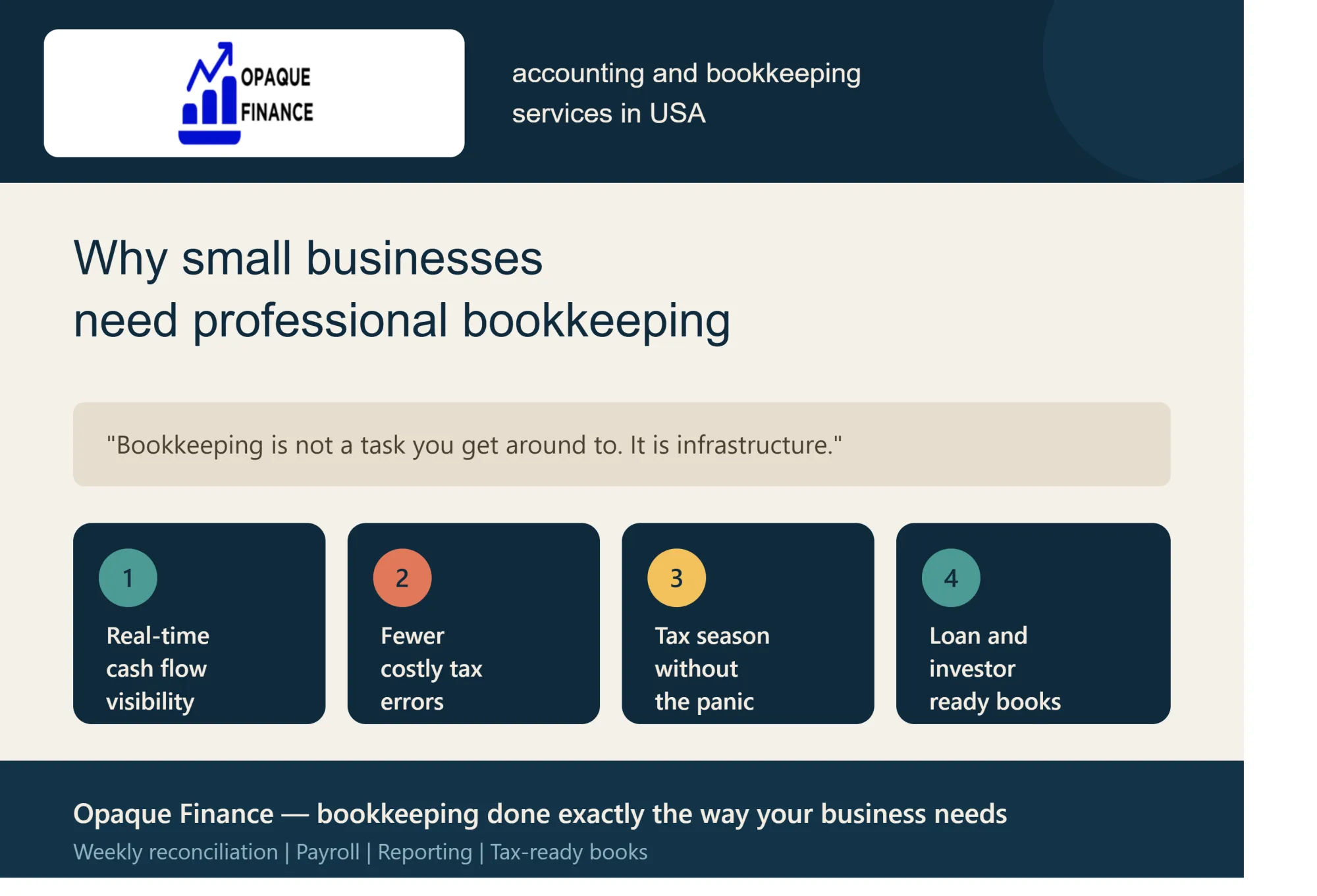
There's a common assumption that hiring a bookkeeper is a cost you delay until the business is "big enough" to justify it. In practice, it's almost always the opposite: the cost of not having clean books compounds quietly in missed deductions, in cash flow blind spots, in decisions made on bad data long before it becomes obvious. By the time the pain is visible, months of financial history usually need to be cleaned up and reconstructed, which costs considerably more than staying current would have.
This is exactly why working with dependable bookkeeping services in USA earlier rather than later tends to pay for itself. A good bookkeeper isn't just recording transactions after the fact they're building the financial infrastructure that lets a business owner make decisions with actual confidence, month over month, not just at tax time.
What to Look for When Choosing a Bookkeeping Partner
A few things worth checking before signing on with any provider:
- Monthly closing discipline books should be reconciled and closed on a set monthly cadence, not "caught up" quarterly or annually.
- Software fluency proficiency in QuickBooks Online, Xero, or whatever platform fits your business, with clean integrations to your bank, payroll, and point-of-sale systems.
- Industry familiarity a bookkeeper who has handled businesses in your sector (retail, professional services, e-commerce, restaurants) will catch category-specific nuances a generalist might miss.
- Clear communication cadence monthly financial summaries you can actually understand, not just raw reports.
- Scalability a provider offering bookkeeping services across USA, capable of supporting multi-state operations, sales tax nuances by jurisdiction, and remote teams, matters the moment your business operates beyond a single location.
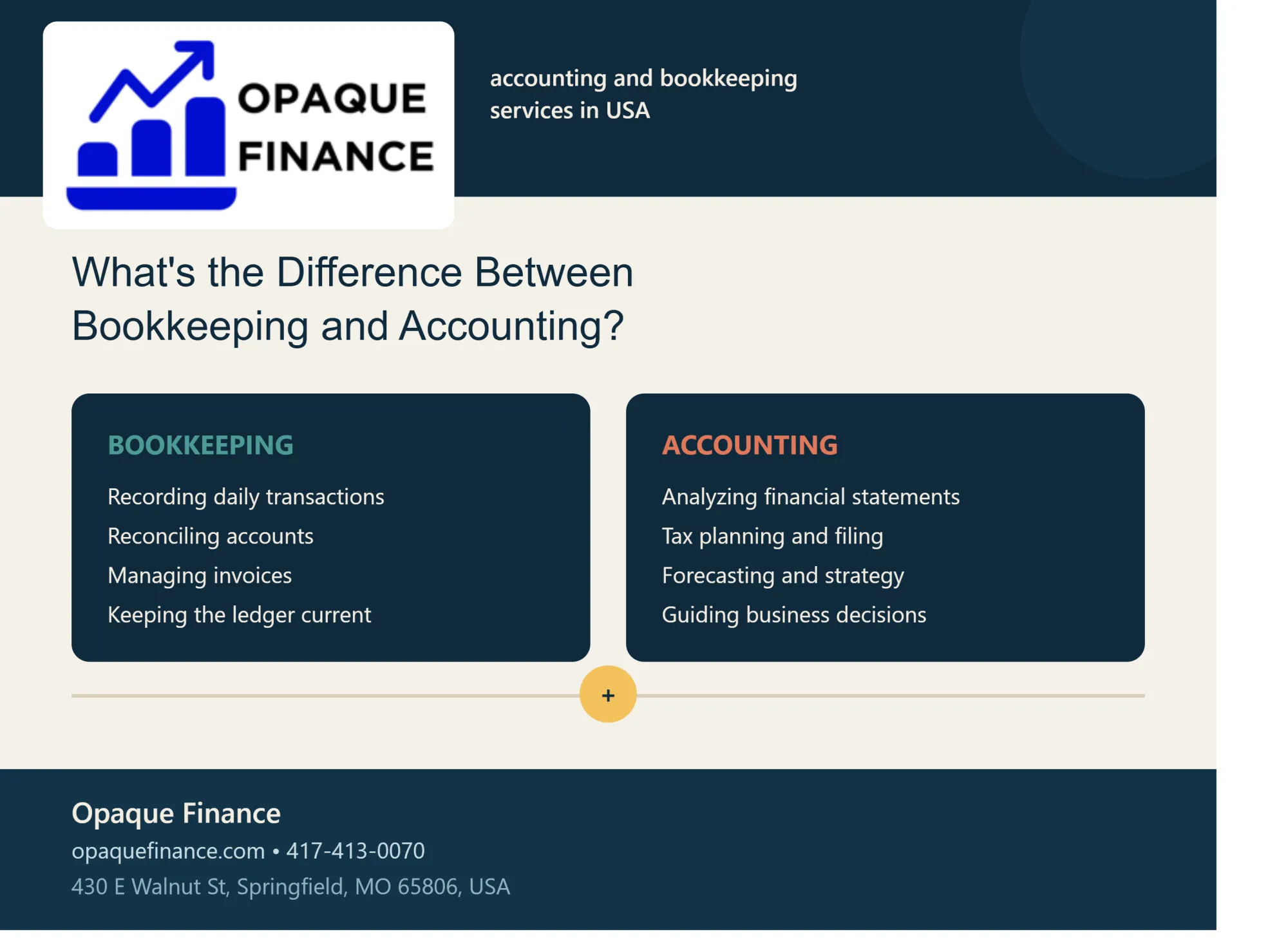
- Separation from (but coordination with) your CPA bookkeeping and tax strategy are related but distinct; the best setups have both functions talking to each other regularly.
Final Thoughts
None of these five signs are dramatic on their own a delayed answer here, a cash flow surprise there. That's exactly what makes them dangerous: they accumulate quietly until the business owner is making six-figure decisions on a foundation that can't actually support them. If two or more of these signs sound familiar, that's usually the point at which bringing in professional, reliable bookkeeping services in USA stops being optional and starts being the thing standing between steady growth and expensive surprises.
Bookkeeping services in Springfield
#Bookkeeping #BookkeepingServices #SmallBusinessBookkeeping #BusinessFinance #Accounting #FinancialClarity #CashFlowManagement #TaxPreparation #BookkeepingTips #BusinessGrowth























Sign in to leave a comment.