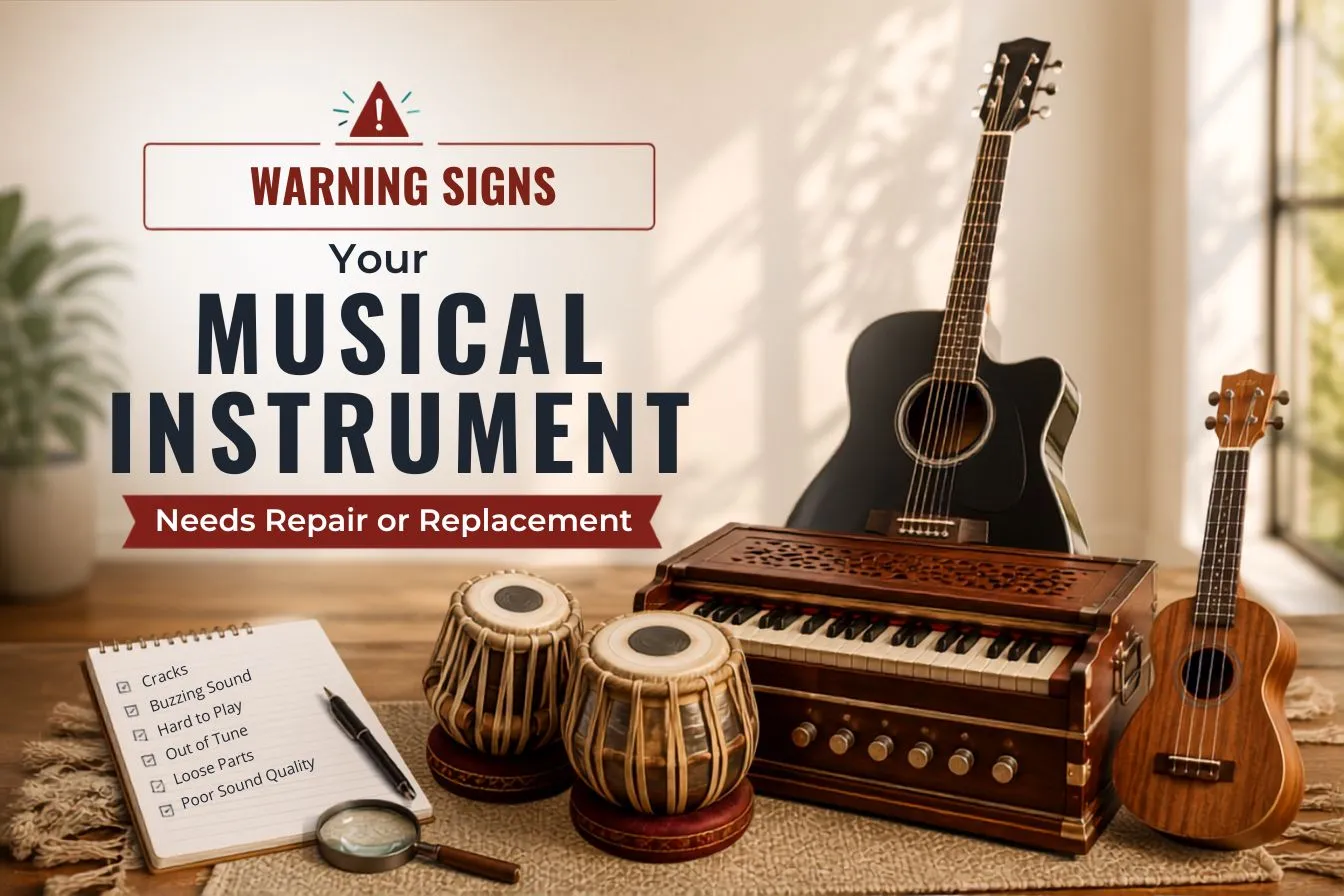

A good musical instrument can last for many years, but regular playing, changing weather conditions, moisture, and normal wear can gradually affect its sound and performance. Whether you play indian musical instruments, perform professionally, teach music, or practice at home, noticing early problems can help you avoid expensive damage.
Not every scratch or minor tuning issue means you need a new instrument. In many cases, proper maintenance or professional repair can restore performance. However, some warning signs indicate that replacement may eventually be the better choice.
Here are five signs every musician should know.
Your Instrument Keeps Going Out of Tune
Frequent tuning problems are one of the easiest signs that something may be wrong.
If an instrument loses its tuning shortly after being adjusted, inspect the strings, tuning pegs, bridge, and other components. Changes in temperature and humidity can also affect wooden instruments.
For example, a sitar may have problems with its tuning pegs or strings, while a harmonium instrument can develop pitch inconsistencies because of reed or airflow-related issues.
Watch for:
- Notes becoming sharp or flat soon after tuning
- Loose or slipping tuning components
- Strings losing tension quickly
- Inconsistent pitch between notes
- Difficulty maintaining tuning during performances
Try replacing worn consumable parts first. If the problem continues, have the instrument checked by a qualified repair professional.
Cracks, Warping or Loose Parts Appear
Minor scratches are normal with regular use, but structural damage should never be ignored.
Check your instrument for:
- Cracks in wooden sections
- Warped surfaces
- Loose joints or fittings
- Broken tuning pegs
- Damaged bridges or frets
- Corroded metal parts
Torn drumheads
A crack can affect vibration, resonance, and overall stability. On string instruments, structural damage can become more serious when the instrument remains under constant string tension.
This is especially important with a handcrafted instrument in India, where different materials and construction methods can influence the instrument's sound and durability.
If you notice structural damage, professional assessment is recommended before continuing regular use.
New Buzzing, Rattling or Unwanted Sounds
Your instrument should produce a clean and consistent sound. Unexpected buzzing, rattling, clicking, or vibrating noises can indicate a loose or damaged component.
The problem may be caused by:
- Loose fittings or screws
- Incorrect string or fret contact
- Bridge movement
- Worn frets
- Internal components becoming loose
Damaged percussion parts
Pay attention to whether the unwanted sound occurs only on particular notes or becomes louder at certain pitches.
For percussion instruments such as tabla or dholak, unusual ringing or buzzing may indicate problems with the drumhead, tension, or other components.
Avoid attempting complicated structural repairs yourself. An incorrect adjustment can sometimes make the original problem worse.
Playing Becomes Uncomfortable or Difficult
A healthy instrument should respond naturally to your normal playing technique. If you suddenly need more effort to produce the same sound, it may be time for an inspection.
Guitar players may notice:
- Excessively high action
- Uneven string tension
- Stiff tuning pegs
- Poor fret response
Keyboard players may experience keys that stick or fail to respond properly.
For harmoniums and other reed-based instruments, airflow problems can also affect performance. Warning signs may include:
- Weak notes
- Uneven volume
- Delayed sound
- Air leakage
- Unusual hissing
Bellows requiring more effort
If basic cleaning and routine adjustments do not solve the issue, professional servicing is a safer option.
Repair Costs Keep Increasing
Sometimes an instrument still works, but maintaining it becomes difficult or expensive.
Consider replacement when:
- The same issue keeps returning
- Replacement parts are difficult to find
- Repair costs are close to the price of a new instrument
- Structural damage has permanently affected the sound
- The instrument no longer suits your playing level
- Reliability has become a concern during performances
However, age alone should not determine whether an instrument needs replacement. A well-maintained older instrument can still perform exceptionally well.
Consider its condition, sound quality, sentimental value, repair cost, and expected lifespan before making a decision.
Special Checks for Tabla, Dholak and Other Percussion Instruments
Percussion instruments require regular attention because their tone depends heavily on the condition and tension of their playing surfaces.
Check for:
- Damaged or cracked drumheads
- Uneven tension
- Loose straps or hardware
- Reduced resonance
- Excessive ringing
- Difficulty achieving the desired pitch
Natural materials can also react to humidity and temperature. Store percussion instruments in a stable environment and protect them from excessive moisture, heat, and sudden temperature changes.
If tuning adjustments no longer restore the expected sound, consult someone experienced in repairing percussion instruments.
Simple Musical Instrument Maintenance Tips
Good maintenance can significantly reduce avoidable repairs.
Clean After Playing
Remove dust, moisture, fingerprints, and residue using cleaning materials appropriate for the instrument. Avoid harsh household chemicals.
Store It Correctly
Use a suitable case or protected storage area. Keep the instrument away from direct sunlight, excessive heat, damp areas, and sudden temperature changes.
Inspect Worn Components
Regularly check strings, reeds, drumheads, straps, tuning parts, and other components that experience frequent use.
Use the Right Accessories
Suitable cases, covers, strings, cleaning products, and tuning tools can make everyday maintenance easier and safer.
Get Professional Servicing When Needed
If you play frequently, occasional professional inspection can identify problems that may not be obvious during normal use.
Repair or Replace: Which Is Better?
Before spending money on a repair, consider three things:
Can the original performance be restored?
If professional repair can bring back the instrument's sound and playability, restoration may be worthwhile.
What will the repair cost?
Compare the complete repair estimate with the price and expected lifespan of a suitable replacement.
Does the instrument still meet your needs?
Your skill level and playing requirements can change over time. Sometimes replacing an instrument is not just about damage—it can also be an opportunity to upgrade.
Final Thoughts
Changes in tuning, visible structural damage, unusual sounds, poor playability, airflow problems, and repeated repair costs are all signs worth investigating.
Regular care can help indian musical instruments and other musical instruments remain reliable and enjoyable for longer. More importantly, early inspection gives you enough information to decide whether repairing the existing instrument or choosing a new one makes more sense.
When buying a replacement, consider sound quality, construction, comfort, materials, durability, servicing options, and your own playing requirements.
Frequently Asked Questions
How do I know when my musical instrument needs repair?
Repeated tuning problems, cracks, unusual sounds, loose components, poor response, or noticeable changes in tone are good reasons to get professional advice.
Should I repair an old musical instrument or buy a new one?
It depends on its condition, repair cost, sound quality, value, and expected performance after repair. An older high-quality or sentimental instrument may be worth restoring.
How often should musical instruments be serviced?
There is no universal schedule. It depends on the instrument type, how often you play, storage conditions, climate, and overall condition.
Can humidity damage musical instruments?
Yes. Excessive moisture or dryness can affect wood, strings, drumheads, adhesives, and other materials. Stable storage conditions can help minimize these effects.
What should I check before buying a new instrument?
Consider sound quality, construction, comfort, tuning stability, material quality, maintenance requirements, spare-part availability, and whether the instrument suits your skill level.























Sign in to leave a comment.