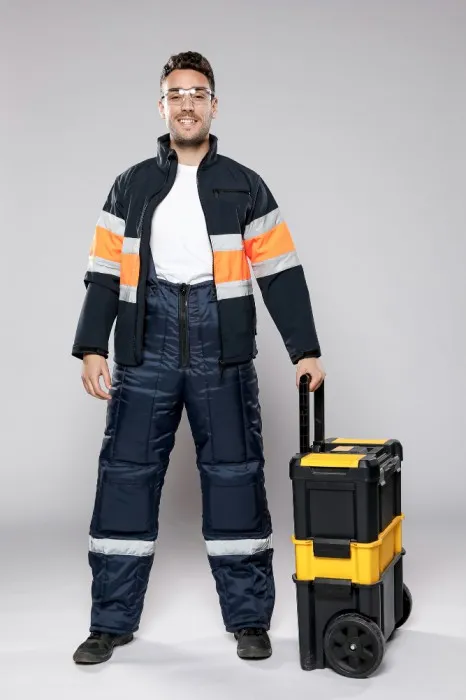

Municipal workwear procurement can look straightforward: determine how many employees need clothing, choose the garments, get pricing, and place the order. In practice, however, municipal workwear programs can become complicated when multiple departments, job requirements, budgets, safety standards, and seasonal conditions are involved.
Small purchasing decisions can create larger operational problems over time. A garment that looks inexpensive on paper may need frequent replacement. A single uniform standard may work administratively but fail to address the needs of different departments. A slow reordering process can leave employees without the appropriate apparel when they need it.
Recognizing these common mistakes can help municipalities build a workwear program that is safer, more efficient, and easier to manage.
1. Buying on Unit Price Alone
Why It Happens
The lowest price is easy to compare. Municipal purchasing processes often require competitive bids, and a lower per-unit price can appear to offer immediate savings.
The problem is that the purchase price tells only part of the story. A lower-cost garment that wears out after several months may ultimately cost more than a higher-quality garment that remains serviceable for several years.
Frequent replacement can also create additional administrative work, including new purchase orders, employee fittings, inventory management, shipping, and disposal of worn garments.
The Fix
Evaluate workwear based on cost per year of service life, not simply cost per garment.
When comparing products, consider:
- Expected service life
- Fabric durability
- Seam and construction quality
- Frequency of replacement
- Repair requirements
- Laundering and maintenance
- Employee comfort and adoption
- Availability of replacement garments
For example, if a $60 garment lasts one year while a $90 garment lasts two years, the more expensive garment may have the lower annual cost of ownership.
The objective is not to automatically choose the most expensive product. It is to identify the garment that provides the best combination of durability, performance, safety, and long-term value.
2. Using One Standard Across All Departments
Why It Happens
A single municipal uniform standard seems easier to administer. One product list, one set of sizes, and one ordering process can simplify purchasing.
But municipal employees do not all perform the same work.
A parks employee working outdoors in summer conditions has different needs from a public works employee working around asphalt and heavy equipment. A water employee may need weather-resistant apparel, while a facilities employee may spend much of the day indoors.
Trying to make one garment work for every department can lead to unnecessary compromises.
The Fix
Use a department-specific approach within a centralized workwear program.
The city can maintain one vendor relationship, procurement structure, and branding strategy while allowing each department to have an approved product line suited to its work.
For example:
- Public Works: rugged pants, reinforced construction, durable outerwear
- Parks & Recreation: lightweight, breathable, flexible garments
- Water & Utilities: weather-resistant layers and appropriate visibility apparel
- Sanitation: durable workwear with visibility features where required
- Facilities: flexible work garments designed for indoor and outdoor maintenance
This approach provides administrative consistency without sacrificing functionality.
Specialty Apparel municipal program is designed around coordinated municipal workwear, allowing departments to have appropriate apparel while maintaining a centralized vendor relationship.
3. Overlooking Seasonal Layering
Why It Happens
Municipal budgets are often planned around a standard annual uniform package. Once that package is established, seasonal requirements can be treated as an additional expense rather than part of the original workwear strategy.
That can create problems when employees suddenly need cold-weather outerwear, rain protection, or lighter garments during extreme heat.
The Fix
Build seasonal layering into the annual workwear plan from the beginning.
Rather than expecting one garment to handle every weather condition, municipalities can develop a layering system that allows employees to adapt to changing temperatures and conditions.
A typical system might include:
- Base layer — comfortable fabric designed for extended wear
- Work shirt or mid-layer — durable and appropriate for the employee's daily tasks
- Insulating layer — fleece, insulated jacket, or similar option for colder conditions
- Outer layer — weather-resistant or waterproof protection where appropriate
- Visibility layer — high-visibility apparel when required for the work environment
Seasonal planning also helps procurement teams forecast demand. Ordering cold-weather gear before winter or lightweight apparel before summer can reduce the need for rushed purchases and improve inventory availability.
4. Treating Hi-Vis Compliance as Optional
Why It Happens
Some municipalities associate high-visibility apparel primarily with roadway construction or traffic crews. As a result, other employees who work near moving vehicles or equipment may not receive the same level of attention during workwear planning.
Visibility requirements should be evaluated based on the employee's actual work environment and applicable safety requirements.
The Fix
Have a knowledgeable workwear provider and municipal safety team formally review which roles require high-visibility apparel and what level or type is appropriate.
Consider employees who may work:
- Near active roadways
- Around moving municipal vehicles
- Near heavy equipment
- During low-light conditions
- In areas where visibility to vehicle or equipment operators is critical
ANSI/ISEA 107 provides performance and design requirements for high-visibility safety apparel and accessories. Municipalities should select garments based on the applicable work environment, hazard assessment, and regulatory requirements rather than simply choosing a brightly colored garment.
A good vendor should be able to explain the intended application of each high-visibility garment and provide the relevant product documentation.
This turns hi-vis selection from a guessing exercise into a documented part of the municipal workwear program.
5. Using Slow, Manual Reordering
Why It Happens
Workwear is sometimes handled like any other municipal purchase. Employees or supervisors realize they need replacement garments, submit a general purchasing request, wait for approval, and then begin the ordering process.
That process can become particularly inefficient when employees need different sizes, departments have different approved garments, or replacement items are needed throughout the year.
The Fix
Use a managed workwear program with dedicated municipal account handling.
A dedicated program can establish approved products, simplify repeat orders, maintain employee or department information, and provide a clear point of contact for questions and replenishment.
The goal is to make a reordering routine rather than turning every replacement into a new purchasing exercise.
Municipalities can also establish guidelines for common replacement situations, such as:
- Normal wear and tear
- Damaged garments
- New employee onboarding
- Changes in employee size
- Department transfers
- Seasonal replacement
- Loss or damage requiring immediate replacement
A streamlined process helps departments maintain adequate inventory without creating unnecessary administrative work.
6. Having No Clear Budget Ownership
Why It Happens
Municipal workwear may be purchased through several departments, each with its own budget and purchasing process. Public works may purchase its own garments, parks may manage a separate apparel budget, and sanitation may handle its own replacement orders.
While decentralized budgets can make individual departments accountable for spending, they can also make it difficult to understand total municipal workwear costs.
The Fix
Create one point of coordination for the overall workwear program, even if individual departments continue to maintain separate budgets.
Central coordination can help the municipality:
- Track total apparel spending
- Standardize approved products
- Negotiate volume pricing
- Identify duplicate purchases
- Coordinate seasonal ordering
- Monitor replacement patterns
- Maintain consistent branding
- Simplify vendor communication
Departments can still control their operational requirements while a centralized coordinator manages the broader program.
This creates a balance between departmental flexibility and municipal-level purchasing efficiency.
Why Fix These Now?
Each of these mistakes may seem relatively minor when viewed individually. The bigger problem is what happens when they compound over time.
Buying inexpensive garments can lead to frequent replacement. Different departments purchasing independently can create inconsistent standards and pricing. Poor seasonal planning can result in emergency purchases. Unclear hi-vis requirements can create safety and compliance concerns. Slow reordering can leave employees without appropriate apparel.
Together, these issues can contribute to:
- Higher total costs
- More administrative work
- Safety and compliance risk
- Frequent emergency purchases
- Inconsistent employee apparel
- Poor inventory visibility
- Frustration for employees and supervisors
A coordinated municipal workwear program addresses these problems by treating apparel as an ongoing operational program rather than a series of individual purchases.
How to Build a Better Municipal Workwear Program
Fixing these mistakes does not necessarily require replacing an entire workwear system overnight.
Municipalities can start with a program audit. Review what employees currently wear, how products are purchased, how often garments are replaced, which departments have different requirements, and where ordering delays occur.
From there, procurement teams can identify the highest-priority improvements.
A practical process might include:
Step 1: Identify Job Requirements
Document the conditions employees encounter, including weather, traffic, equipment, moisture, abrasion, and other workplace exposures.
Consider how frequently employees face these conditions and which tasks create the greatest risk of garment damage or discomfort. This helps ensure apparel choices are based on actual job requirements rather than general assumptions.
Step 2: Review Existing Apparel
Determine which garments are performing well and which products are experiencing premature wear, fit problems, or other recurring issues.
Gather feedback from employees and supervisors to identify common concerns with comfort, durability, sizing, and functionality. Reviewing replacement patterns can also reveal which products may need to be upgraded or replaced.
Step 3: Verify Applicable Standards
Review high-visibility and other protective apparel requirements with the appropriate safety professionals and qualified vendors.
Confirm that selected garments meet the standards and performance requirements applicable to the specific work environment. Documentation and product specifications should also be reviewed before finalizing the apparel program.
Step 4: Create Department-Specific Product Lists
Develop approved apparel packages based on the actual requirements of each department.
Each package can include the appropriate garments, layers, colors, and protective features for the work being performed. Standardized product lists also make ordering easier while ensuring employees receive apparel suited to their roles.
Step 5: Establish Seasonal Plans
Forecast warm-weather, cold-weather, and weather-resistant apparel needs before the relevant season begins.
Planning ahead reduces last-minute purchases and helps maintain adequate inventory throughout seasonal changes. It also gives managers time to review employee needs and adjust quantities before demand increases.
Step 6: Centralize Vendor Management
Use one coordinated relationship where practical while maintaining department-specific products and budgets.
Centralized vendor management can simplify communication, ordering, invoicing, and issue resolution. It can also provide greater visibility into overall apparel spending across departments and locations.
Step 7: Measure Results
Track replacement rates, annual spending, employee feedback, ordering times, and other useful metrics to determine whether the program is delivering better value.
Review these measurements regularly to identify trends and areas for improvement. The results can help management make informed decisions about product quality, purchasing strategies, and future apparel requirements.
What is a typical transition timeline?
A municipal workwear transition can often take approximately 2–4 months, depending on the number of departments, employees, product categories, approval requirements, and procurement processes involved.
A typical process may include an initial program audit, product selection, employee or department review, sizing and sampling, final approval, ordering, and rollout. The exact timeline will vary by municipality and the complexity of the existing program.
.Conclusion
Municipal workwear should not be treated as a simple commodity purchase. The right apparel program can have a direct impact on employee safety, comfort, productivity, procurement efficiency, and long-term costs.
The six mistakes covered here all come back to one central issue: buying workwear without considering the full operational picture. Municipalities can avoid that problem by evaluating total cost of ownership, matching garments to department-specific needs, planning for seasonal conditions, addressing high-visibility requirements, simplifying reordering, and coordinating budgets and vendors.
A well-managed program does not mean every employee wears the same garment. It means every employee gets the right garment for the work they perform, while the municipality maintains a consistent, efficient system for managing the program.
By addressing these common mistakes proactively, cities can build a workwear program that is easier to manage, better suited to field conditions, and more defensible as a long-term investment in their workforce.
Looking to build a more efficient municipal workwear program? Contact us to discuss your department-specific requirements, apparel needs, and procurement goals.
FAQ
How do we audit our municipal workwear program?
Start by reviewing annual workwear spending, replacement frequency, product performance, and purchasing processes by department. Check whether employees in traffic-adjacent or equipment-heavy roles have the appropriate high-visibility apparel, and identify where ordering or replenishment processes create delays.
It can also be useful to collect feedback from employees and supervisors. Their experience can reveal problems with garment durability, comfort, fit, or functionality that may not appear in purchasing records.
Should we fix all six mistakes at once?
Not necessarily. Most municipalities can make improvements incrementally.
A practical starting point is to address the areas with the greatest safety or operational impact. For many organizations, that may mean reviewing high-visibility requirements first, followed by product durability, seasonal planning, and procurement efficiency.
Once the highest-priority issues are addressed, the municipality can gradually standardize other aspects of the program.
Does consolidating vendors save money?
It can. Consolidating appropriate purchases may create opportunities for volume pricing while reducing administrative work associated with managing multiple suppliers.
However, consolidation should not mean forcing every department into unsuitable products. The objective is to coordinate the purchasing relationship while maintaining department-specific apparel requirements.





















Sign in to leave a comment.