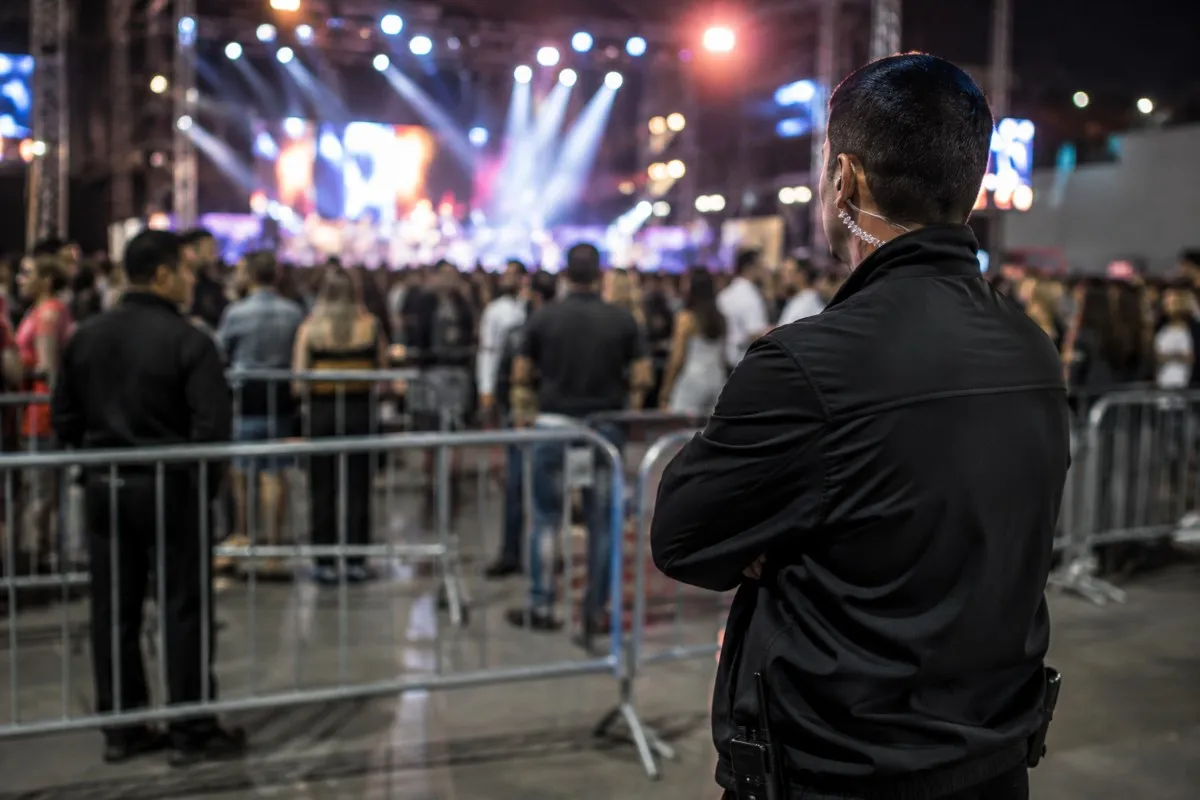

Before you hire security for an event, ask about licensing, guard experience, crowd management capability, communication protocols, and emergency response planning. Choosing the right provider means verifying their track record with similar events, confirming MOM-compliant staffing, and understanding exactly what is included in the service scope — not just the headcount.
Hiring the wrong security team does not just leave gaps in crowd control. It exposes your business to liability, regulatory risk, and reputational damage. Whether you are organising a corporate conference, a product launch, or a large-scale public event in Singapore, the decision to hire security for an event deserves the same rigour you apply to any critical vendor selection. These seven questions will help you cut through generic proposals and identify which provider is actually built for the job.
1. Are Your Security Officers Licensed Under Singapore Law?
This is non-negotiable. In Singapore, all security officers must hold a valid Security Officer Licence issued under the Private Security Industry Act, regulated by the Singapore Police Force (SPF). Any agency you engage must also hold a valid Security Agency Licence.
Ask the provider to confirm their agency licence number and explain how they verify each officer's individual licence before deployment. A reputable company will answer this without hesitation. If they cannot provide clear documentation, walk away.
2. Have You Managed Events of a Similar Scale and Type?
Event security is a specialised discipline. Managing crowd flow at a 500-person gala is fundamentally different from securing a 5,000-person outdoor festival or a high-profile VIP function. The risks, logistics, and required competencies differ significantly.
Ask for specific case studies or references from events comparable to yours in terms of:
- Venue type (indoor, outdoor, mixed-use)
- Expected attendance numbers
- Nature of the event (corporate, entertainment, government, retail)
- Any special risk factors such as alcohol service, celebrity guests, or high-value assets
A provider with relevant experience will already have protocols for the scenarios you are most worried about.
3. What Does Your Service Scope Actually Include?
Many businesses get caught out by proposals that look comprehensive on paper but exclude critical services. Before signing anything, get explicit answers on what is and is not covered.
Key areas to clarify:
- Access control and guest credentialing
- Crowd management and queue monitoring
- VIP escort and close protection
- Bag and asset screening
- Incident documentation and post-event reporting
- Coordination with venue security teams
If these are listed as add-ons rather than standard service components, factor that into your evaluation and budget.
4. How Will Your Team Communicate During the Event?
Poor communication between security personnel is one of the leading causes of incident mismanagement at events. Ask how the team will stay connected — whether through radio, earpieces, mobile devices, or a central command point — and who the primary point of contact will be for your team throughout the event.
You want a dedicated supervisor on-site, not a guard who is also managing communications while handling a crowd entry point. Clarity on command structure matters more than headcount.
5. What Is Your Emergency Response Protocol?
Does the Provider Have a Clear Incident Management Plan?
Ask the provider to walk you through their response process for common scenarios: a medical emergency, an altercation, an unauthorised entry, or an evacuation. A competent team should have documented Standard Operating Procedures (SOPs) and trained officers who can act without waiting for instructions.
Also confirm whether their officers are trained in first aid. In Singapore, the Singapore Civil Defence Force (SCDF) recommends that event organisers ensure first aid resources are accessible on-site. Having security officers with first aid certification adds a practical layer of safety.
6. How Do You Vet and Train Your Security Officers?
The licence tells you an officer is legally permitted to work. It does not tell you whether they have been trained for your specific event environment. Ask about the provider's internal training programme beyond the mandatory requirements.
Strong providers invest in training that covers:
- De-escalation and conflict resolution
- Customer-facing professionalism
- Situational awareness techniques
- Event-specific briefings before each deployment
Also ask about their officer vetting process — background checks, employment history verification, and how they handle last-minute substitutions. An officer deployed without a proper briefing is a liability, not an asset.
7. What Are the Contract Terms, and What Happens If Something Goes Wrong?
This question separates professional security firms from transactional ones. Before you commit, review:
- Liability coverage and insurance documentation
- Cancellation and amendment policies
- What constitutes a breach of service and how it is handled
- Whether there is a contingency plan if a guard does not show up on the day
A trustworthy provider will have clear, written answers to all of these points. Vague verbal assurances are not good enough when your event is on the line.
Quick Comparison: What Strong vs. Weak Event Security Proposals Look Like
| Evaluation Area | Strong Provider | Weak Provider
|
|---|---|---|
| Licensing | Provides licence numbers upfront | Vague or asks you to trust them |
| Experience | Shares specific, comparable event references | Gives generic claims of "years of experience" |
| Service scope | Detailed, itemised service breakdown | Broad package descriptions with no specifics |
| Emergency protocols | Written SOPs available on request | Relies on officer discretion |
| Communication | Named on-site supervisor with clear comms plan | No defined command structure |
| Contracts | Clear liability terms and contingency clauses | Minimal documentation, verbal commitments |
Make a Confident Decision — Not Just a Convenient One
Most event security issues do not happen because a business chose the cheapest option. They happen because the evaluation process was rushed. These seven questions give your team a practical framework to assess any provider before committing.
If you are looking for a security partner with proven event experience in Singapore, Enfort Security offers professional event security services tailored to your event's scale, risk profile, and operational requirements. Explore their full capabilities at Enfort Security.
Frequently Asked Questions
What licence does a security company need to operate legally in Singapore?
In Singapore, security agencies must hold a valid Security Agency Licence issued under the Private Security Industry Act, regulated by the Singapore Police Force. Individual security officers must also hold a Security Officer Licence before they can be legally deployed at any event.
How many security guards do I need for an event in Singapore?
The number depends on event size, venue layout, risk level, and access points. As a general guideline, one security officer per 50–100 guests is a common starting point, but a professional security company should conduct a site assessment and provide a tailored recommendation based on your specific event.
What is the difference between event security and general security guarding?
Event security focuses on crowd management, access control, emergency response, and guest safety within a time-bound setting. General security guarding typically involves static posts or patrol duties. Event security requires specialised training in high-density crowd situations, which not all security officers are equipped to handle.




















Sign in to leave a comment.