

India's fifth National Family Health Survey found that 76.4% of children aged 12 to 23 months were fully vaccinated, which means roughly one in four was not. Missed dates are rarely about carelessness. Often, the card is at the grandparents' home, and the doctor's note is in Mom's bag. A baby vaccination reminder app for new parents keeps everything in one place.
So how do you keep a child's medical information organized when several people share the care? Keep one master record, update it the same day, give every caregiver access, log medicines with times, store allergies and doctor contacts where anyone can find them, use shared reminders, and review it together once a week. That is the short answer. The rest of this post shows how.
In many Indian homes, a baby is looked after by parents, grandparents, an aunt, a nanny, or a creche. Everyone means well, yet each person holds a small piece of the story. One knows about the fever, another gave the syrup, a third took the child for the last shot. When pieces go missing, doses get repeated, vaccines get delayed, and doctors get half answers.
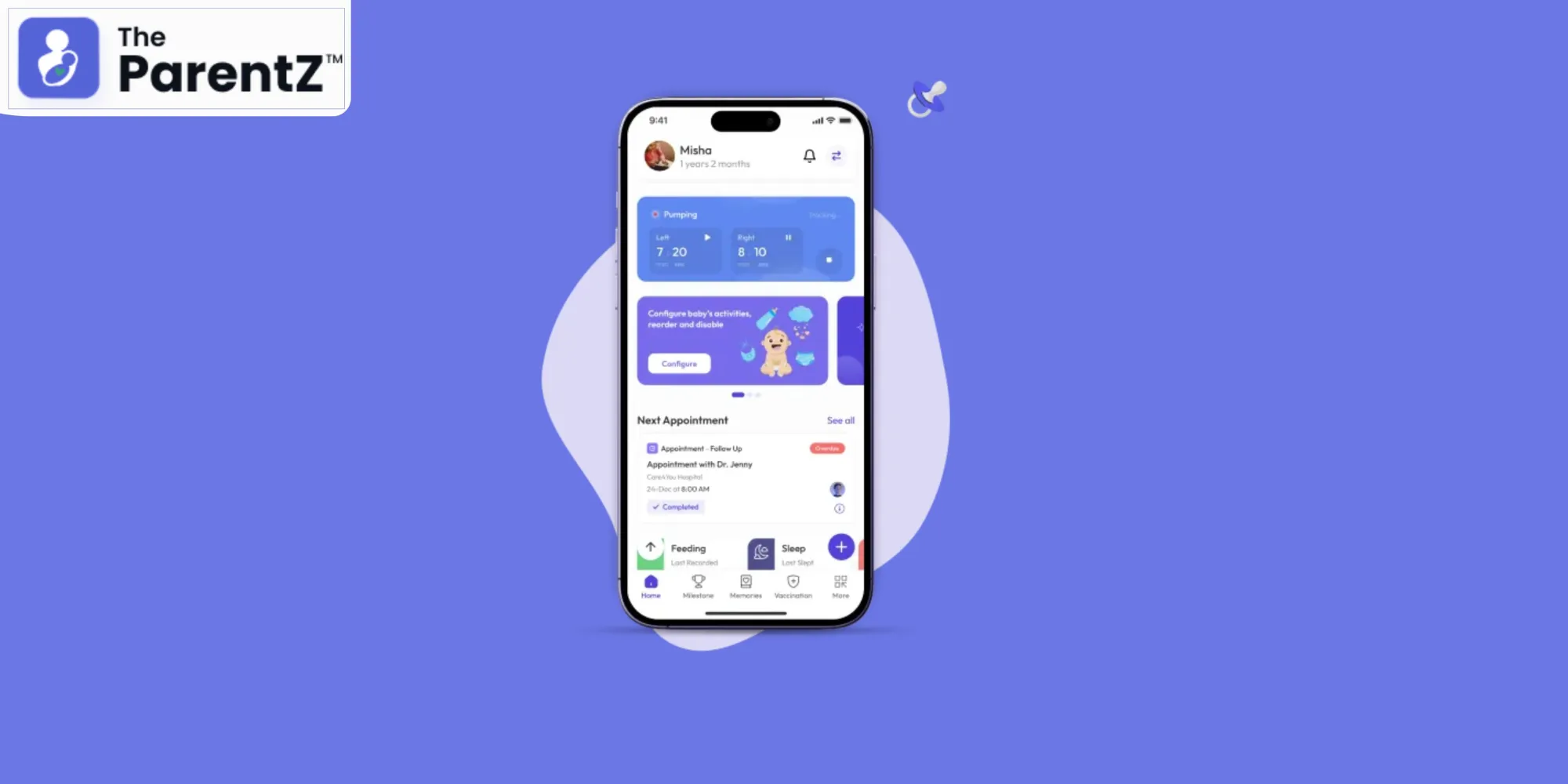
Take the baby vaccination schedule as an example. A child needs shots at birth, then at 6, 10, and 14 weeks, and again at 9 months and beyond, under the national program and the Indian Academy of Pediatrics. That is a lot of dates to track. A shared system, like the one in The Parentz app, makes it far easier.
Why Is It So Hard to Keep a Child's Medical Records Together?
Think of a group chat where five people each type in a different style, and half the messages are deleted. Nobody can find the one thing that matters. A child's health information often lives like that: a paper card here, a photo there, a doctor's slip in a drawer.
The Ministry of Health and Family Welfare gives each mother a Mother and Child Protection (MCP) card, and many families also use the digital U-WIN portal for immunization records (MoHFW). Both are helpful. But a card sitting in one cupboard cannot help a caregiver standing in another city. The trick is to make records easy for everyone to reach.

What Are the 7 Ways to Keep Medical Information Organized?
You do not need fancy tools. You need a clear plan that every caregiver follows. Start with number one and add the rest as you go.
1. Why Should You Create One Master Record?
Pick one place where all medical facts live: the child's name, date of birth, blood group, weight, vaccines, illnesses, and doctor visits. Imagine a school report card. If every teacher kept their own marks in a different notebook, nobody would know the final result. One master record is your report card.
2. How Do You Track Vaccines So Nothing Gets Missed?
Write each shot with the date given, the vaccine name, the clinic, and the next due date. Then take a photo of the page. A baby vaccination reminder app for new parents can send alerts before each date, so you are not counting weeks on a calendar. Reminders are like an alarm clock for health.
3. Who Should Have Access, and How Do You Share It?
Give access to anyone who looks after the child alone, even for a few hours: the other parent, grandparents, a trusted nanny. In a joint family, one person often takes the child to the clinic while another keeps the file. Shared access means the person at the clinic always has the facts. Share only what each person needs.
4. How Can You Log Medicines Without Mixing Up Doses?
Every time someone gives medicine, they write the name, the time, and who gave it. This stops the "Did you already give it?" confusion that leads to doubled doses or missed ones. Follow the dose and gap your doctor prescribed. Never guess a dose from memory or from the family group chat.
5. Where Should Allergies and Emergency Details Live?
Keep a one-page emergency sheet: allergies, current medicines, blood group, the pediatrician's number, the nearest hospital, and a parent's phone number. Stick a copy on the fridge and save one on every caregiver's phone. In an emergency, nobody wants to dig through drawers. This is the page a stranger could use.
6. How Do Shared Reminders Help Busy Families?
Set reminders for vaccines, follow-up visits, and medicine courses. Send them to more than one person so that if one person is busy, another catches it. Picture a relay race: if one runner drops the baton, the next one still has a chance. Shared reminders are the second runner.
7. What Is the Weekly Five-Minute Check-In?
Once a week, sit down together, perhaps on Sunday evening with chai, and read the record. Ask three things: Did anything new happen? Is any date coming up? Is anything missing? This small habit catches mistakes early and keeps everyone on the same page, literally.
What Should a Child's Medical Record Include?
Use this checklist to see if your record is complete. Each row has a reason, so you can skip nothing important.
| What to keep | Why it matters |
|---|---|
| Birth details and weight | Doctors use them to measure growth |
| Vaccine dates and next due dates | Prevents missed or repeated shots |
| Allergies and past reactions | Protects the child in emergencies |
| Illness and fever notes | Helps the doctor see patterns |
| Medicines, dose, time, giver | Stops double or missed doses |
| Doctor and hospital contacts | Saves time when you are stressed |
| Photos of prescriptions and reports | Gives a backup if papers are lost |
The table works like a packing list for a trip. If an item is missing, you notice before you leave, not after the train has gone.
How Does an App Compare With Paper Records?
Paper is familiar, and the MCP card should always stay safe. But paper alone has limits. Here is a simple side-by-side look.
| Feature | Paper card or notebook | Vaccination reminder app |
|---|---|---|
| Reaches every caregiver | No, one copy | Yes, shared |
| Warns before due dates | No | Yes, reminders |
| Safe if lost or damaged | Risky | Stored digitally |
| Easy to show the doctor | Carry it along | On your phone |
| Records medicines and notes | By hand | Quick entries |
The gap is not about paper being bad. It is about reach and reminders. Use both: keep the MCP card in a safe place, and let the app do the remembering and sharing.
How Do You Set This Up in One Evening?
You can finish the basics in about an hour. Follow these steps:
- Gather every paper: the MCP card, discharge summary, prescriptions, and reports.
- Take clear photos and save them in one folder or app.
- Enter your child's vaccines done so far and the next dates.
- Add allergies, doctor names, and the emergency sheet.
- Invite the other parent and one more caregiver.
- Turn on reminders for the next two vaccines.
- Pick a weekly check-in time and put it on the calendar.
Do not aim for perfect. A record that is 80% complete and shared beats a perfect record that only you can see.
What Should You Do When a Caregiver Gives Wrong Information?
Stay calm and fix the record, not the person. Say, "Let's add it here so we all see it." Most mistakes happen because someone was guessing in a hurry, not because they did not care. A friendly system makes guessing unnecessary.
Conclusion
A child grows up in the hands of many loving people. Their health records should not be stuck in just one of those hands. Pick one master record, share it, and review it weekly, and the next time someone asks, "When was the last shot?" you will have the answer in seconds. The Parentz is here to help families do exactly that, so that care passes smoothly from one set of hands to the next.
FAQs
Why is it important to keep a child's medical records in one place?
One place means every caregiver and doctor sees the same facts. That cuts mistakes like repeated medicines or missed vaccines.
What is the best way to share a baby's health information with grandparents?
Use a shared app or a printed emergency sheet. Give them the doctor's number and allergy list, and show them how to log medicines.
Can I keep vaccination records on my phone instead of paper?
Yes, but keep the original MCP card too. Digital copies are great for reminders and sharing, and paper is your official backup.
How early should I set vaccine reminders?
Set an alert a week before and another a day before each due date. That leaves time to book a slot at the clinic.
Is a baby vaccination reminder app for new parents safe?
Choose an app that asks for permission before sharing and lets you control who can view the data. Read its privacy policy before you add details.
What should I do if we missed a vaccine date?
Call your pediatrician or health center. Usually, the next dose can be given without starting over, but your doctor will advise you.



















Sign in to leave a comment.