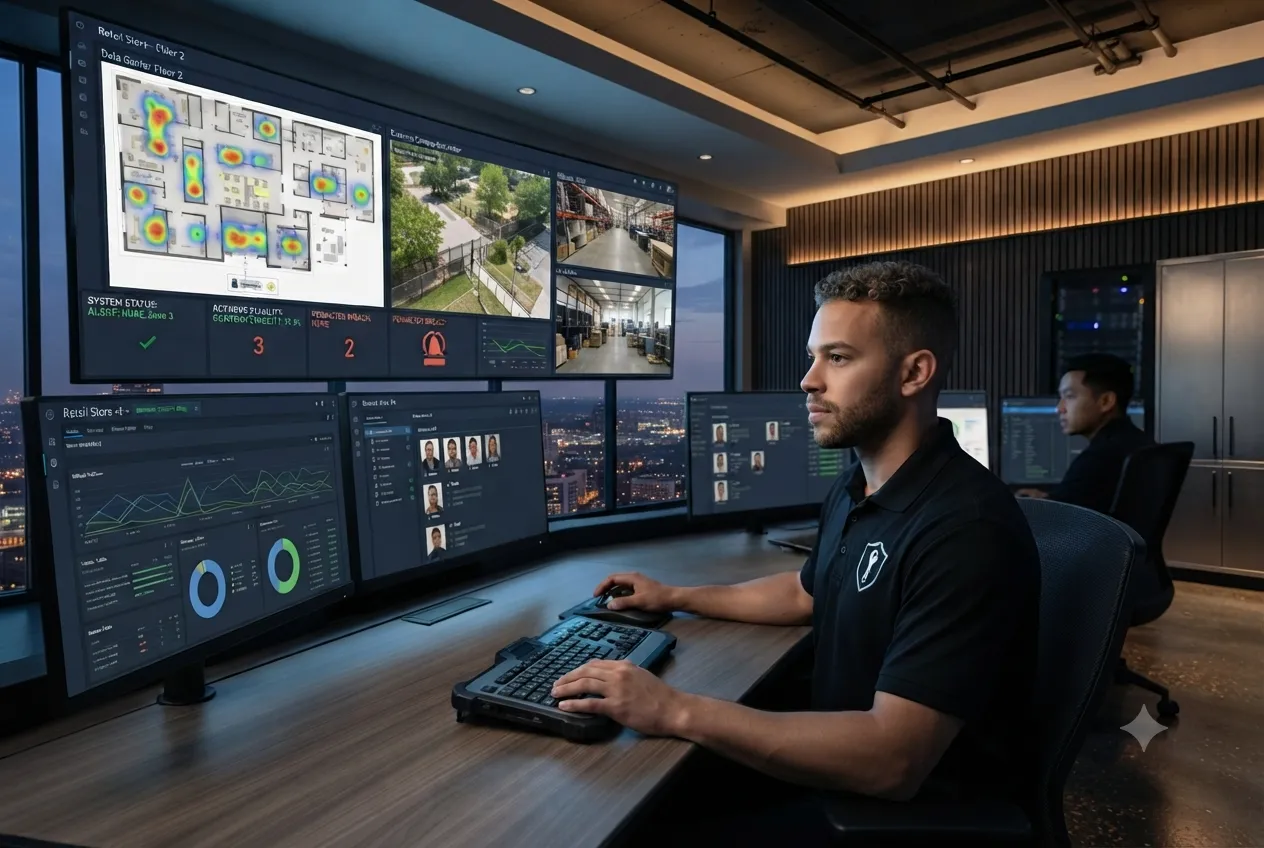

Multi-site security management means overseeing access control, video surveillance, and monitoring across several locations from one connected system, rather than managing each facility separately. For business owners running more than one location, whether that's a school district, a regional healthcare network, or a logistics company with several warehouses, this centralized approach has become the standard rather than the exception. Cobalt FTS builds multi-site security solutions for organizations managing multiple facilities across North Texas.
Why Multi-Site Security Looks Different From Single-Building Security
A single building's security setup is relatively straightforward: one set of doors, one camera system, one alarm. Managing security across multiple sites introduces a different set of problems entirely. Each location may have its own entry points, staff schedules, and risk profile, and without a centralized system, a business owner ends up checking multiple separate logins just to get a full picture of what's happening across the organization.
Enterprise security systems solve this by connecting every location's access control, video, and alarm systems onto one platform. Instead of a facility manager reviewing each site independently, an owner or security lead can see activity across every location from a single dashboard.
What Centralized Security Monitoring Actually Provides
Centralized security monitoring gives a business owner a few specific advantages over managing each site separately:
- One point of visibility – reviewing access activity, camera footage, and alerts across every location without logging into separate systems
- Consistent policy enforcement – applying the same access rules and safety standards at every site instead of location-by-location variation
- Faster response coordination – routing an alert from any facility to the right person immediately, regardless of which location triggered it
- Simplified reporting for compliance – producing one consistent record across all sites rather than compiling separate reports from each
Because access control and other core components run on IP-based systems, they connect to a business's existing network infrastructure, which is what makes true centralization possible in the first place. We design our systems to connect critical security functions into a client's network, so a district office managing several schools or a company managing several warehouses can operate from one streamlined system rather than several disconnected ones.
Cloud-Based Security as the Backbone of Multi-Site Management
Cloud-based security is what makes multi-site security management practical at scale. Rather than housing separate servers or control panels at every location, a cloud-connected platform lets a business owner manage access permissions, review footage, and respond to alerts from anywhere, without needing to be physically present at any single site.
We offer cloud-based security and security automation and monitoring as part of our multi-site solutions, which together reduce how much manual oversight a business owner or security team needs to provide day to day. Automation plays a growing role here too. Instead of a team manually watching every camera feed across every location, an integrated, cloud-connected system can flag anomalies and route alerts automatically, which matters more as the number of managed sites grows.
Common Multi-Site Security Challenges in 2026
A few recurring challenges show up for business owners managing multiple locations:
- Inconsistent systems across sites – older locations may run outdated, disconnected equipment while newer sites use modern platforms, creating gaps in coverage
- Delayed incident response – without centralized alerts, a problem at one site can go unnoticed longer than it should
- Difficulty documenting compliance – regulated industries need consistent access records across every location, which is difficult to produce from disconnected systems
- Rising expectations from stakeholders – boards, parents, patients, and staff increasingly expect visible, modern security standards at every site an organization operates, not just its main location
Multi-site security management in 2026 is less about adding more cameras and more about making existing systems talk to each other consistently across every location.
Building a Multi-Site Security Strategy That Scales
A strong multi-site security strategy starts with the same foundation as a single-building setup: access control, video surveillance, intrusion detection, and alarm systems. The difference is designing those components from the start to integrate across locations rather than retrofitting connections later.
We've built and maintained these systems for schools, healthcare facilities, manufacturers, and defense contractors throughout North Texas since 1998, using our own in-house technicians rather than subcontracting the work. For an organization managing multiple sites, that in-house consistency matters, since the same team that designs a system for one location can maintain it, and every other connected location, without handing the relationship off to a different vendor.
Request a walkthrough of how centralized monitoring would work across your locations.



























Sign in to leave a comment.