
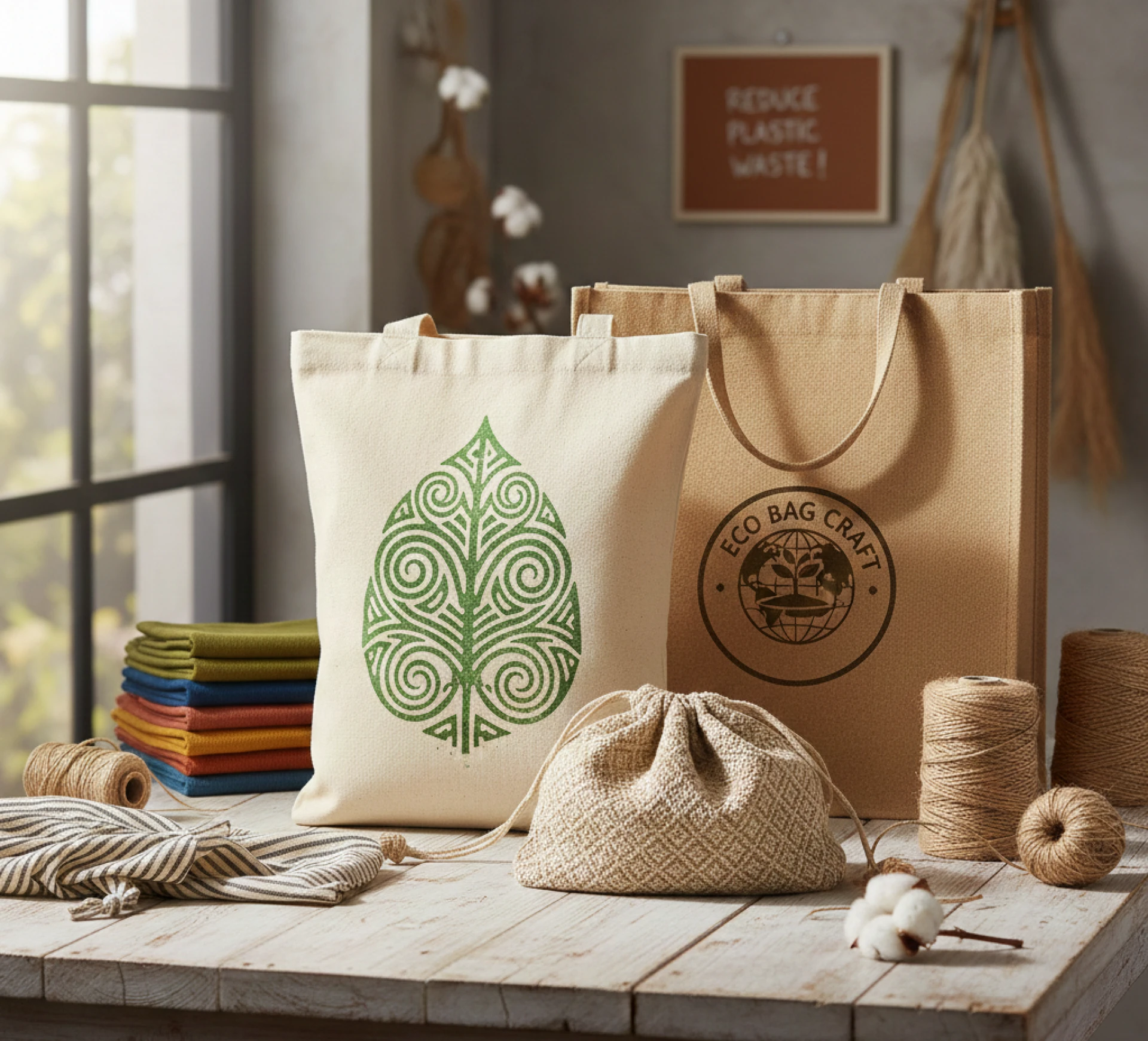
India is an important sourcing destination for businesses looking for reusable and natural-fibre bags. Jute, cotton and juco bags are used for retail packaging, promotional campaigns, corporate gifting, hospitality and everyday shopping. However, importing eco-friendly bags successfully requires more than choosing a product and placing an order. Buyers need to evaluate materials, specifications, customization, quality, pricing, documentation and shipping before confirming a bulk purchase.
Choose the Right Bag Material
Start by identifying the purpose of your bags. Jute is suitable when strength, natural texture and cost efficiency are important. Cotton bags offer a smoother surface and work well for detailed branding, retail packaging and lifestyle applications. Juco, a blend of jute and cotton, combines the natural appearance of jute with a refined finish.
Define Your Product Specifications
Before requesting quotations, prepare a clear product brief. Include dimensions, GSM, material, colour, handle type, printing requirements, quantity and packaging preferences. If you have an existing design, provide artwork along with logo placement and colour references.
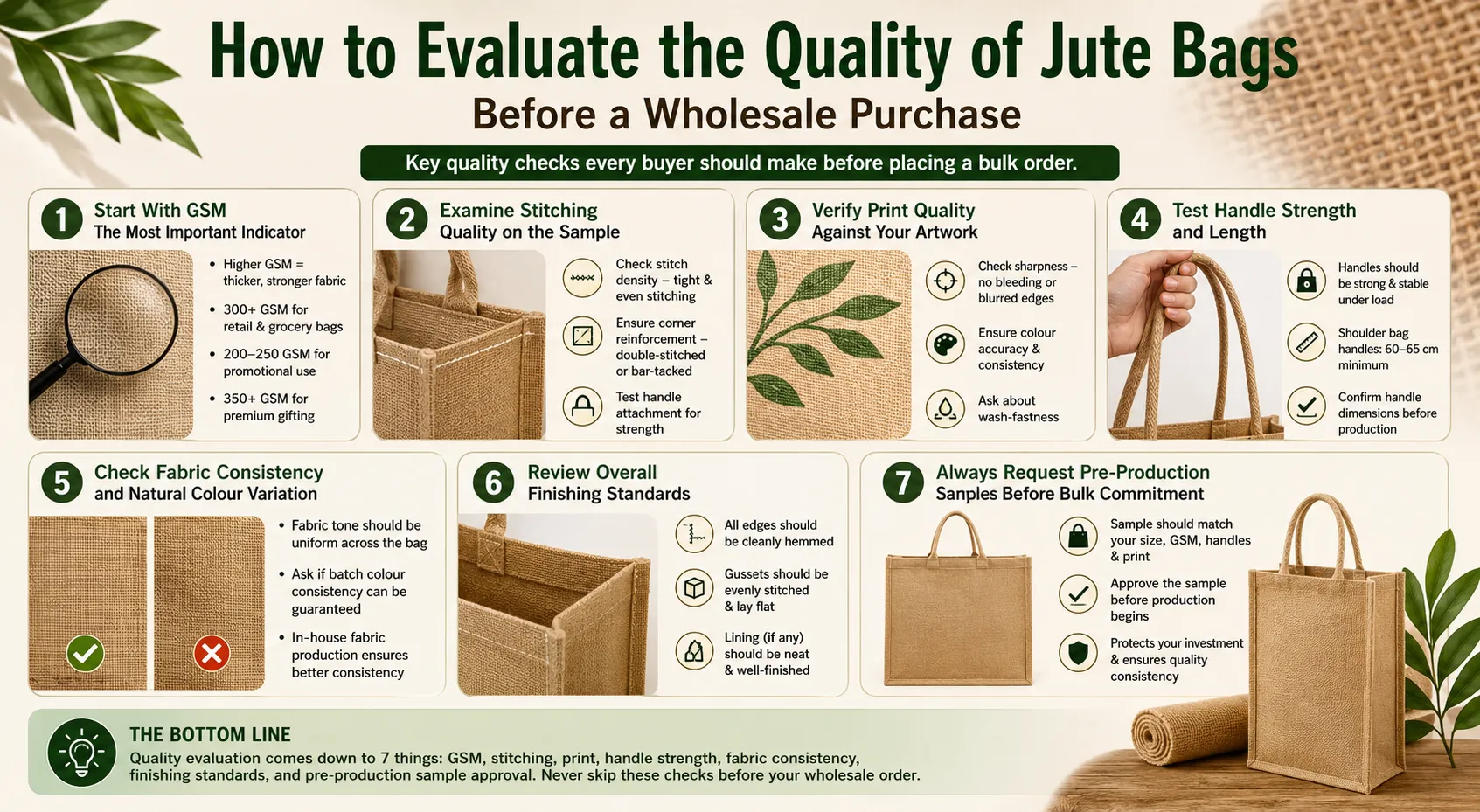
For custom orders, ask for a physical sample before approving bulk production. This lets you check dimensions, stitching, fabric texture, printing quality and overall appearance.
Evaluate the Manufacturer
Choosing the right supplier is an important part of international sourcing. Look for a manufacturer with relevant production experience, quality-control processes and established export capabilities. A direct manufacturer can provide greater visibility into production and customization than a supplier that forwards orders to another factory.
Clarify whether the quoted price includes printing, packaging and customization.
Sara International manufactures jute, cotton and juco bags in Kolkata and exports internationally. Its process includes design and development, sampling, production, packing and shipment, giving buyers a structured path from specification to delivery.
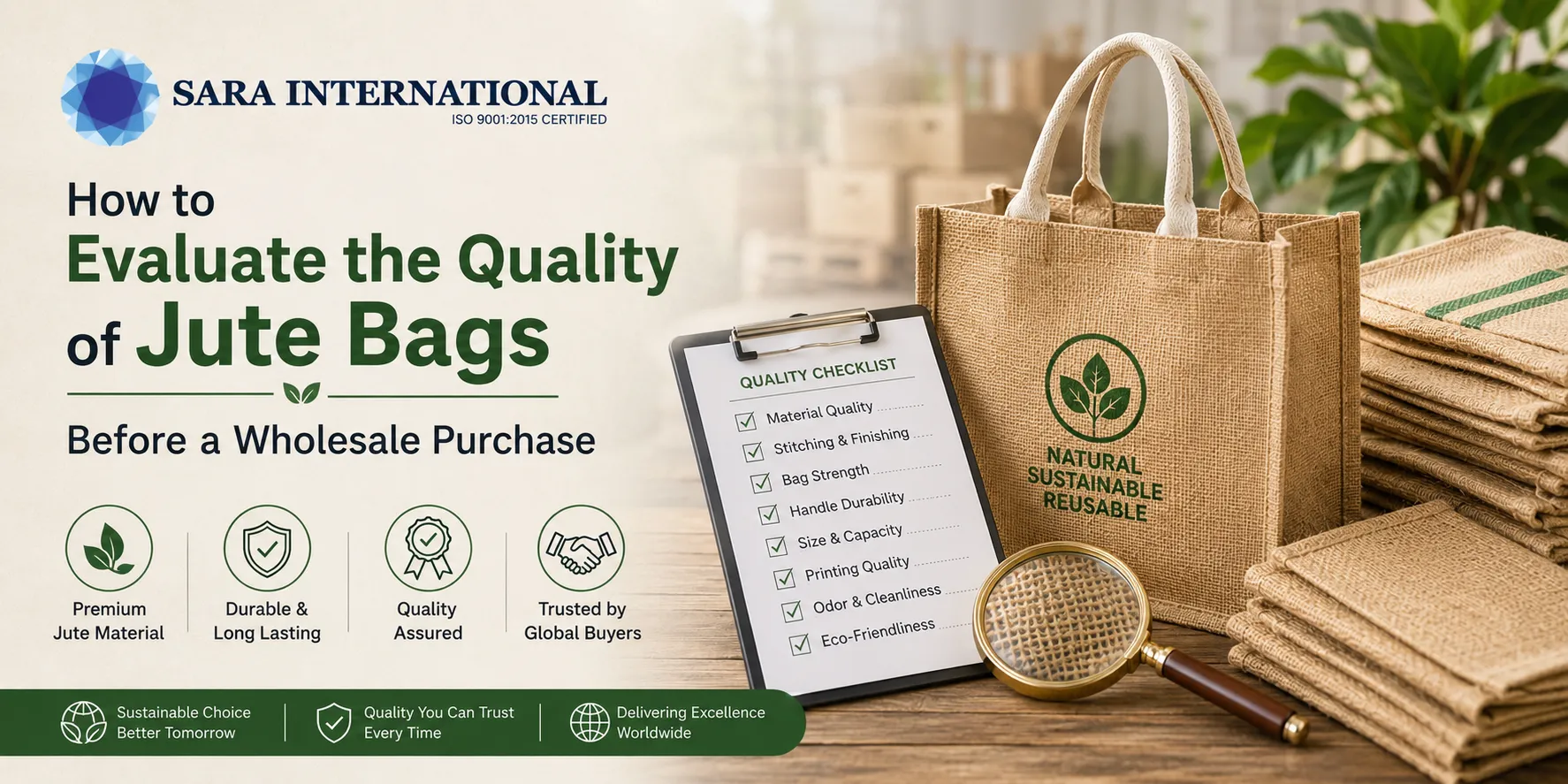
Check Quality Before Bulk Production
Do not rely only on product photographs when placing a large international order. Request samples and compare them against your approved specifications. Check stitching, seams, handles, fabric consistency, dimensions, print alignment and finishing.
Natural-fibre products can have slight variations in texture or colour because of their material characteristics. However, the finished product should still meet agreed quality standards. If sustainability claims matter to your customers, request relevant certification or documentation and verify that it applies to the specific material and product.
Understand Pricing and Minimum Order Quantities
Compare quotations based on the same specifications. A lower unit price may not mean a lower overall cost if another supplier includes better packaging, printing or shipping terms.
Ask for a detailed quotation covering product price, customization, sample charges, packaging, shipping terms and payment conditions. Confirm the minimum order quantity as well. Larger orders may receive volume-based pricing.
Clarify Shipping and Trade Terms
Shipping arrangements should be discussed before placing the purchase order. Depending on order size and urgency, buyers may consider sea freight for larger consignments or air freight for time-sensitive requirements. Courier services can be suitable for samples or smaller shipments.
Clearly agree on the applicable Incoterm, delivery location, freight responsibility and insurance arrangements. A freight forwarder or customs broker in your destination country can help manage import procedures.
Prepare for Customs and Documentation
Import requirements vary by destination country and product classification. Buyers should check customs rules, tariff classifications, duties, taxes, labelling requirements and restrictions before shipment.
Commercial documentation may include a commercial invoice, packing list, shipping documents and certificates or declarations where applicable.
Plan Production Timelines
Custom bags require time for artwork approval, sampling, material sourcing, production, quality checks, packing and shipment.
Ask the manufacturer for a realistic production schedule and identify approval points that could affect the timeline.
Build a Long-Term Supplier Relationship
A reliable sourcing relationship can make future orders easier and more consistent. Keep approved samples, specifications, artwork files and quality requirements on record. This approach also makes repeat orders easier because approved specifications can be reused.
For buyers seeking natural-fibre packaging from India, jute bags can be considered for reusable retail, promotional and gifting applications. Buyers can also review the company’s bag manufacturing process to understand the stages involved from sampling through shipment.
Conclusion
Importing eco-friendly bags from India can be straightforward when buyers approach sourcing with clear specifications and proper checks. Selecting the right material, approving samples, evaluating the manufacturer, confirming commercial terms and preparing documentation are essential steps. With careful planning and communication, businesses can build reliable supply chains for reusable jute, cotton and juco bags while maintaining consistent quality across bulk orders.

























Sign in to leave a comment.