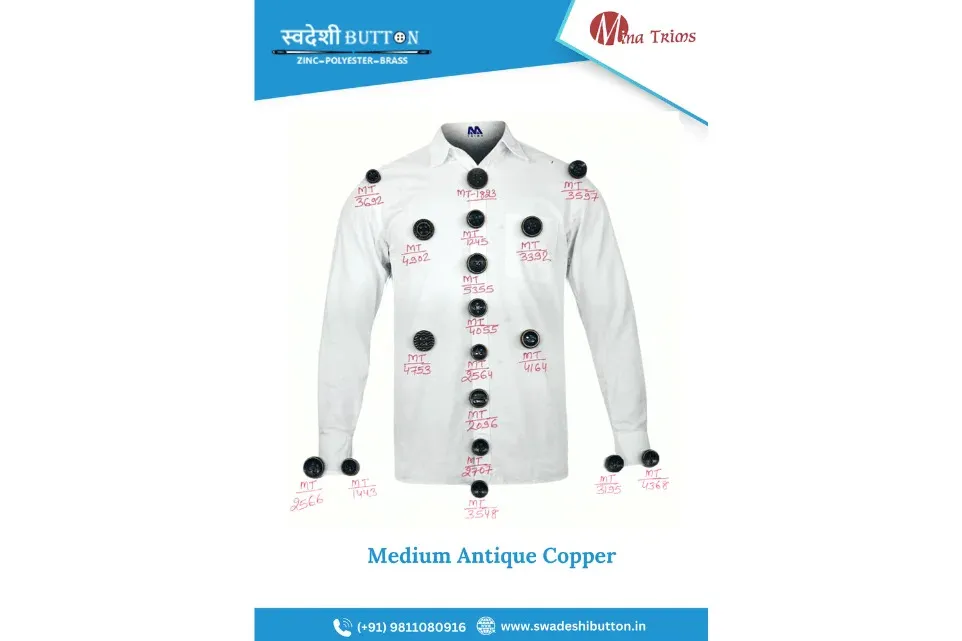

Sourcing buttons for a garment collection is rarely as simple as picking a color and placing an order. For brands producing shirts, casualwear, kidswear, or budget fashion lines at volume, the manufacturing process behind the button matters just as much as its appearance — it determines whether the color holds after twenty washes, whether thousands of units arrive dimensionally consistent, and whether a supplier can actually deliver on an export timeline. This guide walks through how polyester buttons are produced, what makes the material such a practical choice for high-volume garment production, and what to verify before committing to a manufacturing partner.
Why Polyester Remains the Practical Choice
Every button material makes a trade-off between cost, durability, and design flexibility. Polyester consistently wins on all three fronts for a huge share of garment categories. It's inexpensive to produce at scale compared to metal or natural materials like horn and shell. It holds color extremely well when manufactured correctly, resisting the fading and cracking that cheaper synthetic alternatives are prone to. And it can be shaped, layered, and finished in nearly unlimited combinations — solid colors, pearl effects, multi-layer marbling, and novelty shapes — giving designers room to match buttons precisely to a season's aesthetic.
This combination of affordability and versatility is exactly why polyester button manufacturing has become one of the highest-volume categories in the entire button supply chain.
Walking Through the Manufacturing Process
Producing a polyester button involves more steps than most buyers assume. Here's the typical sequence:
Resin preparation and pigmenting. Manufacturing starts with preparing polyester resin and blending in pigments to hit the exact shade specified by the buyer. This step determines color accuracy across the entire batch, and any inconsistency here shows up immediately once buttons are attached to matching fabric.
Forming sheets or rods. The colored resin is formed into sheet or rod stock, depending on the button style being produced. For multi-layer designs — the marbled or striped patterns seen on many fashion buttons — different colored layers are bonded together at this stage before cutting begins.
Precision cutting. Buttons are cut to size from the formed stock. Consistency in this step is what ensures every button in a shipment fits standard buttonholes and matches the specified diameter, which matters enormously on large production runs where even small variance compounds across thousands of units.
Drilling and detail work. Holes are drilled to the required configuration — two-hole, four-hole, or shank style — and additional detailing like rim shaping or novelty patterns is applied for specialty designs, including children's wear.
Surface polishing and finishing. Depending on the design brief, buttons receive a glossy, matte, pearl, or textured finish. This is also where laminated and multi-layer buttons get their protective top coat for shine and scratch resistance.
Final inspection. Every batch should be checked for color match, hole alignment, edge quality, and dimensional accuracy before it ships. This is the step that separates a manufacturer you can trust with a container-scale order from one that will cause headaches on your production line.
Where Polyester Button Manufacturing Shines: Design Range
The biggest advantage of working with an experienced polyester manufacturer is design flexibility. A strong catalog typically includes:
- Multi-layer sheet buttons with marbled or striped visual effects
- Pearl and ondulation finishes that replicate premium natural materials at lower cost
- Imitation horn styles for a natural aesthetic without sourcing real horn
- Bright, novelty-shaped buttons designed specifically for children's clothing
- Custom branding options, including logo embossing for private-label lines
This range is what allows fashion brands to refresh their button styling every season without the longer lead times and higher costs that come with metal or natural-material alternatives.
Due Diligence Checklist Before You Order
Before placing a bulk or export order, it's worth running through a short checklist with any prospective manufacturer:
Ask about color-fastness testing. Buttons that fade or bleed color after a handful of washes reflect a manufacturing shortcut, not just bad luck. A manufacturer confident in their process should be able to speak to how they test for this.
Request samples first. No bulk order should proceed without sample approval. This single step catches most quality issues before they become expensive problems across a full production run.
Confirm custom design capability. If your brand needs logo embossing, unique shapes, or specific color matching, ask about minimum order quantities for custom work upfront rather than assuming it's included.
Check consistency claims against real batch sizes. A manufacturer should be able to demonstrate consistency not just on small trial runs, but across the scale of order you're actually planning to place.
Verify export documentation. For buyers in Nepal, Bangladesh, or other international markets, confirm that any required compliance or safety documentation is available before finalizing an order.
Sourcing the Rest of Your Button Requirements
Polyester rarely covers an entire seasonal collection on its own. Brands typically need metal buttons for structural pieces like denim and outerwear, alongside polyester for shirts, dresses, and casualwear. Working with a manufacturer that also produces zinc casted buttons and brass sheet trims, rivets, and jeans buttons means a brand can source its entire button requirement — across multiple materials — from a single, quality-controlled vendor instead of managing several suppliers with different lead times and quality standards.
Final Thoughts
Choosing a polyester button manufacturer isn't just about comparing price lists. The manufacturing process — from resin pigmenting through cutting, finishing, and final inspection — determines whether a bulk order arrives consistent and durable, or riddled with color mismatches and dimensional variance. Brands and export buyers who ask the right questions upfront, request samples, and verify documentation put themselves in a far stronger position than those choosing on cost alone.
Swadeshi Button's polyester buttons range is manufactured with exactly this level of process control, supplying tailors, boutique brands, and export houses across India, Nepal, and Bangladesh with consistent, export-ready quality.




















Sign in to leave a comment.