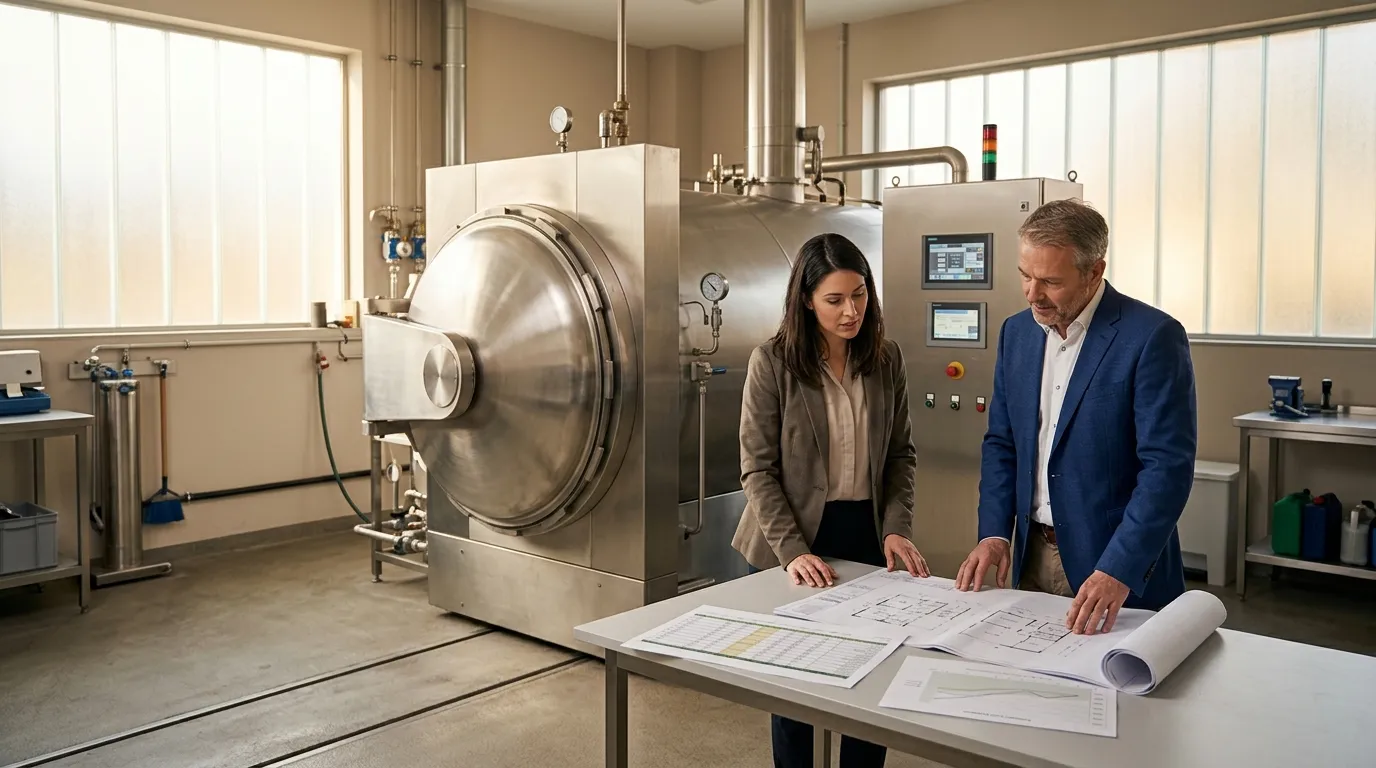

As cremation becomes an increasingly important part of the funeral industry, many growing funeral businesses are considering whether investing in their own crematory equipment makes financial sense. Bringing cremation services in-house can provide greater operational control, create an additional revenue stream, and reduce reliance on third-party crematories. However, the investment requires careful financial planning.
The cost of a crematory is not limited to purchasing a retort. Installation, facility modifications, permits, emissions requirements, maintenance, utilities, staff training, and ongoing operating expenses can all affect the total investment. A well-prepared financial plan helps funeral business owners understand the true cost of the project and determine how much capital they may need.
1. Understand the Full Cost of a Crematory Investment
The first step in crematory investment planning is looking beyond the equipment's purchase price. A cremation system may represent a significant portion of the project, but it is only one component of the overall investment.
Depending on the facility and equipment selected, a project may involve expenses such as:
- Cremation retort and associated control systems
- Processing and ventilation equipment
- Refrigeration or temporary storage capacity
- Electrical and gas infrastructure
- Facility renovations or construction
- Air-quality and environmental compliance
- Permits, inspections, and professional fees
- Installation and commissioning
- Staff training
- Initial replacement parts and supplies
- Insurance and ongoing maintenance
Before approaching a lender, owners should create a detailed project budget that separates equipment costs from facility and operational costs. This makes it easier to determine the actual capital requirement rather than basing the financing request solely on a manufacturer's quotation.
2. Compare Retort Options Based on Long-Term Value
The retort is at the center of a crematory operation, but choosing equipment based solely on the lowest purchase price can create problems later. Funeral business owners should evaluate equipment based on expected workload, operating efficiency, maintenance requirements, technology, warranty coverage, and available service support.
A growing funeral home should estimate its expected cremation volume for the next several years rather than purchasing equipment only for today's demand. If cremation cases are expected to increase significantly, equipment with greater capacity or the ability to support future expansion may provide better long-term value.
Owners should also request detailed information from equipment suppliers about installation requirements, expected useful life, maintenance schedules, replacement components, and service availability.
These factors are important when developing a retort equipment funding strategy because lenders and business owners need a realistic understanding of the asset's cost and useful life.
3. Build a Realistic Revenue and Capacity Forecast
Equipment financing becomes easier to evaluate when the business has a clear forecast for how the investment will generate revenue.
Start by estimating the number of cremations the business currently handles through outside providers. Then consider expected growth based on historical case volume, local market trends, marketing plans, geographic expansion, and changes in customer preferences.
For example, a funeral home might compare its current annual cremation volume with projected volume over three to five years. The forecast should consider not only the number of cases but also the revenue associated with each service.
Potential revenue may include:
- Basic cremation services
- Cremation-related arrangements
- Memorial services
- Merchandise
- Urns and keepsakes
- Transportation
- Additional facility services
At the same time, the financial model should account for direct costs such as fuel, labor, maintenance, utilities, processing supplies, and insurance.
The objective is to determine whether projected cash flow can comfortably support the investment and its financing obligations.
4. Explore Crematory Equipment Financing Structures
Once the total project cost and expected cash flow are established, owners can explore crematory equipment financing options. The appropriate structure depends on the business's financial position, the project size, the equipment being purchased, and the intended use of the facility.
Potential financing approaches can include equipment loans, commercial term loans, business lines of credit, or financing incorporated into a broader facility improvement project.
An equipment loan may be appropriate when the primary need is purchasing the retort and related machinery. A broader commercial financing structure may make more sense when the project includes substantial construction, renovations, real estate improvements, or additional business expansion.
Owners should compare financing based on more than the interest rate. Important considerations include:
- Loan term
- Monthly payment
- Down-payment requirements
- Fees and closing costs
- Collateral requirements
- Prepayment provisions
- Equipment useful life
- Cash-flow impact
The goal should be a financing structure that supports the business without placing unnecessary pressure on working capital.
5. Prepare the Business Financials Before Applying
Strong documentation can make the financing process more efficient. Lenders generally want to understand both the funeral home's historical performance and its ability to support additional debt.
Before applying, owners should organize financial statements, tax returns, bank statements, existing debt information, ownership details, and projections.
For a new crematory project, the lender may also want to review:
- Equipment quotations
- Installation estimates
- Construction or renovation budgets
- Permits and regulatory information
- Project timelines
- Revenue projections
- Expected cremation volume
- Operating cost assumptions
A detailed business plan or project summary can also help explain why the investment is necessary and how it fits into the company's broader growth strategy.
Most importantly, projections should be realistic. Overly optimistic case-volume assumptions can weaken an otherwise strong financing request. A conservative forecast with clearly explained assumptions is generally more useful for evaluating repayment capacity.
6. Measure the Investment's Long-Term Financial Impact
The final step in crematory investment planning is evaluating how the project will affect the funeral home's financial position over several years.
Owners should calculate the expected return on investment by comparing the total project cost with anticipated incremental revenue and savings. Bringing cremation services in-house may reduce payments to outside providers while giving the funeral home greater control over scheduling and service delivery.
However, ownership also creates new responsibilities. Equipment requires maintenance, compliance oversight, trained personnel, utilities, and eventual replacement. These expenses should be incorporated into the long-term financial model.
It is also wise to maintain an adequate working-capital reserve. A business should not use all available cash for equipment and construction only to discover that it lacks funds for payroll, marketing, inventory, or unexpected repairs.
A successful crematory investment should strengthen the funeral home's operations rather than compromise its financial flexibility.
Making a Confident Crematory Investment Decision
Adding crematory equipment can be a significant growth opportunity for a funeral business, but it should be approached as a complete business investment rather than simply an equipment purchase. Understanding the full project cost, forecasting demand, comparing equipment options, and evaluating financing structures can help owners make a more informed decision.
With a detailed budget and realistic cash-flow projections, funeral business owners can determine how much capital they actually need and which financing structure best fits their goals. Whether the project involves a single retort or a larger facility expansion, thoughtful retort equipment funding and crematory equipment financing can help turn growing demand into a sustainable long-term business opportunity.
The strongest projects begin with preparation: understand the numbers, plan for future capacity, account for ongoing costs, and make sure the investment aligns with the funeral home's broader growth strategy.




























Sign in to leave a comment.