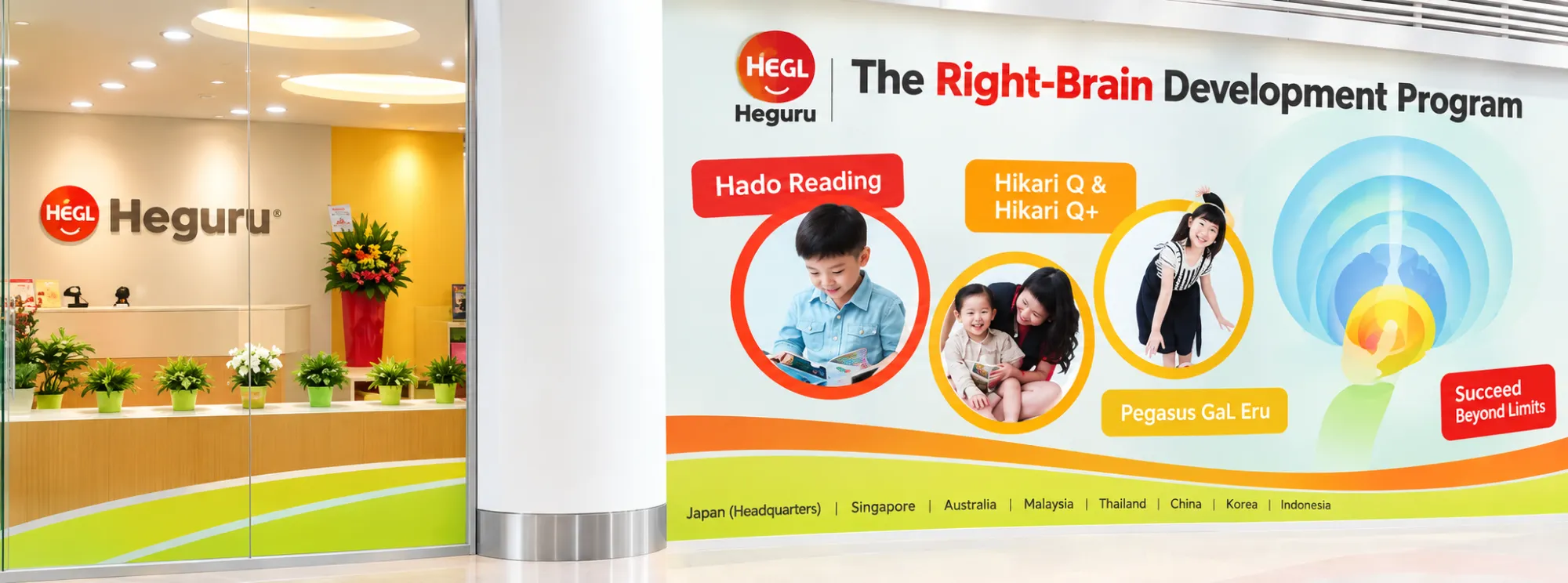


Preschool enrichment programmes for young children typically focus on whole-brain development through structured play, visual memory training, and guided activities. These programmes blend right-brain stimulation with foundational cognitive skills, targeting children from infancy through early primary school. Activities often include flashcard sessions, worksheets, speed reading, and creativity exercises designed to build learning independence from an early age.
If you are a parent in Singapore exploring enrichment classes for preschoolers, Heguru offers one of the most structured and research-informed programmes available. This guide walks you through what to expect — from age-appropriate class levels to what actually happens inside the classroom.
What Is the Heguru Preschool Enrichment Programme?
Heguru is a Japanese-origin enrichment methodology brought to Singapore that focuses on whole-brain development during the critical early years of a child's life. The programme targets the right brain — which is believed to be most receptive during the first six years — while simultaneously building left-brain analytical skills.
Classes are fast-paced, structured, and deliberately stimulating. Sessions typically run for 50 to 90 minutes depending on the child's age group, and each lesson follows a fixed sequence of activities designed to maximise focus and retention.
Age Groups: Who Is the Programme For?
Heguru in Singapore structures its enrichment classes across clearly defined age bands. This matters because cognitive and sensory development milestones shift significantly between ages one and seven.
Here is a general breakdown of how classes are grouped:
| Age Group | Programme Focus | Class Duration |
|---|---|---|
| 6 months – 1.5 years | Sensory stimulation, parent-child bonding | ~50 minutes |
| 1.5 – 3 years | Right-brain activation, visual memory | ~60 minutes |
| 3 – 6 years | Speed learning, reading, creativity | ~75–90 minutes |
| 6 – 9 years | Cognitive deepening, memory techniques | ~90 minutes |
Starting early does make a difference. Research from Singapore's Ministry of Education and early childhood bodies consistently recognises that the first three years are foundational for language, memory, and social-emotional development.
What Happens Inside a Heguru Class?
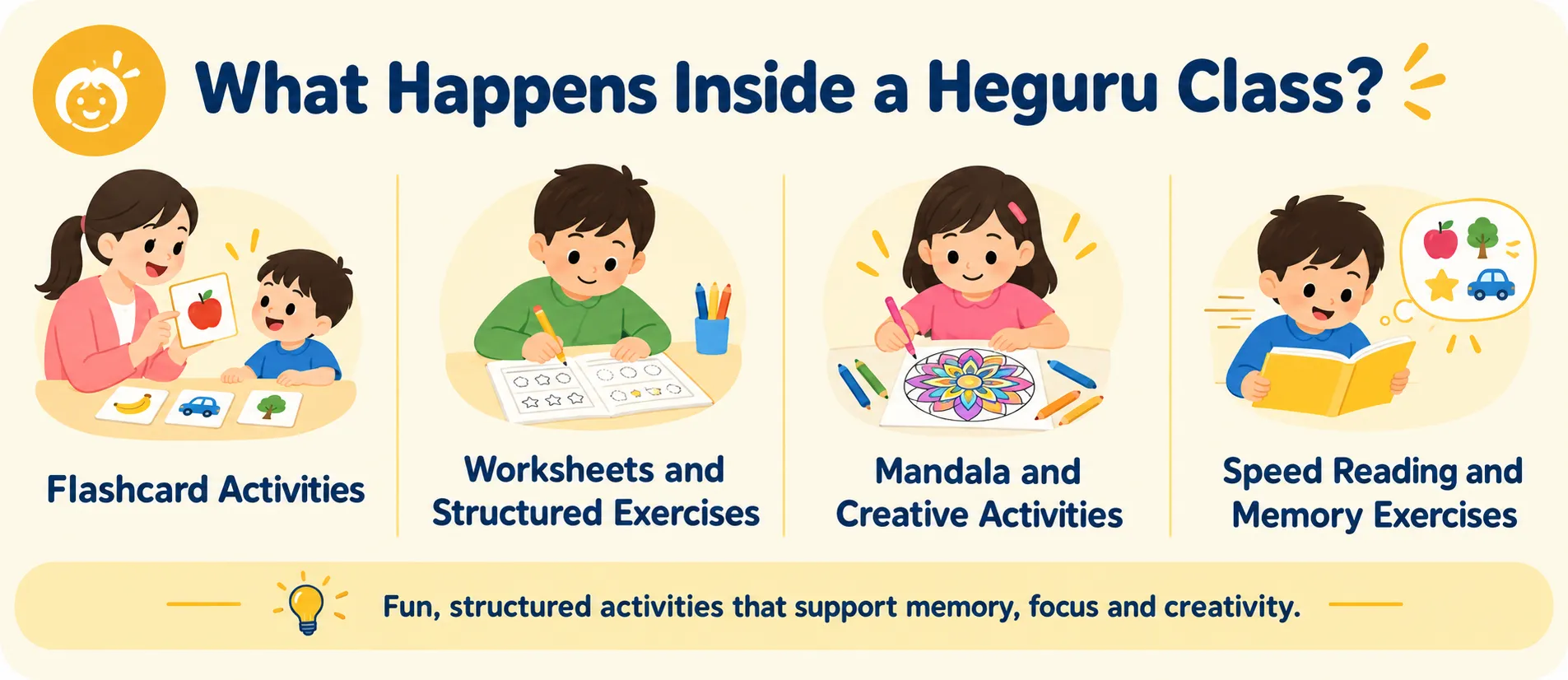
This is what most parents want to know before enrolling. A typical Heguru class is not a traditional sit-and-learn session. It is deliberately designed to cycle through multiple types of stimulation in a single lesson.
Flashcard Activities
High-speed flashcard sessions are a signature element. Cards covering topics like numbers, words, animals, flags, and concepts are shown rapidly to activate photographic memory and right-brain processing. Children are not expected to memorise consciously — the aim is subconscious absorption through repetition and speed.
Worksheets and Structured Exercises
As children move into older age groups, worksheets become part of every session. These are not standard school worksheets. They are designed to develop pattern recognition, logical sequencing, spatial reasoning, and early literacy. Parents often receive take-home materials to reinforce learning between classes.
Mandala and Creative Activities
Creative exercises like mandala colouring and drawing are included to develop concentration and fine motor control. Brain Training for kids also support engagement in a calmer, more meditative way — balancing the high-stimulation portions of class.
Speed Reading and Memory Exercises
Older preschoolers and early primary children are introduced to speed reading techniques and memory games. These build the foundation for academic confidence before formal schooling begins.
How Does Heguru Support Independence and Cognitive Development?
One concern many parents share is whether enrichment classes create dependency on external input rather than independent thinking. The Heguru approach directly addresses this.
The programme is structured to gradually reduce parental scaffolding as the child advances. In infant classes, parents participate actively. By the time a child reaches the three-to-six age band, they are expected to engage independently within the classroom environment. This progression builds:
- Self-directed focus and attention span
- Confidence in completing tasks without immediate adult guidance
- Intrinsic motivation for learning
- Emotional regulation during structured activity
Cognitive development benefits are rooted in the methodology itself. Speed-based activities train the brain to process information efficiently. Repetitive, varied stimulation strengthens neural pathways. And the multi-sensory approach — combining visual, auditory, and kinaesthetic elements — means different types of learners are all engaged within the same session.
What Should Parents Expect Beyond the Classroom?
Heguru is not a drop-and-leave programme. Parental involvement, especially in the early years, is an intentional part of the design. Here is what participation typically looks like:
- Attending classes with your child in the infant and toddler groups
- Reviewing take-home materials and practising flashcard sequences at home
- Maintaining consistency — weekly attendance is strongly encouraged to allow the cumulative approach to take effect
- Observing progress through the child's growing ability to focus, complete tasks, and engage with new concepts
Parents frequently report noticing improvements in concentration and memory recall within the first few months. These are not dramatic overnight changes — they are gradual shifts that become most visible when children enter formal school settings.
Is Heguru the Right Children's Enrichment Class for Your Child?
Choosing children's enrichment classes in Singapore involves more than comparing prices or locations. The right fit depends on your child's temperament, your family's schedule, and the developmental goals you have in mind.
Heguru suits children who benefit from structured, stimulating environments and parents who are willing to be active partners in the process. It is particularly well-suited for families who want a programme grounded in cognitive science rather than purely academic drilling.
If your child is between six months and nine years old, there is likely an age-appropriate level worth exploring. Most centres offer trial classes, which give both parent and child a genuine feel for the pace and format before committing to a term.
Heguru Center has built its reputation on a consistent, methodology-first approach to early childhood enrichment. For parents who want more than a supplementary activity — and are looking for a programme that genuinely invests in how a young child thinks, learns, and grows — it is worth experiencing firsthand.
Frequently Asked Questions
What age should my child start enrichment classes for preschoolers at Heguru?
In Heguru, enrollment can begin at an early age of six months. With early enrollment, the child will be able to develop his/her right brain within the development window for right brain, which is at the ages of six years.
How is Heguru different from standard preschool enrichment programmes?
Heguru uses a Japanese whole-brain methodology that combines high-speed flashcards, creative exercises, and memory training. Unlike academic-focused programmes, it targets cognitive processing, independence, and intrinsic learning motivation from infancy through early primary school.
Do parents need to attend Heguru classes with their child?
Certainly, there is an element of parental participation needed for smaller age groups, particularly babies and toddlers. However, as the child grows up, the program increasingly promotes independence on the part of the child.
How long does it take to see results from Heguru's programme?
Parents generally find that there are improvements in attention and memory in the first few months of attending regularly. However, it will be after the kids start going to school, specifically at Primary One level, that their advantages start becoming noticeable.

























Sign in to leave a comment.