
Daily routines can be helpful, but they can also become difficult to maintain when they are packed with too many expectations. Between school, work, family responsibilities, hobbies, and personal goals, it is easy to forget the small actions that support larger plans. Writing those actions down creates a simple visual reminder and makes progress easier to understand.
Tracking is not about proving that every day was perfect. It is about noticing what happens, recognizing useful patterns, and making adjustments when circumstances change. A thoughtful system can turn scattered intentions into something visible without making daily life feel more demanding.
Choose Behaviors With Purpose
The first step is deciding what deserves space on your page. Think about activities that genuinely support your current priorities. Reading, practicing a skill, organizing your surroundings, preparing for tomorrow, spending time creatively, or setting aside moments for reflection can all be possibilities.
Avoid choosing items simply because they are popular.
Start with a small group. Three to five actions provide enough variety without overwhelming the page.
Make Each Goal Easy to Recognize
A tracker works best when each entry describes an action you can identify quickly. Broad statements such as “have a better day” are difficult to record because they mean something different every time. A clearer option might be reading a few pages, practicing for fifteen minutes, or preparing materials before bed.
Specific wording also makes review easier. If an activity repeatedly goes unfinished, you can investigate what is happening around it. Perhaps the timing is inconvenient, the task is too large, or you need a reminder in a different place.
Clarity keeps the tracking process simple. You should be able to glance at an item and immediately understand what it means.
Design a Page That Encourages Use
The appearance of your page can influence whether you enjoy returning to it. Some people like neat grids, while others prefer illustrations, lettering, symbols, or generous empty space.
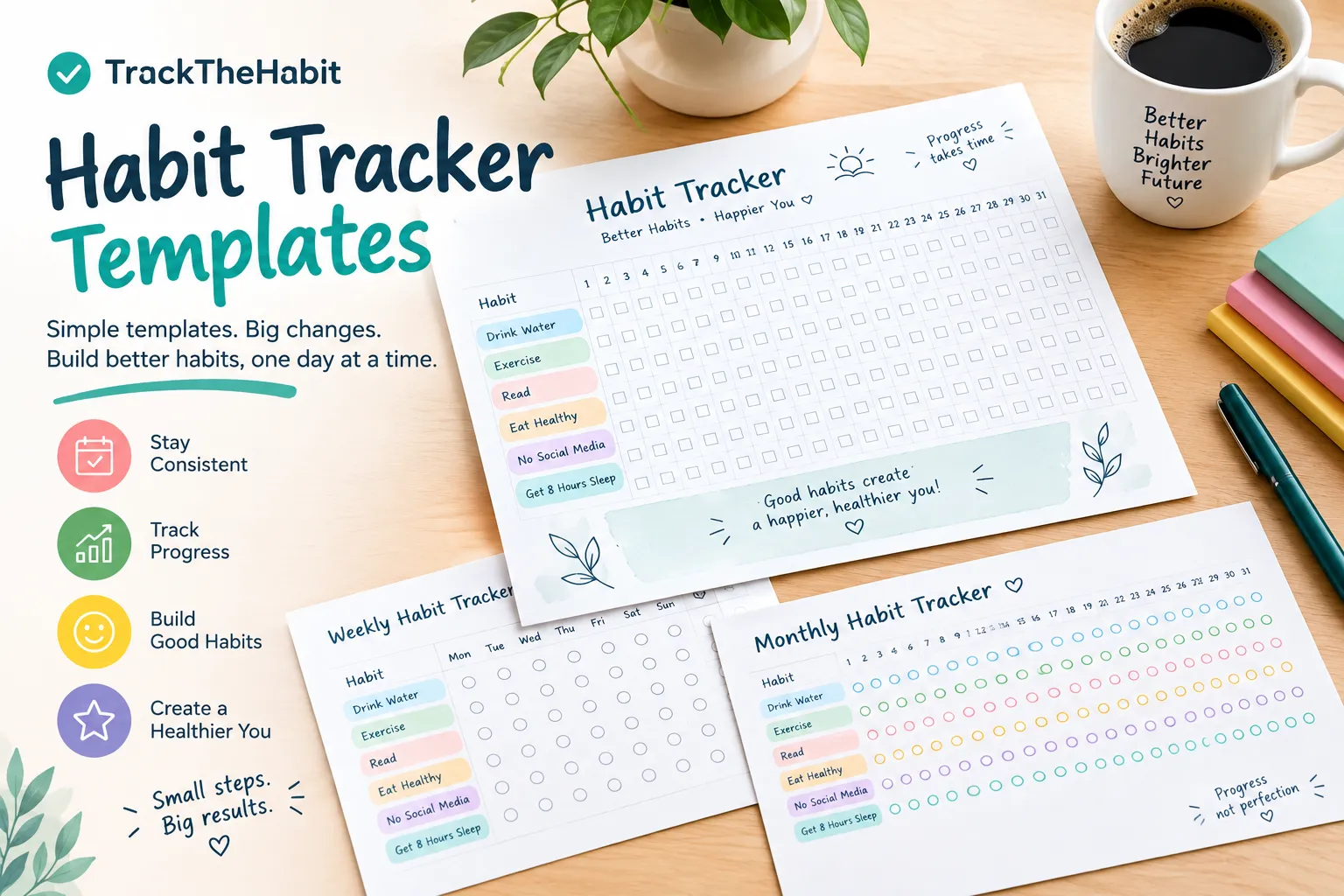
A free habit tracker printable can give you an organized foundation when you want to begin without designing an entire layout yourself. After printing a suitable page, you can personalize the categories, add small notes, or modify sections to match your schedule. The purpose of the template is convenience, so keep the final version easy to understand.
Use Simple Symbols
You do not need an elaborate marking system. A check can indicate completion, a dot can represent partial progress, and a short note can explain something unusual. Choose symbols that you can understand immediately.
However, decoration should remain optional. The tracking system should not require so much preparation that you avoid using it.
Consistency becomes easier when recording takes only a few seconds.
Study Patterns Instead of Chasing Streaks
Streaks can look motivating, but they are not the only measure of progress. A missed day does not cancel earlier effort. Looking across a week or month often provides a more useful perspective.
You might discover that an activity happens regularly except on particularly busy days. That information can suggest a scheduling change. Perhaps mornings are too crowded, while evenings offer more breathing room. Instead of assuming the routine does not work, test a different time.
Leave Space for Changing Circumstances
Schedules change. Unexpected responsibilities appear, plans move, and some days simply feel different. A tracking method should be flexible enough to handle these variations.
Consider defining a smaller version of certain actions. If your usual reading session is lengthy, a few pages might be a realistic alternative on a crowded day. A large organizing project could become one small task.
Flexibility also means knowing when to remove an item. If something no longer supports your priorities, replacing it can make the entire system more relevant.
Review What the Page Is Teaching You
The information you collect becomes more valuable when you occasionally review it. At the end of a week, look over the entries and consider which actions felt natural, which required planning, and which repeatedly disappeared.
Ask what surrounded the successful days. Did you have materials ready? Did a reminder help? Was the activity connected to another routine? Then consider what was different when things did not happen.
These questions can lead to useful experiments. Move an activity, simplify the first step, prepare something earlier, or change the reminder. One small adjustment can reveal more than completely rebuilding your schedule.
Keep the Process Personal
Your tracking method does not have to resemble anyone else’s. A beautiful layout is not automatically a useful one, and a plain page can be extremely effective. What matters is whether the system helps you notice and understand your own patterns.
Change the design when you become bored. Remove unnecessary categories when the page feels crowded. Add reflection space when you want more context. Treat the system as something adjustable rather than permanent.
Let Small Observations Shape Bigger Changes
The greatest benefit of tracking is often awareness. When you repeatedly record small actions, you begin to see how timing, environment, preparation, and priorities influence your routines.
That knowledge can support better decisions. You may discover that a task is easier after another activity, that preparation removes unnecessary friction, or that one goal deserves more attention than another.
The objective is not a flawless record. It is a clearer understanding of what helps you move forward. A simple page can provide that understanding without demanding perfection.
With a few meaningful actions, straightforward symbols, regular reflection, and room for change, tracking can become a sustainable part of everyday planning. The result can feel useful, calm, and sustainable.

























Sign in to leave a comment.