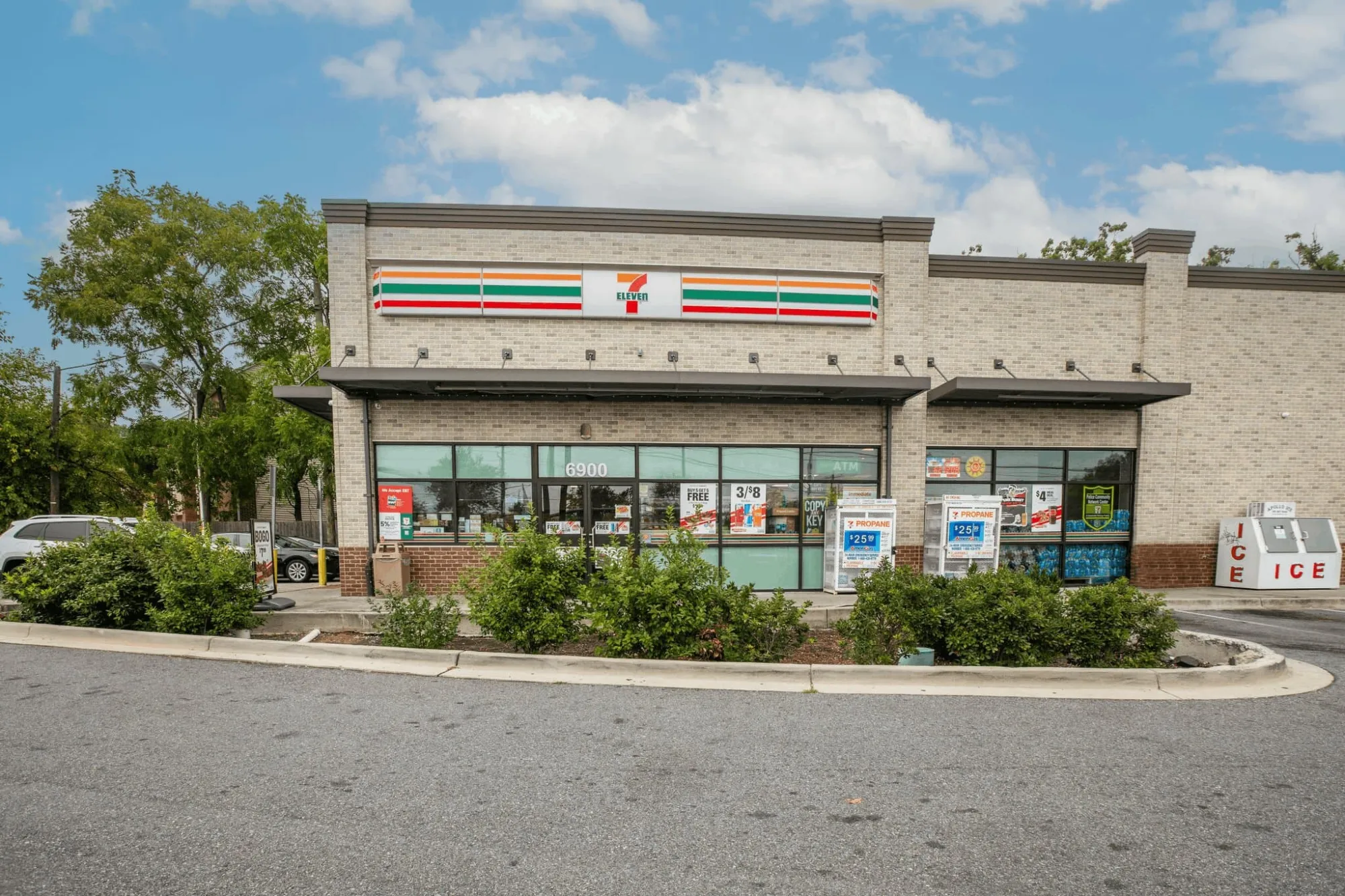

Convenience retail properties can attract commercial investors because they often serve recurring consumer needs and operate from highly visible, accessible locations. 7-Eleven property investment guide considerations should begin with the underlying real estate rather than focusing exclusively on the tenant name. Investors need to examine lease structure, property location, purchase price, remaining lease term, tenant obligations, and future marketability. A recognizable convenience store operator may provide useful tenant context, but the investment quality ultimately depends on how well the property fundamentals support reliable income and long term value throughout the ownership period.
The convenience retail model can provide characteristics that appeal to net lease investors. Properties are commonly positioned along busy roads, near residential neighborhoods, transportation routes, employment centers, and other retail destinations. The broader Seven & i organization continues to describe its convenience store network as an important part of its operating model, with a large customer base across Japan and North America. These characteristics can make individual locations worth examining, but investors should avoid assuming that every property offers the same level of demand. Site specific analysis remains essential before making an acquisition decision.
Assessing Location Quality
Studying Traffic and Visibility
Location is one of the most important factors in convenience retail real estate. Investors should examine vehicle traffic, road frontage, intersection positioning, visibility, signage opportunities, parking access, and ease of entry and exit. A property positioned along a heavily traveled corridor may benefit from strong exposure, while a site with difficult access can face operational limitations even when surrounding demographics appear favorable. Investors should also consider nearby transportation routes and changes to road infrastructure. Understanding how customers reach the property can provide valuable insight into its current usefulness and potential future marketability.
Reviewing Surrounding Demographics
Demographic analysis can help investors determine whether a location has a sustainable customer base. Population density, household growth, employment levels, income characteristics, residential development, and daytime population should all be considered. Convenience stores often depend on frequent local trips, making the surrounding trade area particularly important. Investors should review both current conditions and projected changes because new housing developments or employment centers may strengthen demand over time. Conversely, population declines, commercial vacancies, or major changes in traffic patterns could weaken the location. A strong demographic profile can support the property's long term investment potential.
Examining Lease Structure
Understanding Net Lease Responsibilities
Lease structure directly affects the income and expense profile of a commercial property. Under a triple net arrangement, tenants generally assume responsibility for property taxes, insurance, and maintenance, although specific obligations depend on the actual lease agreement. Investors should never assume that every convenience retail lease follows identical terms. Roof repairs, structural components, parking areas, replacement costs, and other responsibilities should be carefully identified. Understanding these provisions allows investors to estimate actual ownership expenses and determine whether projected rental income accurately reflects the property's long term financial potential.
Reviewing Remaining Lease Term
Remaining lease duration is another critical consideration. A long contractual term can provide greater visibility into future rental income, while renewal options may create additional opportunities after the initial expiration. Investors should review lease commencement dates, expiration dates, extension provisions, rent increases, termination rights, assignment conditions, and other important clauses. A recent 2026 transaction involving a convenience property operated under a long term triple net lease illustrates how investors may evaluate remaining lease duration alongside location and pricing. However, lease length should always be evaluated together with property quality and rental economics rather than treated as an isolated advantage.
Evaluating Purchase Price
Comparing Price With Income
Purchase price should be carefully compared with expected rental income and the property's overall risk profile. Investors can examine capitalization rates, annual rent, remaining lease term, comparable sales, property condition, and surrounding market fundamentals when establishing an appropriate valuation. A property with a strong tenant may command a premium, but an excessive acquisition price can reduce potential returns. Investors should determine whether the expected income adequately compensates for the capital invested. The objective should be to identify a property where pricing, income, location, and long term marketability create a balanced investment opportunity.
Studying Comparable Transactions
Comparable property sales can provide useful information when assessing valuation. Investors should review similar convenience retail properties within the same market or comparable trade areas and examine purchase prices, building sizes, lease terms, capitalization rates, tenant characteristics, and physical condition. Differences between properties should be considered carefully because no two assets are exactly alike. A newer building with a longer lease and stronger traffic exposure may justify a different price from an older property requiring significant capital improvements. Comparable analysis can help investors avoid making decisions based solely on tenant recognition or advertised yield.
Reviewing Property Condition
Conducting a Thorough Inspection
Physical due diligence is essential before acquiring any commercial retail property. Investors should arrange professional inspections of the building structure, roof, exterior, parking areas, drainage, electrical systems, plumbing, heating and cooling equipment, landscaping, and other major components. The age and expected remaining life of important systems should also be documented. A property can appear attractive financially while containing significant deferred maintenance. Identifying these issues before closing gives investors an opportunity to estimate future expenses and negotiate appropriate terms. Physical condition should therefore receive the same attention as lease and financial analysis.
Planning for Capital Expenditures
Long term ownership can involve substantial capital requirements even when routine maintenance responsibilities are assigned to the tenant. Roof replacement, parking resurfacing, structural repairs, exterior improvements, and mechanical upgrades can create unexpected costs. Investors should review inspection reports, maintenance records, previous repairs, and lease provisions before completing financial projections. Establishing realistic reserves can help protect future cash flow. Properties with limited near term capital requirements may offer greater predictability, while assets approaching major replacement cycles may require pricing adjustments. Capital planning should form part of the initial underwriting process rather than being considered after acquisition.
Analyzing Tenant Strength
Understanding Operational Importance
Tenant quality is important because rental income depends on the occupant fulfilling contractual obligations. A widely established convenience retail operator can provide useful context regarding brand recognition, operating experience, and customer accessibility. However, investors should evaluate the specific property and lease instead of assuming that all locations have equal strategic importance. The location's sales environment, surrounding market, accessibility, and role within the broader store network can influence future occupancy decisions. Investors should therefore examine tenant strength together with property fundamentals to develop a more complete understanding of potential income stability.
Reviewing Business Model Resilience
The convenience retail sector can benefit from recurring consumer needs, particularly when stores provide frequently purchased products and services. Seven & i's current corporate materials emphasize convenience, food offerings, store investment, and digital capabilities as parts of its broader transformation strategy. For property investors, these developments can provide useful context when assessing how physical locations may remain relevant as customer behavior changes. Nevertheless, the investment analysis should remain property specific. A strong business model does not eliminate risks associated with lease expiration, changing traffic patterns, property condition, or unfavorable acquisition pricing.
Considering Future Marketability
Evaluating Replacement Tenant Potential
Future marketability can protect investors against potential vacancy when a lease eventually expires. Investors should consider whether the building and site could accommodate another convenience retailer, service business, restaurant, or other commercial use. Parcel size, zoning, parking, visibility, access, building configuration, and surrounding demand can all influence replacement tenant potential. A flexible property may offer greater residual value than a highly specialized asset. Investors should therefore consider the property independently of its current occupant and ask whether another user could realistically operate from the site if circumstances change.
Assessing Long Term Location Demand
A property's long term value can depend heavily on the future strength of its surrounding trade area. Investors should examine planned housing, infrastructure projects, employment growth, competing developments, transportation changes, and commercial construction. Strong current traffic does not guarantee future demand if major infrastructure changes redirect customers elsewhere. Likewise, an emerging neighborhood can create opportunities when population and employment expand. Investors should incorporate both current and projected market conditions into their analysis. A location with durable accessibility and growing surrounding activity may provide stronger protection against future leasing challenges and value deterioration.
Managing Financial Risk
Building Conservative Projections
Financial projections should use realistic assumptions about rental income, expenses, financing costs, capital requirements, and potential lease renewal. Investors can perform sensitivity analysis to determine how returns might change under different conditions. Higher interest rates, unexpected repairs, slower market growth, or vacancy can affect overall performance. Conservative underwriting can reveal whether the investment remains financially sustainable when conditions become less favorable. Investors should avoid relying on optimistic assumptions simply because the property has a recognizable tenant. A well structured analysis should demonstrate how the asset performs under both expected and more challenging circumstances.
Balancing Yield and Risk
The highest projected yield does not necessarily represent the strongest investment opportunity. A higher capitalization rate can sometimes reflect shorter lease duration, weaker location fundamentals, property condition concerns, or greater uncertainty. Conversely, a lower yield may be supported by stronger real estate fundamentals and greater income visibility. Investors should evaluate yield alongside lease term, tenant quality, location, property condition, purchase price, and future marketability. This balanced approach helps determine whether the expected return appropriately compensates for the risks attached to the asset. Risk adjusted performance should remain more important than headline yield alone.
Conclusion
A practical approach to convenience retail property investing requires careful evaluation of location, lease structure, tenant strength, purchase price, property condition, market trends, financial projections, and future marketability. The 7-Eleven property investment guide approach should focus on the individual asset rather than relying solely on the reputation of the operating tenant. Current industry developments demonstrate the continuing importance of convenience focused retail locations and physical stores, but every property carries its own financial and operational considerations. Thorough due diligence, conservative underwriting, and careful comparison with similar properties can help investors make informed decisions. NNN Trends by Equity CRE can provide useful perspectives for investors researching commercial real estate opportunities and evaluating potential income producing assets.

























Sign in to leave a comment.