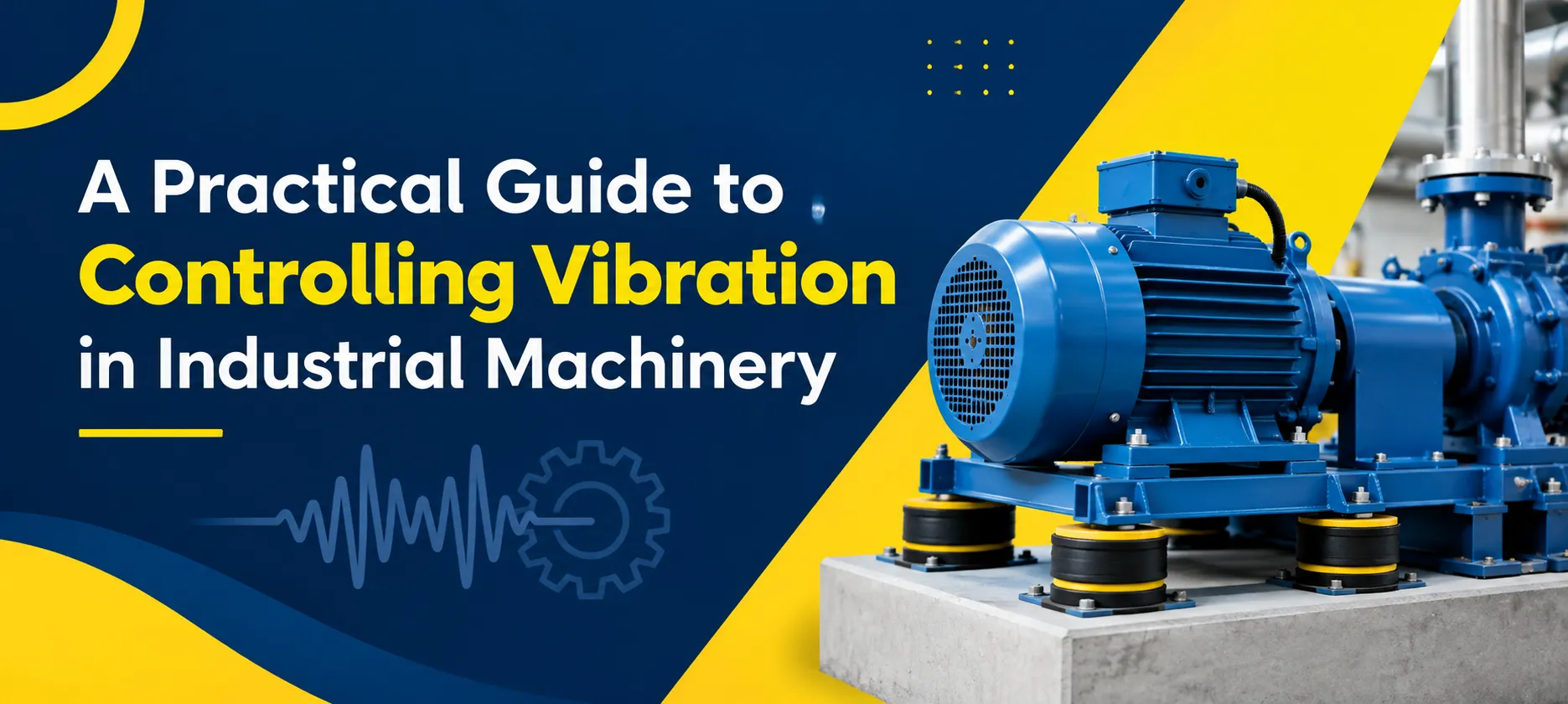

Industrial machinery is built to handle demanding workloads, often running for several hours a day without much interruption. During operation, some amount of vibration is normal. However, when vibration becomes excessive, it can affect machine performance, create unwanted noise, and transfer movement to the floor or surrounding equipment.
Controlling vibration is therefore an important part of maintaining a stable and efficient industrial setup. The good news is that vibration control does not always require complicated modifications. In many cases, understanding the source of the vibration and choosing the right support system can make a noticeable difference.
Why Does Industrial Machinery Vibrate?
There are several reasons why a machine may vibrate during operation. Rotating parts, motors, belts, bearings, gears and other moving components naturally generate mechanical movement. Problems such as improper alignment, worn components or an uneven foundation can make the situation worse.
Machine load also plays a role. Equipment operating under heavy or uneven loads may experience more movement than expected. Similarly, machines running at high speeds can produce significant dynamic forces.
Ignoring these issues for a long period may lead to unnecessary stress on machine components. It can also make the working environment less comfortable, particularly when several machines are operating in the same facility.
Start With the Source of the Problem
Before installing any vibration control product, it is worth checking the machine itself. A vibration pad cannot compensate for every mechanical problem.
Inspect the machine for loose bolts, worn bearings, alignment issues and damaged components. Check whether the equipment is sitting properly on its foundation and whether the load is distributed evenly across its mounting points.
Regular maintenance is particularly important for machines that operate continuously. Small problems can become more noticeable over time if they are not addressed early. Once the machine has been checked and is operating properly, vibration isolation can be considered as part of the overall solution.
The Role of Anti Vibration Pads
One commonly used approach is to place isolation material between the machine and its supporting surface. Anti vibration pads for industrial machinery are designed for this purpose.
The pad creates a separation between the equipment and the floor, helping reduce the amount of mechanical vibration transmitted into the supporting structure. At the same time, it provides a stable base for the machine.
These pads can be used with different types of industrial equipment, including pumps, compressors, generators, CNC machines and textile machinery. The exact type required depends on the application. Choosing a pad simply because it is labelled as “heavy duty” is not always enough. The actual machine weight, load at each mounting point and operating conditions should be considered.
How to Choose the Right Vibration Pad
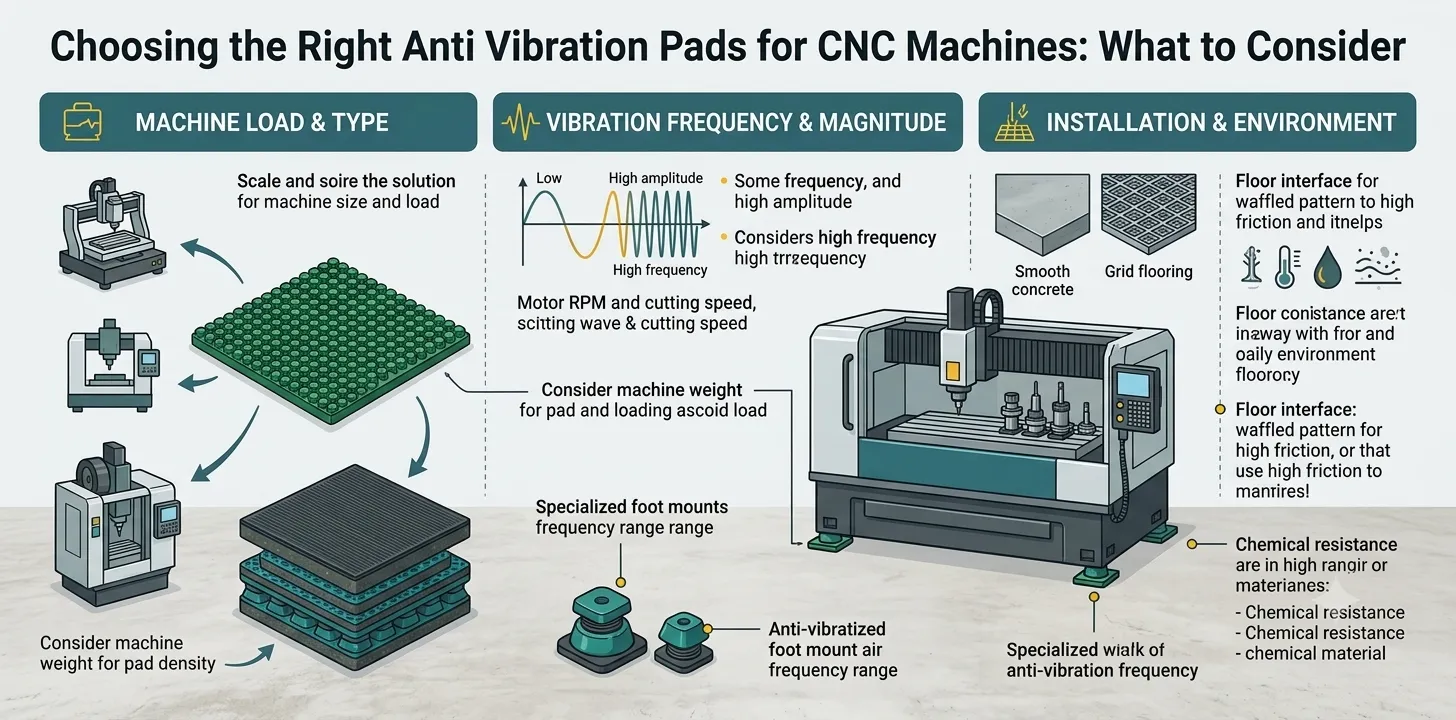
There is no universal vibration pad that works equally well for every machine. A few basic factors should be reviewed before making a selection.
Machine weight: The total operating weight of the equipment is one of the first things to consider. The load should also be understood at individual mounting points where applicable.
Operating speed: Machinery operating at different speeds can produce different vibration characteristics. This can influence the type of isolation required.
Foundation or floor: The condition and type of supporting surface can affect the performance of a vibration isolation system.
Working environment: Temperature, moisture, chemicals and other environmental conditions may influence which pad material is appropriate.
Machine movement: Some equipment produces mainly vertical vibration, while other machinery may experience movement in several directions. Understanding the movement helps in selecting a suitable support.
Taking these points into account can prevent the common mistake of choosing a product based only on dimensions or price.
Where Are Vibration Pads Commonly Used?
Vibration isolation is relevant across many industrial applications. Pumps may transmit vibration through their base during continuous operation, while compressors can generate substantial mechanical movement. Generators and other power equipment may also benefit from suitable isolation.
CNC machines require stable support because unwanted movement can affect the operating environment around precision equipment. Textile machinery can also produce continuous vibration when running at high speeds.
For heavy equipment, anti vibration pads for heavy machinery can provide additional support while helping reduce vibration transmission to the floor. The requirements, however, can vary significantly between machines. A pad suitable for a small industrial pump may not be appropriate for a large generator or compressor.
Benefits Beyond Vibration Reduction
The main purpose of an isolation pad is to control vibration, but there can be other practical benefits.
- Reducing vibration transmission can help create a quieter and more stable working environment. Better machine stability may also reduce unwanted movement during operation.
- In facilities where multiple machines are installed close together, limiting the transfer of vibration can be particularly useful. It may help reduce disturbance between equipment and surrounding structures.
- It is important to keep expectations realistic, though. Vibration pads are one part of a complete vibration-control approach. Proper machine maintenance, alignment, installation and foundation design remain important.
Final Thoughts
Industrial vibration should be treated as a practical engineering concern rather than simply an unavoidable part of machine operation. The right approach begins with identifying the source of vibration, checking the condition of the equipment and understanding how the machine interacts with its supporting surface.
Where additional isolation is required, properly selected vibration pads can help reduce the transmission of mechanical movement while providing stable machine support. For businesses looking for vibration-control solutions, working with an experienced manufacturer can make the selection process easier. Unick Vibration provides vibration-control products for different industrial machinery applications.
Ultimately, the most effective solution depends on the machine, its operating load, vibration characteristics and installation environment. Taking these factors into account can help create a more stable and controlled industrial workspace.























Sign in to leave a comment.