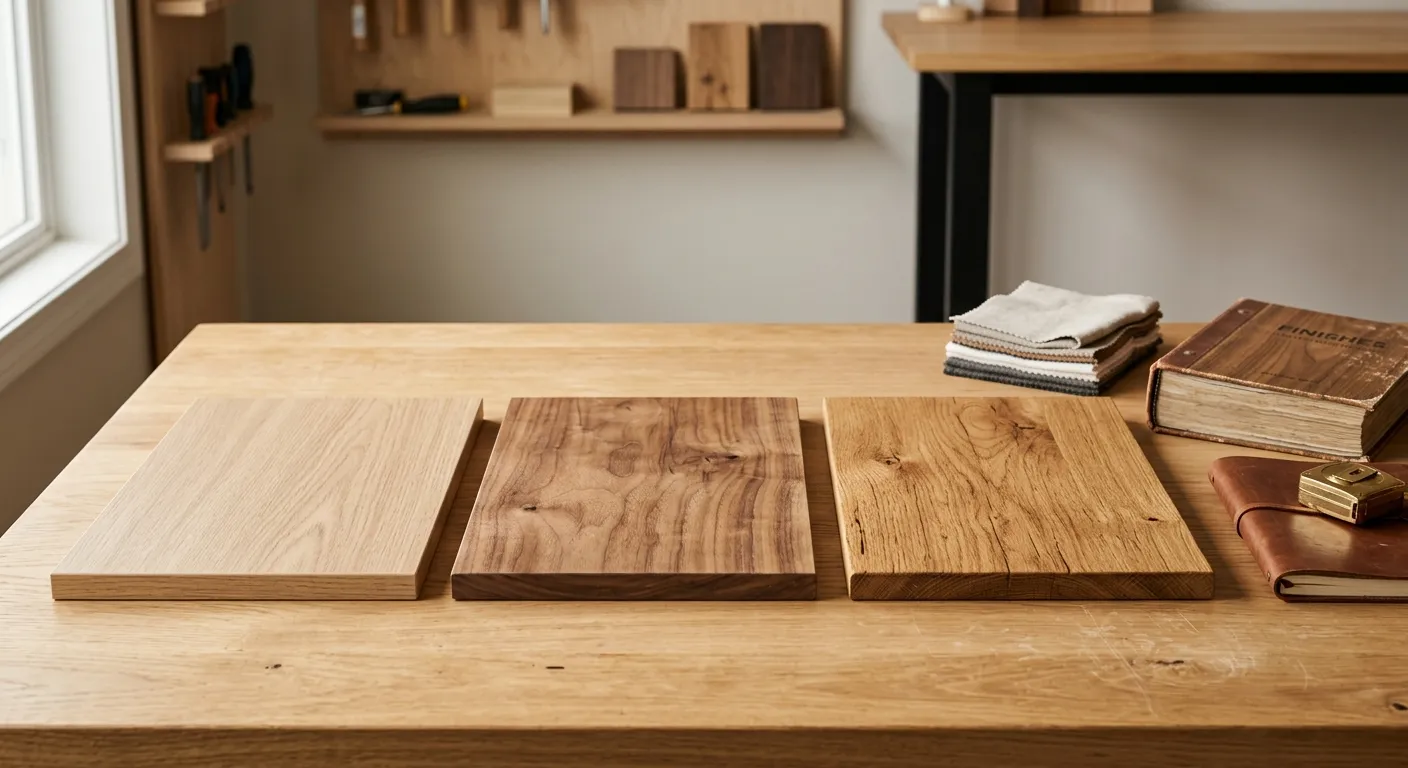

Choosing a desk often comes down to how it looks in a showroom, but material choice matters far more once that desk is in daily use, especially in a climate as demanding on furniture as Dubai's.
Laminate: the practical workhorse
Laminate desks offer strong resistance to scratches, stains, and daily wear at a more accessible price point than natural materials. Quality varies enormously between suppliers though, thickness and edge banding quality determine whether a laminate surface holds up for years or starts chipping within months.
Veneer: a middle ground worth understanding
Veneer applies a thin layer of real wood over an engineered core, offering the appearance of solid wood with better dimensional stability. This matters in a climate with significant humidity swings between air-conditioned interiors and outdoor heat, since veneer resists warping better than solid wood in these conditions.
Solid wood: premium look, more maintenance
Solid wood delivers genuine warmth and character that engineered materials can't fully replicate, but it demands more careful climate control and maintenance to avoid warping or cracking over time. It tends to suit private offices and executive desks more than high-traffic open-plan areas.
What actually determines the right choice
Budget matters, but so does expected wear. High-traffic workstations benefit from laminate's durability and lower replacement risk, while boardrooms and executive spaces can justify veneer or solid wood's premium look given lighter daily use and closer visibility to clients.
Why this decision benefits from expert input
As a Dubai-based office furniture manufacturer, we help clients weigh these trade-offs against their specific space and budget, rather than defaulting to whichever material looks best in a catalog photo without considering how it'll actually perform.
Learn more: https://ergospace.ae/



















Sign in to leave a comment.