

Flooring and subfloor installation can involve hundreds or even thousands of fasteners. While a standard drill or handheld screw gun can complete the job, working in a bent or kneeling position for long periods can be tiring. Professional installers often look for equipment that improves both productivity and comfort.
A stand up screw gun is designed to allow users to drive screws while remaining in a more upright position. This design can be especially useful for flooring, subfloor, decking, and other applications where many fasteners need to be installed across a large horizontal surface.
By reducing the need to repeatedly bend down or kneel, a standing fastening tool can make repetitive work more manageable while helping installers maintain a consistent workflow.
What Is a Standing Screwdriving Tool?
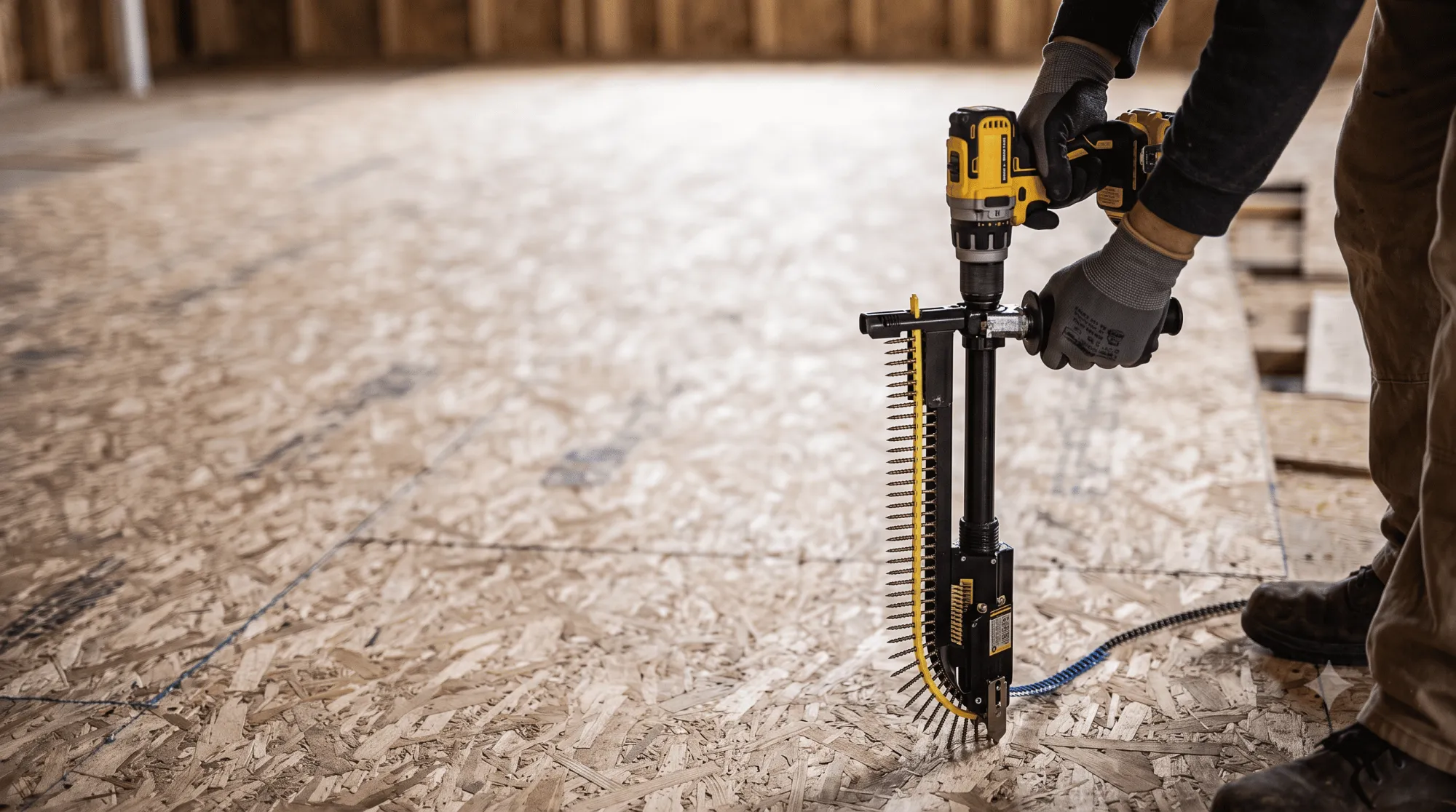
A standing screwdriving tool is a specialized power tool with an extended shaft or handle that allows the operator to work from a standing position. Instead of holding the fastening mechanism close to the floor, the user can operate the tool from above.
This design is particularly useful for projects involving large floor areas. Installers can move across the work surface while maintaining a more upright posture.
Some models may also incorporate automatic screw feeding. This allows multiple compatible screws to be loaded into the tool and fed into position automatically, further reducing the amount of manual handling required.
Why Ergonomics Matter in Flooring Work
Floor installation can be physically demanding. Workers may spend hours bending, kneeling, crouching, and reaching across the floor while securing boards or subfloor panels.
Repeatedly performing these movements can contribute to fatigue and make long projects more difficult.
A standing fastening tool changes the working position by allowing the user to remain upright for much of the installation process. This can make repetitive fastening more comfortable and help workers maintain a steadier pace.
Ergonomics does not replace proper work practices, but selecting equipment that suits the physical demands of a job can make a meaningful difference.
Common Applications
These tools are particularly suited to applications where fasteners are installed across large horizontal surfaces.
Flooring and subfloor installation are common examples. Instead of repeatedly bending down to drive each screw, the installer can work from a standing position.
Other potential applications include:
- Hardwood flooring
- Subfloor installation
- Plywood fastening
- Deck construction
- Woodworking
- Renovation projects
- Large residential flooring jobs
- Commercial construction
The appropriate tool depends on the material and fastening requirements of the project.
Automatic Screw Feeding
One feature that can further improve productivity is automatic screw feeding. Instead of manually loading a new screw after every installation, compatible fasteners can be loaded into a magazine.
The tool feeds the next screw into position after each fastener is driven. This creates a smoother workflow and reduces interruptions.
For large flooring projects, the combination of an upright design and automatic feeding can be particularly convenient. The installer can move across the floor while spending less time handling individual screws.
However, not every tool uses the same screw system. Always confirm that the fasteners are compatible with the tool before purchasing or beginning a project.
Features to Consider
When choosing a stand up screw gun, consider how the tool will be used and what features are most important for the application.
Depth adjustment is valuable for flooring and subfloor work because it helps control how deeply screws enter the material. Consistent depth can contribute to a cleaner and more uniform installation.
Weight and balance are also important. A tool that is too heavy or poorly balanced may become uncomfortable during extended use.
Other useful features may include:
- Adjustable screw depth
- Automatic screw feeding
- Variable speed
- Cordless operation
- Ergonomic handles
- Durable construction
- Replaceable bits
- Adjustable working settings
A tool should be selected based on the specific flooring system and expected workload rather than simply choosing the most powerful model.
Cordless vs. Corded Models
Cordless standing fastening tools offer excellent mobility. Installers can move around a construction site without dealing with an extension cord.
This can be particularly useful on large floors or renovation projects where access to electrical outlets may be limited.
Corded models, on the other hand, can provide continuous power. They may be useful for long installation sessions where battery changes would otherwise interrupt the workflow.
For cordless equipment, battery capacity and availability of spare batteries should be considered when planning a large project.
Choosing the Right Fasteners
A quality tool requires suitable fasteners. Screw length, diameter, thread design, and material should all be appropriate for the flooring or subfloor application.
For outdoor projects such as decking, corrosion resistance may be especially important because fasteners can be exposed to moisture and changing weather conditions.
For indoor flooring, the requirements may be different. Always follow the flooring manufacturer's recommended installation method and fastener specifications.
If using a collated or automatic feeding system, make sure the screw strips are specifically designed for the selected tool.
Tips for Better Results
Before starting the main installation, test the tool on a small piece of similar material. This allows you to check the depth setting and make adjustments before installing large numbers of screws.
Prepare the work area carefully and make sure flooring or subfloor panels are correctly positioned before fastening.
Maintain a consistent fastening pattern based on the manufacturer's instructions. Proper spacing helps distribute the holding force across the material.
Keep the tool clean and inspect the driver bit regularly. A worn bit can cause slipping and inconsistent screw installation.
Benefits for Professional Contractors
For professional installers, time and productivity are important factors. Large flooring projects can require significant amounts of repetitive fastening, making efficient equipment valuable.
A stand up screw gun can help reduce bending and kneeling while allowing workers to maintain a consistent installation rhythm. When combined with automatic feeding, it can also reduce the time spent handling individual screws.
This can make the tool especially useful for contractors who install flooring regularly and need equipment designed for repetitive work.
Safety and Maintenance
Even ergonomic power tools should be used carefully. Wear appropriate eye protection and maintain a stable stance while operating the tool.
Inspect the tool before use and check the magazine, driver bit, and fastening mechanism for signs of damage or excessive wear.
If a screw becomes jammed, stop operation and follow the manufacturer's instructions for clearing the problem safely. Never force the tool or attempt repairs while it is powered.
Regular cleaning and maintenance can help extend the tool's service life and maintain consistent performance.
Final Thoughts
Large flooring and subfloor projects can be physically demanding, particularly when installers spend long periods bending or kneeling. Standing fastening tools are designed to address some of these challenges by allowing users to work from a more upright position.
When selecting a stand up screw gun, consider depth control, automatic feeding, power source, weight, ergonomics, fastener compatibility, and the requirements of the flooring material.
For contractors and professionals who regularly complete large flooring installations, the right standing fastening tool can improve workflow, reduce repetitive bending, and make long projects more manageable. Combined with proper preparation, compatible fasteners, and safe operating practices, it can be a valuable addition to a professional flooring toolkit.

























Sign in to leave a comment.