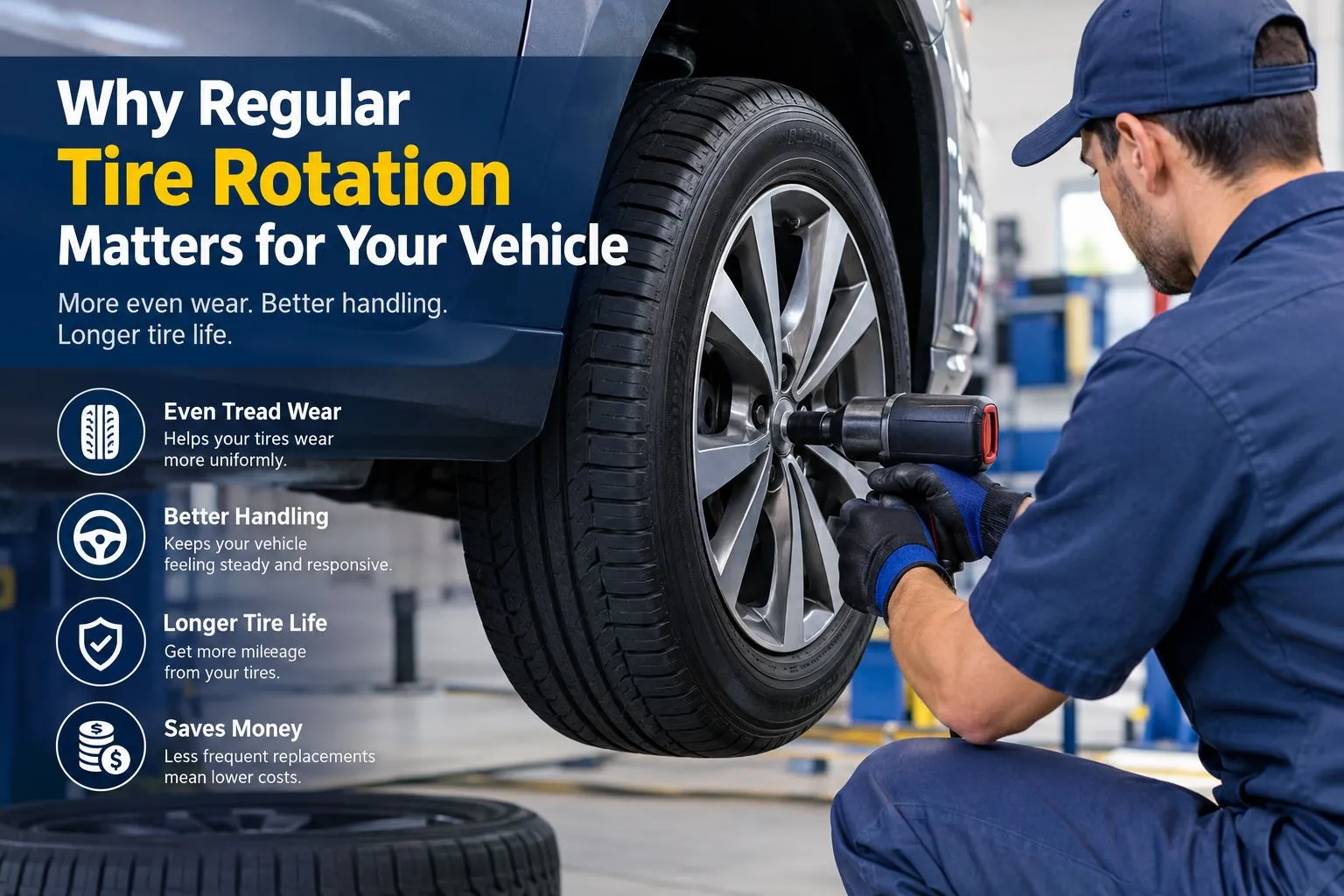


A Simple Guide to Tire Rotation and Maintenance
Tire maintenance can seem complicated when you start looking at tread depth, pressure, alignment, balancing, and rotation schedules. The good news is that basic tire care is relatively straightforward when you know what to check.
One of the easiest maintenance services to understand is tire rotation. It involves moving tires from one wheel position to another according to a pattern that is appropriate for the vehicle and tire design.
What is the easiest way to understand tire rotation?
Direct Answer: Tire rotation means moving your vehicle's tires to different wheel positions to encourage more even tread wear. The correct pattern depends on factors such as drivetrain, tire size, tread direction, and whether the tires are designed to be rotated from side to side.
The goal is simple: avoid allowing the same tire to experience the same type of road stress throughout its entire service life.
Why do tires need to be moved?
Every wheel position places different demands on a tire.
Front tires often handle steering and additional braking forces. On front-wheel-drive vehicles, they also provide engine power to the road. Rear tires experience different loads and forces.
Because of these differences, tread wear can vary from one position to another.
Regular rotation gives each tire the opportunity to operate in different positions, which can help create a more balanced wear pattern.
What are the common tire rotation patterns?
The correct pattern depends on the tire and vehicle. Common approaches include:
- Forward cross: Rear tires move forward, while front tires move diagonally to the rear.
- Rearward cross: Front tires move toward the rear, while rear tires move diagonally to the front.
- X-pattern: Tires move diagonally between axles.
- Side-to-side: Tires on the same axle exchange sides when permitted.
Not every pattern is appropriate for every vehicle.
Directional tires, for example, are designed to rotate in one direction and may require a different procedure. Vehicles with different-sized front and rear tires may also have limited rotation options.
Always follow the vehicle and tire manufacturer's instructions.
When should you rotate your tires?
The vehicle manufacturer's maintenance schedule is the best place to start. Rotation intervals can vary between vehicles and tire setups.
Some drivers also have their tires inspected whenever they visit a shop for routine service. This makes it easier to catch uneven wear before it becomes severe.
Driving conditions can also influence wear. City driving with frequent braking and turning can place different demands on tires than steady highway driving.
Heavy loads and rough roads may also affect wear patterns.
What should you check before and after rotation?
Tire rotation should be part of a broader inspection.
Before or during service, check:
- Tire pressure
- Tread depth
- Sidewall condition
- Visible punctures
- Uneven tread wear
- Wheel condition
After rotation, confirm that the tires are inflated to the recommended pressure.
If unusual wear is present, do not assume rotation alone will correct it. A technician may need to inspect the alignment, suspension, steering components, or wheels.
Can tire rotation fix uneven tire wear?
Rotation can help prevent some types of uneven wear from becoming concentrated on one tire, but it cannot repair tread that has already worn away.
If the tires show severe irregular wear, the underlying cause should be investigated.
Potential causes include:
- Incorrect tire pressure
- Wheel misalignment
- Worn suspension parts
- Improper balancing
- Aggressive driving
- Tire damage
Correcting the cause is important. Otherwise, the same wear pattern may appear again after the tires are rotated.
Is tire rotation the same as wheel alignment?
No. These are two different services.
Rotation changes the position of the tires on the vehicle. Alignment involves adjusting the angles of the wheels so they meet the manufacturer's specifications.
Both services can play a role in maintaining tires, but one does not replace the other.
If your vehicle pulls to one side or the tires are wearing unevenly, an alignment inspection may be appropriate.
Frequently Asked Questions
Can I rotate my tires at home?
It is possible if you have the correct equipment, knowledge, and safe lifting setup. However, tire rotation also provides an opportunity for professional inspection, so many drivers choose to have the service performed by a qualified technician.
Do all four tires need to be rotated?
The appropriate procedure depends on the vehicle and tire setup. Some vehicles use different-sized front and rear tires or directional tires, so the manufacturer’s instructions should determine whether and how they can be rotated.
Regular tire care does not require complicated routines. Check pressure, inspect tread, follow the recommended rotation schedule, and pay attention to unusual handling or wear. These basic steps can help keep your tires working properly and make potential problems easier to identify early.



























Sign in to leave a comment.