A Step-by-Step Guide to Planning and Executing High-Voltage Substation Projects

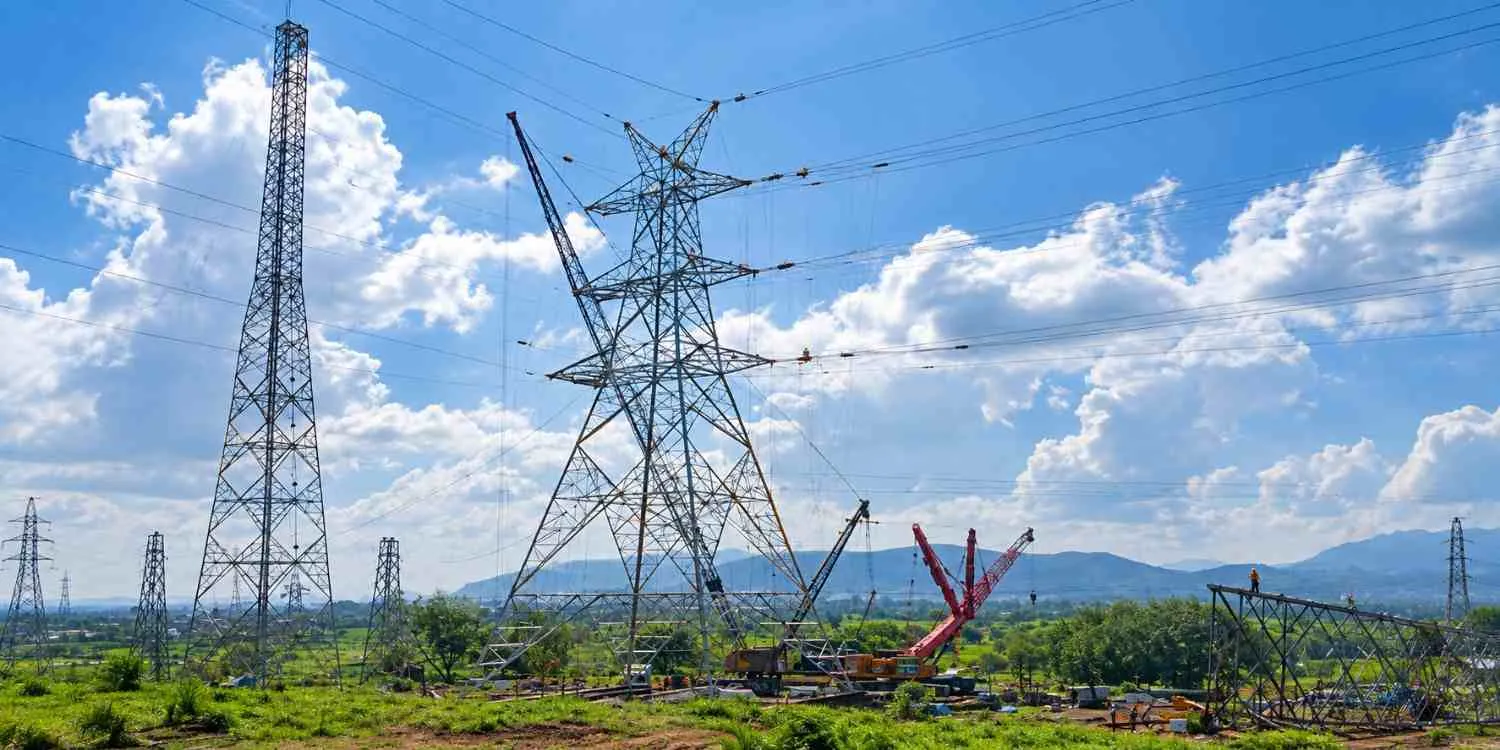
High-voltage substations are essential components of modern power infrastructure. They enable electricity to be transformed, controlled, protected, and transferred between generation facilities, transmission networks, and distribution systems. As India expands its renewable-energy capacity and strengthens its transmission network, the demand for well-planned and efficiently executed substation projects continues to grow.
Developing a high-voltage substation requires careful coordination across engineering, procurement, civil construction, electrical installation, protection systems, automation, testing, and commissioning. Each stage must meet the project's technical specifications, applicable standards, safety requirements, and grid-connection conditions.
For utilities, infrastructure developers, renewable-energy companies, and industrial organisations, understanding this process helps improve project planning and execution.
This guide explains the key steps involved in delivering a high-voltage substation project, from initial feasibility assessment to final commissioning.
What Is a High-Voltage Substation?
A high-voltage substation is an electrical facility that manages the transfer of power between different parts of an electricity network. Depending on its function, it may increase or decrease voltage, connect transmission lines, control power flow, isolate faults, and support grid stability.
Typical substation equipment includes:
- Power transformers
- Circuit breakers and disconnectors
- Current and voltage transformers
- Busbars and insulators
- Protection and control panels
- Earthing and lightning protection systems
- Metering and communication equipment
- SCADA and automation systems
Substations may be designed for different voltage levels, including 132 kV, 220 kV, 400 kV, and 765 kV, depending on network requirements and the project's approved design.
Step 1: Define Project Requirements and Conduct a Feasibility Study
The first step is to establish the substation's purpose, capacity, location, and connection requirements.
The project team should identify whether the substation will serve a transmission network, renewable-energy project, industrial facility, or distribution network.
Key activities include:
- Assessing the required voltage levels and transformation capacity
- Identifying incoming and outgoing transmission lines
- Evaluating land availability and site accessibility
- Reviewing existing grid infrastructure
- Estimating future load or power-transfer requirements
- Identifying applicable technical standards and approvals
- Preparing preliminary cost and schedule estimates
For renewable-energy projects, the feasibility study should also consider power evacuation requirements, the proposed grid-connection point, and coordination with the relevant transmission utility.
A thorough feasibility study helps establish a practical project scope before detailed engineering begins.
Step 2: Develop the Detailed Engineering Design
Once the project requirements are established, engineers prepare the detailed design of the substation.
This stage determines the arrangement of electrical equipment, switching schemes, protection systems, and supporting infrastructure. The design must account for present requirements, future expansion, operational flexibility, and equipment maintainability.
Major engineering activities include:
- Preparing single-line diagrams
- Developing substation layouts
- Conducting load-flow and short-circuit studies
- Selecting busbar configurations
- Designing earthing and lightning protection
- Planning cable routes and trenches
- Designing auxiliary power systems
- Establishing protection and control philosophies
The Central Electricity Authority (CEA) provides transmission-planning criteria and technical guidance for substation design in India. Project teams should refer to applicable regulations and current technical requirements when finalising engineering specifications.
CEA
+1
Step 3: Select Equipment and Manage Procurement
Equipment selection influences substation safety, performance, reliability, and lifecycle costs. The procurement team must ensure that each component meets the approved design specifications and applicable standards.
Major equipment typically includes power transformers, circuit breakers, disconnectors, instrument transformers, surge arresters, insulators, and busbars.
Depending on the electrical configuration, the project may also require a medium voltage switchboard, medium voltage panel, and auxiliary distribution equipment. A packaged transformer substation may be appropriate for certain compact distribution applications, depending on project requirements.
When evaluating low voltage switchboard manufacturers, project teams should review rated current, short-circuit withstand capacity, applicable standards, test documentation, and compatibility with the auxiliary power system. An lv switchgear panel must also meet the project's electrical protection and distribution requirements.
Procurement planning should cover vendor qualification, technical approvals, factory inspections, delivery schedules, and equipment documentation. Early coordination between engineering and procurement can reduce delays caused by specification changes or long manufacturing lead times.
Step 4: Plan Civil Works and Site Preparation
Civil construction creates the physical foundation for substation equipment and supporting facilities.
Typical activities include site levelling, drainage development, foundation construction, cable-trench installation, control-room construction, access-road development, and boundary protection.
The civil design should account for soil conditions, groundwater levels, seismic requirements, rainfall, and potential flooding. Equipment foundations must be designed for the relevant static and dynamic loads.
For outdoor substations, adequate electrical clearances and equipment access must be maintained. The layout should also provide safe routes for maintenance personnel and sufficient space for future expansion where required.
Coordinating civil works with electrical drawings is essential to prevent foundation mismatches, cable-routing conflicts, and equipment-installation delays.
Step 5: Install Electrical Equipment and Control Systems
After the civil works are ready, the installation team begins placing and connecting the electrical equipment according to approved drawings and manufacturer instructions.
This stage can involve transformer positioning, circuit-breaker installation, busbar assembly, cable laying, control-panel installation, and the termination of power and communication cables.
Protection systems are particularly important. A relay control panel and control and relay panel provide interfaces for protection, monitoring, control, and indication functions.
For suitable applications, a 132 kv control relay panel may support the protection and control requirements of a 132 kV substation. Project teams evaluating control relay panel manufacturers in india should verify technical compliance, panel documentation, testing facilities, and experience with comparable installations.
A control and relay panel in substation must be integrated with the relevant circuit breakers, instrument transformers, protection relays, interlocking arrangements, and communication systems according to the approved design.
Installation and testing should be performed by qualified personnel following the applicable safety procedures.
Step 6: Integrate SCADA and Substation Automation
Modern substations require monitoring and control systems that allow operators to observe equipment status and electrical parameters.
A scada system in power system applications can collect information from field devices and present it to operators through monitoring and control interfaces.
A scada control system may support functions such as:
- Monitoring voltage, current, and power
- Displaying circuit-breaker status
- Recording alarms and events
- Tracking transformer parameters
- Enabling authorised remote operations
- Communicating with control centres
A scada based system should be designed around the project's communication architecture, operational requirements, and cybersecurity controls.
When planning scada in power systems, engineers must verify communication links, signal mapping, time synchronisation, alarm configuration, and integration with relevant control centres. These functions should be tested before the substation is placed into service.
Step 7: Implement Protection, Safety, and Quality Controls
Protection and safety requirements must be addressed throughout the project rather than only during commissioning.
Protection engineers should verify relay settings, protection coordination, circuit-breaker trip logic, interlocking, and backup protection arrangements. The selected schemes depend on the network configuration, equipment ratings, fault levels, and applicable requirements.
Quality assurance activities should include equipment inspections, installation checks, cable verification, torque checks, earthing inspections, and documentation reviews.
Site teams must also follow approved electrical safety procedures, permit-to-work systems, isolation requirements, and applicable CEA safety regulations.
Chief Electrical Inspectorate
+1
Step 8: Conduct Testing and Commissioning
Before energisation, the project team must confirm that the equipment and protection systems operate as intended.
Typical commissioning activities include:
- Visual inspection and installation verification
- Transformer and switchgear testing
- Circuit-breaker functional checks
- Cable insulation and continuity testing
- Earthing-system verification
- Protection-relay testing
- Interlocking and trip-circuit checks
- SCADA and communication testing
- Metering and control verification
- Review of commissioning documentation
The team must resolve identified defects and obtain the required inspections, clearances, and approvals before energisation.
Commissioning should follow an approved procedure, with coordination between the project owner, EPC contractor, equipment suppliers, and relevant grid authorities.
Step 9: Plan Handover and Long-Term Maintenance
After commissioning and the required approvals, the substation can be handed over according to the project contract and operating procedures.
The handover package should include as-built drawings, equipment manuals, test reports, protection settings, warranties, spare-parts lists, and maintenance schedules.
A structured maintenance plan helps identify equipment deterioration and operational issues before they lead to outages. Periodic inspections, condition monitoring, protection-system checks, and maintenance records support long-term asset management.
Choosing the Right EPC Partner for Substation Projects
Successful substation delivery depends on engineering expertise, procurement management, construction resources, protection systems, automation, and commissioning experience.
When comparing epc companies in india, developers should examine their track record in high-voltage substations, transmission infrastructure, safety management, quality assurance, and project execution.
Experience across renewable-energy projects can also be relevant. Although epc solar companies and solar epc companies focus on solar generation infrastructure, projects that include dedicated substations may require additional high-voltage engineering and power-evacuation expertise. Therefore, the top epc companies in india and top solar epc companies in india should be evaluated against the actual technical scope rather than rankings alone.
Hartek's Power Systems business provides substation and power-infrastructure capabilities alongside its renewable-energy EPC operations. Explore its Power Systems business and land-based solar EPC services for more information.





Sign in to leave a comment.