

An Access Control System has become the standard security backbone for corporate offices across the UAE, replacing mechanical locks and shared keys with credential-based entry that IT and facility teams can manage remotely. From free-zone headquarters in Dubai to bank branches in Abu Dhabi, a single centralized platform now decides who can enter which floor, room, or server closet, and precisely when. For a working access control system UAE reference, Tektronix maintains a dedicated deployment page outlining hardware, software, and rollout options.
Corporate offices face pressures that residential or retail sites rarely encounter: high staff turnover, a rotating mix of employees and contractors, shared floors inside multi-tenant towers, and regulatory expectations around protecting data rooms and server closets. A mechanical key cannot be revoked remotely, cannot log who opened a door, and cannot be time-boxed for a three-month consultant. This guide walks through what a modern corporate deployment looks like, the hardware and software decisions involved, and the compliance outcomes a well-designed system delivers.
Why Corporate Offices in the UAE Are Replacing Mechanical Locks
The Limitations of Shared Keys and Card Duplication
Shared metal keys create a security gap the moment an employee resigns: unless every key is physically collected, the risk of an unreturned copy lingers indefinitely. Credential-based platforms close that gap instantly — a departing employee's card or mobile pass is deactivated the same day, with no dependency on a physical handover.
Compliance and Audit Pressure Driving Adoption
Enterprise tenants and regulators auditing UAE offices increasingly expect a documented trail of who accessed sensitive areas such as server rooms and finance departments. A Security Access Control System produces an exportable digital log that satisfies ISO 27001 or SOC 2 evidence requests, replacing manual sign-in sheets that are easy to falsify and tedious to reconcile.
Planning an Access Control Deployment for Multi-Tenant Towers
An Access Control System Dubai office fit-out differs from a standalone building because it must coexist with base-building systems already managed by the landlord. In towers across DIFC, Business Bay, and Sheikh Zayed Road, tenant-level door hardware typically integrates with — but remains independent of — the lobby turnstiles and lift-call security the landlord already operates.
Door-by-Door Security Tiering
•Public-facing entrances versus staff-only zones versus restricted server or archive rooms
•Fail-safe or fail-secure lock configuration matched to local civil defense code
•Integration with the building's visitor and vendor management workflow
•A single consolidated platform for tenants leasing multiple floors, instead of duplicate credential databases per level
Free Zone Compliance in DIFC, DMCC, and DAFZA
Tenants operating inside free zones often need their internal access policy to align with the zone authority's own facility regulations, particularly for licensed financial or logistics operations. A platform that exports clean, per-door logs saves compliance teams from manually reconstructing records whenever a zone inspection is requested.
Biometric Access Control Dubai: Cards, Fingerprints, and Facial Recognition
Biometric Access Control Dubai deployments have grown quickly among tenants who want to eliminate card-sharing and buddy-punching at the door. Tying access to an individual rather than a card matters most for server rooms, trading floors, and executive suites, where accountability for every entry is non-negotiable.
When Facial Recognition Outperforms Fingerprint Readers
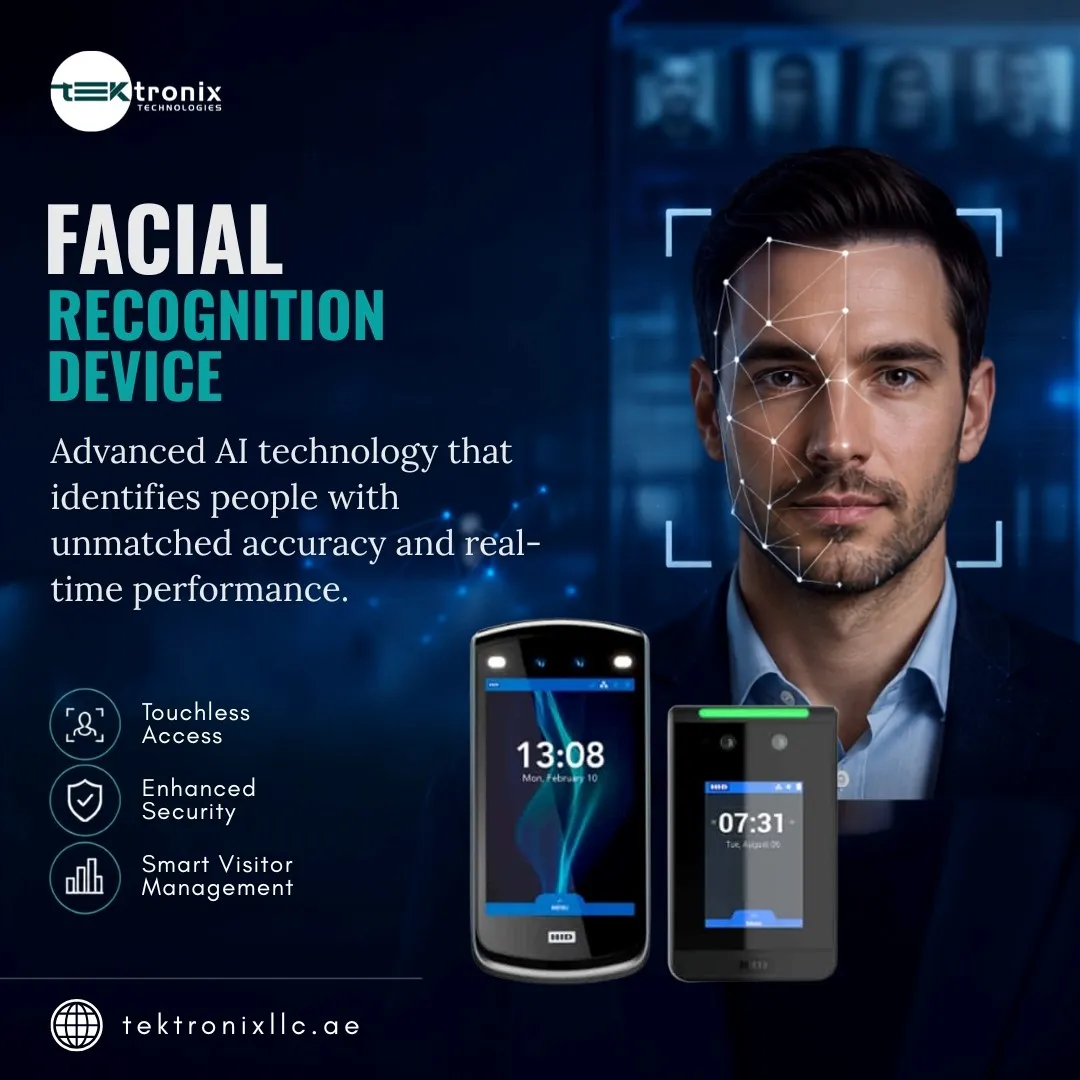
Facial recognition terminals suit high-traffic main entrances because they combine speed with a fully touchless experience, letting staff walk through without pausing. Fingerprint or dual-factor readers combining a biometric scan with a PIN remain the stronger choice for interior doors protecting sensitive data or cash-handling areas.
Throughput Without Compromising Security
Modern biometric terminals verify a face or fingerprint in well under a second, matching card-reader throughput while removing the risk of a lost, stolen, or lent credential. For offices handling client data or trading activity, that accountability often outweighs the marginally higher hardware cost.
Core Door Access Control Hardware Explained
Door Access Control hardware at each opening includes the reader, electric lock or strike, request-to-exit sensor, and a door-position contact that reports whether a door is closed, open, or held ajar past an acceptable duration.
Electric Strikes vs. Magnetic Locks
Electric strikes suit standard office doors and integrate cleanly with existing frames, while magnetic locks are usually reserved for higher-security or glass doors needing greater holding force. The choice also affects fire-code compliance: fail-safe locks release automatically on power loss, while fail-secure locks stay locked, and the correct configuration depends on the door's role in the evacuation plan.
Anti-Passback and Tailgating Prevention
Anti-passback rules stop a single credential from re-entering the same zone twice in a row without an intervening exit — a common safeguard against one employee badging in and handing the card back to a colleague. Paired with a request-to-exit sensor and, at high-security doors, an interlock or turnstile, this substantially reduces tailgating into restricted zones.
Mobile Access Control and Cloud-Managed Platforms
Mobile Access Control replaces the physical card with a smartphone-based credential that IT can issue or revoke instantly from a cloud console. This suits offices with frequent onboarding, since a new hire's phone credential can be provisioned before their first day rather than waiting for a card to be printed and delivered to reception.
Reduced Overhead for Hybrid Offices
For hybrid-work offices where staff badge in only a few days a week, mobile credentials cut the administrative load of managing a large card inventory for employees who are rarely on-site. A lost phone is handled the same way as a lost card: revoke remotely, reissue within minutes.
Scalability for Growing Offices
Offices planning to add floors or relocate within the same tower benefit from controllers and software licensed for expansion from day one, avoiding a forklift upgrade once headcount outgrows the original door count. Cloud-managed platforms make it straightforward to add a new floor's doors to the existing admin console without re-provisioning the whole system.
Choosing the Right Access Control Device for Each Door
Selecting the correct Access Control Device for a given door depends on traffic volume, security tier, and environmental exposure. A staff entrance handling hundreds of daily transits needs a fast, high-throughput reader, while a server room door prioritizes verification strength over speed.
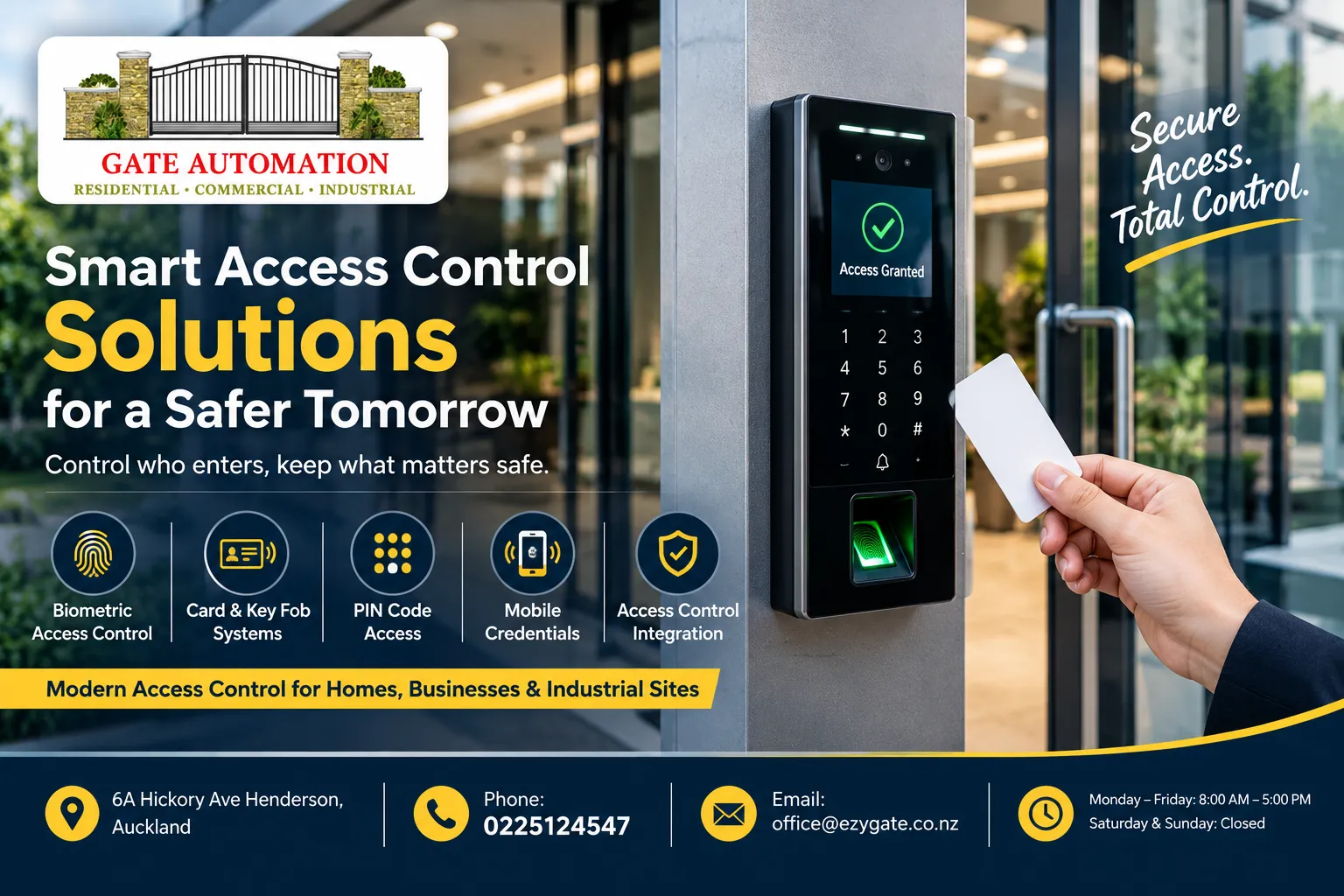
•Card and fob readers for standard staff-only doors
•Facial recognition terminals for high-traffic main entrances
•Fingerprint or dual-factor readers for server rooms and finance areas
•Weatherproof outdoor readers for parking gates and loading docks
End-to-End Access Control Solutions for Enterprise Offices
Enterprise buyers evaluating Access Control Solutions should look beyond individual door hardware to the full platform: centralized credential management, HR-system integration for automatic onboarding and offboarding, visitor and contractor workflows, and reporting that satisfies internal audit and insurance requirements.
HR System Integration
When a new hire is added in the HR platform, their access profile can be created automatically with the correct door permissions for their department, and access is revoked the moment HR marks them as terminated — removing the lag manual offboarding often creates.
CCTV Correlation and Anomaly Reporting
Linking each access event to the corresponding camera footage lets security teams verify who actually used a credential, not just which card or fingerprint was presented. A monthly report can flag a credential used outside normal hours, repeated failed attempts at a restricted door, or a departed contractor's badge still showing activity.
Why Tektronix Is a Trusted Security Access Control System Partner
Tektronix LLC designs and installs access control system deployments for corporate offices, free zones, and enterprise campuses across the Emirates. Our integration team has delivered door and turnstile security for commercial tenants in DIFC and Business Bay, supported technology rollouts referencing infrastructure standards used by G42-affiliated smart-building programs, and aligned vehicle and pedestrian access flows with RTA Dubai guidance for large corporate campuses. Operational patterns refined during large-scale public deployments around EXPO 2020 Dubai — high-throughput credential verification and centralized monitoring — now inform how Tektronix designs everyday corporate office security.
Every project includes a site survey, door hardware selection, software configuration, and staff training. Review the full scope on the Tektronix corporate access control page or request a site assessment for your office.
Implementation Best Practices and Common Pitfalls
Best Practices
•Run a door-by-door security audit before ordering any hardware, classifying every door by tier
•Route access control cabling through the same containment as low-voltage IT cabling during fit-outs
•Wire door controllers through an uninterruptible power supply so doors behave predictably during a brief outage
Pitfalls to Avoid
The most frequent delay is discovering mid-installation that a fire-rated door needs a different lock configuration than planned, which can trigger a civil defense resubmission. The second common pitfall is skipping a formal handover of the admin console to IT staff — without training, credential management often reverts informally to one person holding all the access, recreating the single-point-of-failure risk the system was meant to remove.
Measuring Success After Go-Live
Facility and security teams typically track three indicators in the first 90 days: the percentage of staff migrated from physical keys to credentials, the number of forced-door or held-open alarms requiring follow-up, and how quickly offboarding is processed after an employee's last day. A steady decline in alarm volume alongside same-day offboarding is the clearest sign the system is functioning as intended.
Conclusion
A well-designed Access Control System gives UAE corporate offices credential-based security that mechanical locks cannot match. From biometric readers and reliable door hardware to convenient mobile credentials, every component works together as part of a coordinated security platform. Enterprise-grade access control solutions reduce administrative overhead while strengthening audit readiness. For offices seeking a proven access control system UAE deployment partner, Tektronix combines door-by-door security design with hands-on local deployment experience.
FAQS
1. What is the difference between an access control system and a traditional lock-and-key setup?
A credential-based system lets facility teams grant, restrict, and revoke entry instantly per person, per door, and per time window, and logs every attempt — none of which a mechanical key can do.
2. Can biometric readers be combined with card or mobile credentials?
Yes. Many corporate deployments use dual-factor verification for high-security doors, requiring both a fingerprint or face scan and a card or mobile credential before the door releases.
3. What happens to access if an employee's phone is lost or stolen?
The mobile credential is revoked remotely from the admin console within minutes and reissued to a replacement device, the same way a lost physical card would be deactivated.
4. Does the system integrate with a building's base-building security?
Yes. Office-level door hardware is typically configured to work alongside the landlord's lobby turnstiles and lift-call systems rather than replacing them, so tenant and building security operate as complementary layers.
5. How long does installation take for a mid-size corporate office?
A typical fit-out with 10 to 20 doors can be completed within two to four weeks after device selection and cabling plans are finalized, depending on civil defense approvals for fire-rated doors.






























Sign in to leave a comment.