
Introduction
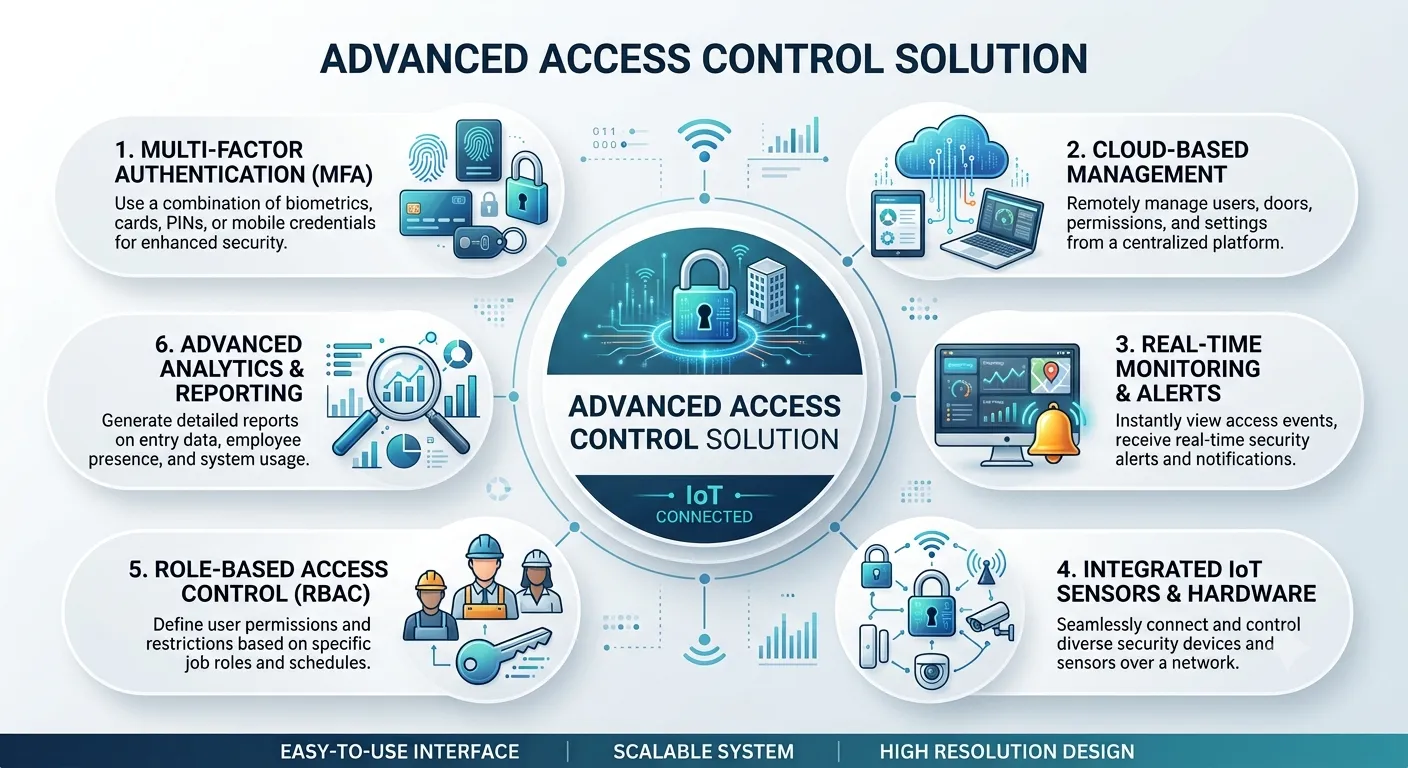
The demand for access control systems in Saudi Arabia has surged dramatically over the past five years as businesses prioritize workplace security and regulatory compliance. From sprawling commercial complexes in Riyadh to industrial facilities in the Eastern Province, organizations are recognizing that traditional lock-and-key solutions no longer meet modern security standards. An effective access control system not only protects physical assets but also provides valuable data insights, enhances operational efficiency, and ensures compliance with Saudi Arabia's evolving security regulations.
This comprehensive guide explores everything you need to know about implementing a robust access control solution for your Saudi Arabian facility.
Understanding Access Control Systems
An access control system is a security framework that regulates who can enter specific areas within a building or facility. Unlike conventional security measures, modern access control systems use advanced technology to grant or deny entry based on user credentials, time-based permissions, and predefined security protocols.
In Saudi Arabia's competitive business environment, organizations are increasingly adopting sophisticated door access control systems and biometric access control technologies to protect sensitive areas, safeguard valuable assets, and maintain accurate visitor logs.
Types of Access Control Technologies
Biometric Access Control Systems Biometric technology has revolutionized security in Saudi Arabia. Fingerprint recognition, facial recognition, and iris scanning offer unparalleled accuracy and eliminate the risk of lost credentials. Many government institutions and banks across the Kingdom have adopted biometric access control for high-security zones.
RFID and Card-Based Systems Radio-Frequency Identification (RFID) and proximity card systems remain popular for commercial access control applications. Employees carry cards or keycards that communicate with access points, providing a balance between security and convenience. These systems are ideal for medium-sized operations across Saudi Arabia.
PIN and Code-Based Access Control Keypad systems requiring numerical PINs offer a cost-effective entry point for organizations beginning their security digitization journey. While less secure than biometric solutions, they work well for basic office security solutions in smaller facilities.
Mobile-Based Access Control Smartphone-enabled access is gaining traction in Saudi Arabia's tech-forward companies. Employees use mobile apps or digital credentials to unlock doors, combining convenience with real-time audit trails.
Why Saudi Arabian Businesses Need Access Control Systems
Regulatory Compliance
Saudi Arabia's workplace regulations increasingly mandate documented access trails and controlled entry to facilities. The General Authority for Civil Aviation and the Saudi Industrial Property Authority require specific security protocols, making comprehensive access control essential for compliance.
Asset Protection
With valuable equipment, confidential documents, and sensitive data housed in facilities across the Kingdom, unauthorized access poses significant financial risks. A properly configured door access control system ensures only authorized personnel reach critical areas.
Employee Safety and Accountability
Modern access control systems create transparent records of who enters and exits facilities at any time. This accountability measure enhances workplace safety and simplifies incident investigations.
Operational Efficiency
Automated access eliminates time spent managing physical keys and manual sign-in sheets. Employees enjoy seamless entry, while administrators gain real-time visibility into facility occupancy and movement patterns.
Implementing Access Control Solutions in Saudi Arabia
Assessment and Planning
Before selecting an access control solution, conduct a thorough security audit of your facility. Identify high-risk areas requiring restrictions, determine the number of authorized users, and assess integration needs with existing systems. Many organizations partner with local security consultants in Riyadh, Jeddah, and Dammam for this initial evaluation.
Technology Selection
Consider these factors when choosing your commercial access control system:
- Scalability: Will your system grow with your organization?
- Integration capabilities: Must it connect with CCTV, alarm systems, or HR databases?
- User-friendliness: Can your staff operate it with minimal training?
- Support infrastructure: Are qualified technicians available in your region?
Installation and Configuration
Professional installation is critical for optimal performance. Experienced technicians will properly position card readers, configure access levels, set time-based permissions, and establish backup power systems. In Saudi Arabia, many businesses employ both local installers and manufacturer representatives to ensure compliance with international standards.
Staff Training
Comprehensive training ensures your team maximizes system benefits. User training covers badge usage and credential procedures, while administrative training encompasses user management, report generation, and system troubleshooting.
Benefits of Modern Access Control Systems
Enhanced Security
Real-time alerts notify security personnel of unauthorized access attempts. Biometric access control systems virtually eliminate credential fraud, providing the highest security level available today.
Reduced Operational Costs
Eliminating manual key management, reducing security personnel requirements for basic entry monitoring, and preventing theft and unauthorized use of resources significantly reduces costs over time.
Audit and Compliance Documentation
Detailed access logs provide undeniable documentation of who accessed specific areas and when. This functionality is invaluable during security investigations and compliance audits.
Flexible Access Permissions
Manage access rights by day, time, location, and user role. Temporary contractors, evening staff, and visiting executives can receive appropriate access levels that automatically expire.
Integration with Smart Facilities
Modern access control systems integrate seamlessly with workplace management platforms, visitor management systems, and emergency evacuation procedures, creating comprehensive facility solutions.
Choosing the Right Access Control Vendor in Saudi Arabia
Selecting a qualified vendor is paramount to your system's success. Look for providers offering:
- Proven experience with Saudi Arabian businesses and facilities
- Factory-certified technicians and after-sales support
- Systems compatible with local networking infrastructure
- Responsive customer service across multiple Saudi cities
- Competitive warranty and maintenance packages
Leading international manufacturers maintain service centers in Riyadh and the Eastern Province, while local system integrators offer personalized solutions tailored to regional requirements.
Future Trends in Access Control Technology
AI-Powered Systems Artificial intelligence increasingly enables predictive security analytics, anomaly detection, and automated threat responses within access control environments.
Cloud-Based Management Remote management capabilities allow facility managers to monitor and adjust access permissions from anywhere, a trend gaining popularity among Saudi enterprises managing multiple locations.
Contactless Technology Post-pandemic preferences for touchless entry have accelerated adoption of facial recognition and mobile-based access control systems across the Kingdom.
Integration with IoT Connected device ecosystems enable access control systems to communicate with lighting, HVAC, and other building management systems for enhanced efficiency.
Conclusion
Access control systems have become indispensable for modern organizations across Saudi Arabia, from multinational corporations to government institutions. Whether you're protecting valuable assets, ensuring regulatory compliance, or enhancing operational efficiency, investing in a robust access control solution delivers measurable returns. The evolution of biometric access control, RFID systems, and cloud-based management platforms means there's an appropriate technology for every facility size and budget. By carefully assessing your security needs, selecting qualified vendors, and implementing comprehensive training, you'll establish a foundation for long-term security and operational excellence. For organizations serious about modernizing their security infrastructure, the question isn't whether to adopt access control technology—it's which solution best aligns with your unique requirements and growth trajectory.
Frequently Asked Questions (FAQs)
1. What is the most secure type of access control system?
Biometric access control systems are currently the most secure option, utilizing fingerprint, facial recognition, or iris scanning technology. These systems are virtually impossible to circumvent through credential theft or duplication, making them ideal for high-security government facilities, financial institutions, and research centers across Saudi Arabia. However, they typically involve higher initial investment than card-based systems. Many organizations implement layered security by combining biometric systems for sensitive areas with card-based access for general office use.
2. How much does an access control system cost in Saudi Arabia?
Access control system costs vary significantly based on scope and technology type. Basic door access control systems for small offices may start at SAR 10,000-20,000, while comprehensive biometric access control installations for enterprise facilities typically range from SAR 50,000 to SAR 500,000+. Costs depend on the number of access points, technology sophistication, installation complexity, and ongoing maintenance. We recommend obtaining multiple quotes from qualified vendors in your city to ensure competitive pricing and quality service.
3. Can existing doors be retrofitted with access control systems?
Yes, most existing doors can be retrofitted with access control technology. Professional installers assess your current door infrastructure and recommend appropriate solutions—electric strikes for traditional locks, electromagnetic locks for glass doors, or wireless systems for quick deployment. Retrofitting is often more economical than complete door replacement, particularly for existing commercial facilities in Saudi Arabia seeking security upgrades.
4. How do I choose between biometric and card-based access control?
Your choice depends on security requirements, budget, and user preferences. Biometric access control offers superior security and eliminates lost credential issues but involves higher costs and requires more sophisticated infrastructure. Card-based systems are cost-effective, user-friendly, and easier to manage but are vulnerable to credential loss or theft. Many organizations implement hybrid approaches, using biometric systems for secure areas and card-based access for common spaces.
5. What maintenance is required for access control systems?
Regular maintenance ensures optimal performance and security. Essential maintenance includes quarterly security audits, battery testing for backup power systems, credential updates and expiration management, software updates and patches, and physical inspection of readers and locks. Most reputable vendors offer comprehensive maintenance contracts starting at SAR 2,000-5,000 annually. Establishing a maintenance schedule with your vendor prevents costly downtime and security vulnerabilities.


























Sign in to leave a comment.