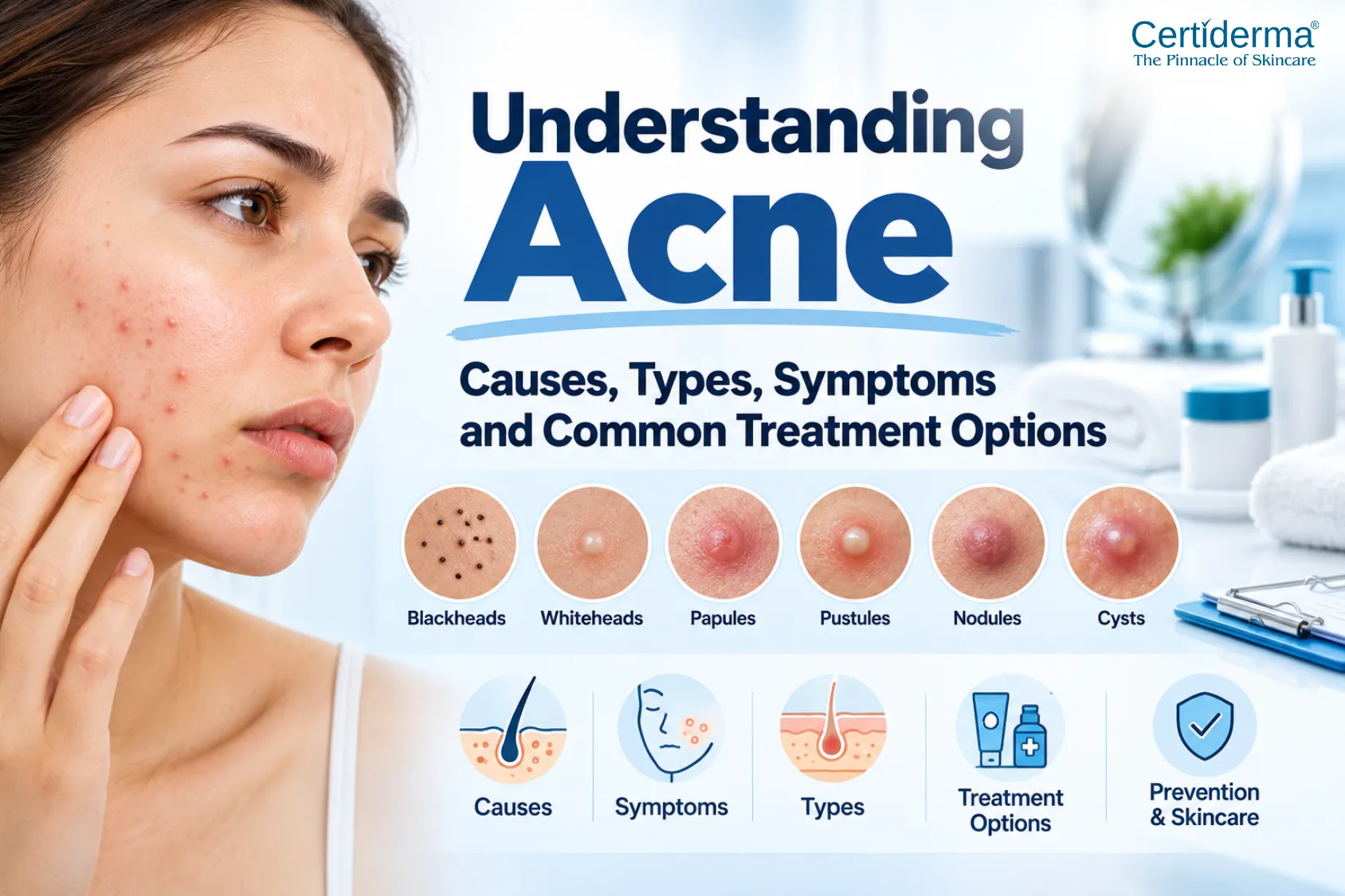

Acne treatment options can vary depending on the type, severity, location, and underlying factors associated with the condition. Acne is one of the most common skin conditions, particularly among teenagers and young adults. It can appear as blackheads, whiteheads, red bumps, pustules, or deeper and more painful lesions. While occasional breakouts may be mild, persistent or inflammatory acne can sometimes lead to pigmentation and scarring.
Understanding the causes, types, symptoms, and available acne treatment options can help people make more informed decisions about their skincare. Although acne cannot always be prevented completely, appropriate skincare and professional treatment can help manage breakouts and reduce the risk of complications.
What Is Acne?
Acne is a skin condition that develops primarily around hair follicles and sebaceous glands. These glands produce sebum, an oily substance that helps maintain the skin's protective barrier.
Acne can develop when excess sebum, dead skin cells, and other material contribute to blockage of hair follicles. Inflammation can then develop, resulting in different types of acne lesions.
The bacterium Cutibacterium acnes is also associated with acne and can contribute to inflammatory processes within blocked follicles. Importantly, acne is not simply the result of poor hygiene or having "dirty skin."
The severity of acne can range from a few occasional comedones to widespread inflammatory lesions involving the face, chest, shoulders, or back.
What Causes Acne?
Acne usually develops because of several interacting factors rather than one single cause.
Excess Sebum Production
Sebum is naturally produced by the sebaceous glands. Increased oil production can contribute to an environment where pores become more easily blocked.
Hormonal changes during puberty are one reason sebaceous glands can become more active during adolescence. Hormonal influences can also contribute to acne in adults.
Dead Skin Cell Buildup
Skin cells are continuously shed and replaced. When dead skin cells accumulate within hair follicles and combine with sebum, they can contribute to clogged pores.
These blockages are known as comedones and can develop into whiteheads or blackheads.
Bacteria and Inflammation
Cutibacterium acnes is a microorganism normally found on human skin. Changes within clogged follicles can allow conditions that contribute to inflammation.
Inflammation is responsible for many of the red, swollen, tender lesions associated with inflammatory acne.
Hormonal Changes
Hormonal fluctuations can influence sebum production and acne development. Puberty is a particularly common period for acne because of changes in androgen activity.
Some adults may also experience acne associated with hormonal fluctuations, including patterns that become more noticeable around the menstrual cycle. Pregnancy and certain hormonal conditions may also affect the skin.
Genetics
Family history may influence a person's tendency to develop acne. People whose parents or close relatives experienced significant acne may have an increased susceptibility.
Other Contributing Factors
Certain medications can contribute to acne-like eruptions in some individuals. Occlusive cosmetics or skincare products may also aggravate breakouts in susceptible skin.
Stress does not necessarily cause acne by itself, but it may aggravate existing acne in some people. Friction, pressure, or repeated contact with the skin may also contribute to breakouts in certain situations.
Diet is another frequently discussed factor. Research continues to examine relationships between diet and acne, and individual responses can vary. It is better to avoid assuming that a particular food is the definite cause of acne in every person.
Types of Acne
Acne can appear in several forms. Understanding the differences can help explain why treatment approaches vary.
Blackheads
Blackheads are open comedones. They develop when a pore becomes blocked but remains open at the surface. The dark appearance is caused by changes in the material exposed to air, not simply by dirt.
Whiteheads
Whiteheads are closed comedones. The opening of the follicle is covered by a thin layer of skin, creating a small, pale or skin-colored bump.
Papules
Papules are small, raised, inflamed bumps. They may appear red or pink and can be sensitive or tender.
Pustules
Pustules are inflamed lesions that contain visible pus. They may have a red base with a white or yellowish center.
Nodules
Nodules are deeper, larger, and often painful inflammatory lesions. They develop deeper within the skin and may have a greater risk of causing scarring.
Cysts
Cyst-like or deeply inflammatory acne lesions can be painful and may contain fluid or pus. Severe acne involving deep lesions should generally be evaluated by a dermatologist because of the potential for scarring and the need for appropriate treatment.
Common Symptoms of Acne
The appearance of acne can vary considerably from person to person. Common signs include:
- Blackheads
- Whiteheads
- Red bumps
- Pustules
- Tender or painful lesions
- Nodules
- Deep inflammatory lesions
- Post-inflammatory redness or dark marks
- Acne scars
Some people experience primarily non-inflammatory acne, while others develop a combination of comedones and inflammatory lesions.
Where Does Acne Commonly Occur?
Acne most commonly affects areas of the body with a relatively high concentration of sebaceous glands.
Common locations include the:
- Face
- Forehead
- Cheeks
- Chin and jawline
- Chest
- Upper back
- Shoulders
Facial acne is particularly noticeable, but acne affecting the back and chest can also be significant and sometimes uncomfortable.
Who Can Develop Acne?
Although acne is particularly common during adolescence, it is not limited to teenagers.
Teenage acne often develops alongside hormonal changes during puberty. Adults can also experience persistent acne or develop acne after previously having relatively clear skin.
Hormonal-pattern acne may occur in some adults, particularly around the lower face and jawline, although the location and pattern of acne vary between individuals.
People with oily or combination skin may be more prone to clogged pores, but acne can occur in people with different skin types.
How Is Acne Diagnosed?
Acne is usually diagnosed through a clinical examination by a qualified healthcare professional or dermatologist.
During an assessment, the clinician may consider the type of lesions, severity, location, duration, previous treatments, medications, and other relevant factors.
For ordinary acne, laboratory testing is not generally required. However, a healthcare professional may recommend additional evaluation when there are signs suggesting another underlying condition or an unusual presentation.
A professional assessment can also help distinguish acne from other skin conditions that may appear similar.
Common Acne Treatment Options
Readers looking for dermatology-focused product information can also explore Certiderma's dermatology product portfolio, which includes acne-care formulations alongside products for other dermatological concerns.
Topical Treatments
Topical acne treatments are applied directly to the affected skin. For example, tretinoin is a topical retinoid commonly used in acne management, particularly for comedonal acne. Its use should follow appropriate professional guidance because irritation and other considerations can occur.
Some topical antibiotic formulations may be used in selected acne cases under professional guidance. One example is clindamycin phosphate with nicotinamide, a combination listed within Certiderma's acne-care portfolio.
Different ingredients work in different ways. Some help reduce clogged pores, while others address inflammation or acne-associated bacteria.
Not every topical treatment is suitable for every person, and some active ingredients can cause dryness, irritation, or sensitivity. Professional guidance can be useful, particularly when acne is persistent or moderate to severe.
Oral Treatments
Dermatologists may consider oral medicines for moderate-to-severe, persistent, or widespread acne.
Depending on the individual situation, treatment may include certain oral antibiotics or other prescription medicines. The appropriate choice depends on factors such as acne severity, previous treatment, medical history, and potential risks.
Prescription medicines should be used according to the instructions of a qualified healthcare professional.
Hormonal Treatment
Hormonal treatment may be considered for some individuals whose acne is influenced by hormonal factors. The suitability of these treatments depends on the person's health, medical history, and other factors.
Hormonal therapies should only be used under appropriate medical supervision.
Isotretinoin
Isotretinoin is a prescription medicine that may be considered for certain severe or treatment-resistant forms of acne.
It can be highly effective for appropriately selected patients, but it has important safety considerations and requires medical supervision. Pregnancy-related risks are particularly important, and appropriate precautions and monitoring are required when isotretinoin is prescribed.
It should never be started or stopped without guidance from the prescribing healthcare professional.
Acne Skincare Routine
A consistent skincare routine can complement an appropriate acne treatment plan.
Gentle Cleansing
Use a gentle cleanser rather than repeatedly scrubbing the skin. Excessive washing can irritate the skin barrier and may make some acne-prone skin more uncomfortable.
Avoid Excessive Scrubbing
Harsh scrubs and aggressive exfoliation can irritate inflamed skin. Acne is not caused simply by surface dirt, so aggressive cleaning does not solve the underlying problem.
Choose Suitable Products
People with acne-prone skin may benefit from products described as non-comedogenic or suitable for acne-prone skin.
However, product labels alone cannot guarantee that a product will suit every individual.
Moisturize
Moisturizers can help support the skin barrier, particularly when acne treatments cause dryness or irritation.
Use Sunscreen
Daily sunscreen can help protect the skin from ultraviolet radiation. Sunscreen may also be particularly useful for people concerned about the appearance of post-inflammatory marks.
Avoid Picking or Squeezing
Picking, squeezing, or repeatedly touching acne lesions can increase inflammation and may increase the risk of prolonged marks or scarring.
Things to Avoid When You Have Acne
Several common habits can make acne-prone skin more irritated.
Avoid unnecessarily:
- Picking or squeezing pimples
- Using harsh scrubs
- Washing the skin excessively
- Combining several strong active ingredients without guidance
- Applying unverified home remedies
- Sharing prescription acne medicines
- Stopping prescribed treatment without consulting the healthcare professional
A simpler and consistent routine is often more practical than constantly changing products.
Can Acne Cause Scars?
Acne can sometimes result in lasting changes to the skin, particularly when inflammation is severe or lesions are repeatedly manipulated.
Post-inflammatory redness and hyperpigmentation may occur after an acne lesion heals. These marks are different from true acne scars.
Acne scars can include atrophic scars, which appear as depressions in the skin, and raised scars in some individuals.
Early management of significant inflammatory acne may help reduce the risk of scarring. People who are developing scars or experiencing deep, painful acne should consider professional dermatological evaluation.
When Should You See a Dermatologist?
Mild occasional breakouts may sometimes be managed with basic skincare and appropriate over-the-counter products. However, professional advice is particularly useful when acne:
- Is painful or deep
- Is widespread
- Is leaving scars
- Continues despite basic skincare
- Is significantly affecting daily life or confidence
- Appears suddenly or unusually
- Requires prescription treatment
A dermatologist can assess the type and severity of acne and develop an appropriate treatment plan.
Acne Prevention and Long-Term Skin Care
There is no guaranteed way to prevent every acne breakout, particularly when hormones and genetics play an important role. However, consistent skincare and appropriate treatment may help reduce breakouts.
A practical approach includes gentle cleansing, suitable moisturization, sunscreen, avoiding unnecessary irritation, and following a consistent treatment plan.
It is also useful to remember that acne treatments often require time. Constantly changing products because results are not immediate can increase irritation and make it harder to determine what is helping.
Frequently Asked Questions About Acne
What is the main cause of acne?
Acne generally results from several factors, including excess sebum, follicular blockage, changes in skin-cell shedding, inflammation, bacteria associated with acne, and hormonal influences.
What are the different types of acne?
Common acne lesions include blackheads, whiteheads, papules, pustules, nodules, and deeper inflammatory lesions.
Can adults get acne?
Yes. Acne can persist from adolescence into adulthood or develop for the first time during adulthood.
Does oily skin always cause acne?
No. Oily skin can contribute to clogged pores, but acne involves several factors and can occur in people with different skin types.
Should you pop pimples?
It is generally better to avoid squeezing or popping acne lesions because manipulation can increase inflammation and may contribute to marks or scarring.
Can acne cause permanent scars?
Yes. More severe or inflammatory acne can sometimes cause permanent scars. Picking or squeezing lesions may also increase the risk.
When should I see a dermatologist for acne?
Consider seeing a dermatologist when acne is persistent, painful, widespread, scarring, significantly affecting your quality of life, or not improving with basic skincare.
How long does acne treatment take to show results?
Treatment response varies depending on the type and severity of acne and the treatment being used. Many acne treatments require consistent use over time rather than producing immediate results.
Certiderma and Dermatology-Focused Care
Dermatology-focused pharmaceutical companies such as Certiderma provide products intended for different dermatological and skincare needs. As with any dermatology product, the appropriate choice depends on the specific skin condition, product formulation, individual circumstances, and professional medical advice where required. Readers should review product information and consult a qualified healthcare professional when prescription treatment or persistent skin problems are involved.
Final Thoughts
Acne is a common and often manageable skin condition with multiple contributing factors. It can appear in several forms, from blackheads and whiteheads to inflammatory papules, pustules, nodules, and deeper lesions.
Understanding the causes and types of acne can make it easier to recognize when basic skincare may be appropriate and when professional dermatological care is needed.
A gentle, consistent skincare routine, appropriate treatment, sun protection, and avoiding unnecessary manipulation of lesions can all form part of responsible acne management. For persistent, painful, severe, or scarring acne, consultation with a qualified dermatologist can help identify an appropriate treatment approach.
























Sign in to leave a comment.