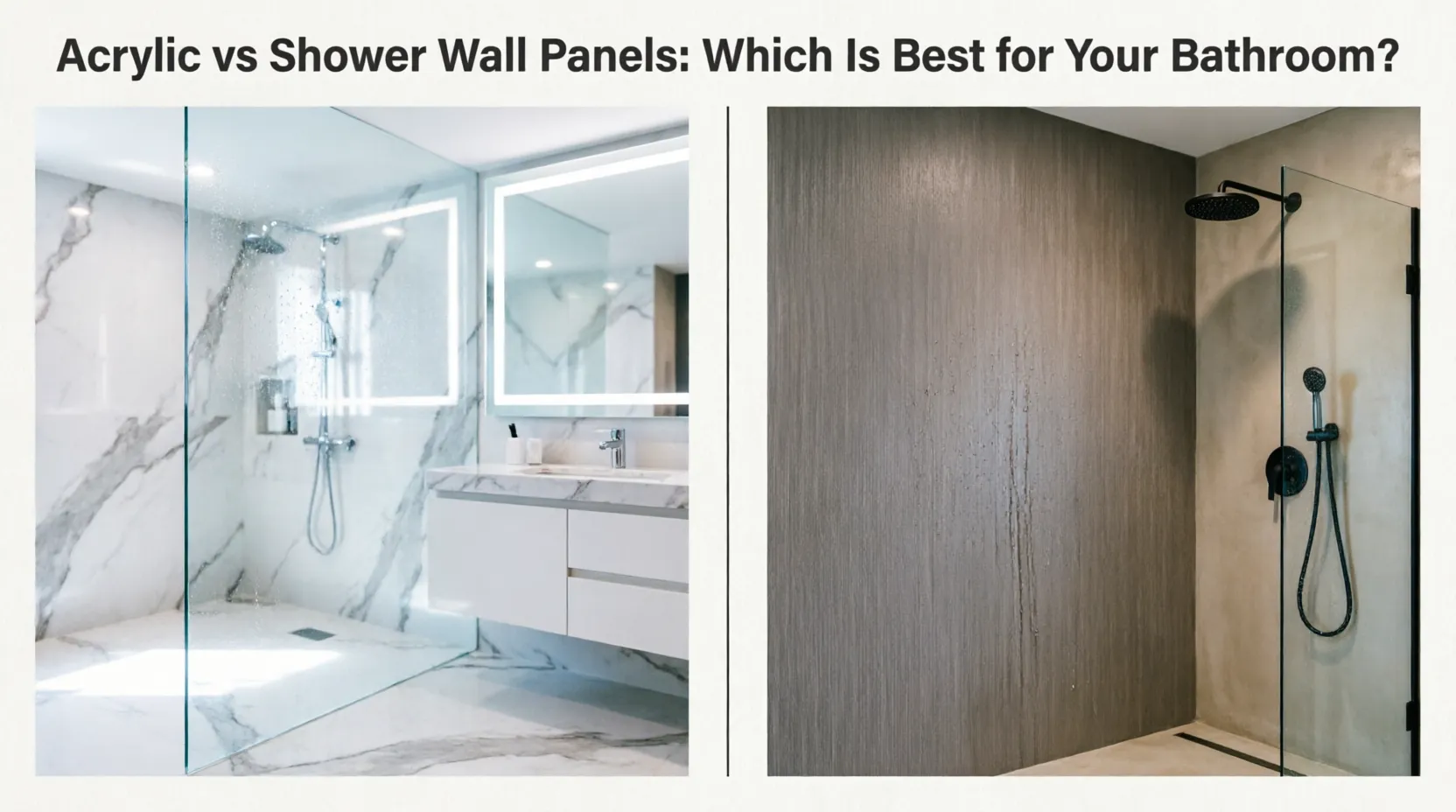

Picture two showers. In one, a single sheet of glossy acrylic flows from tray to ceiling, broken only by a seam or two. The other is a patterned arrangement of PVC or composite boards, designed to resemble natural stone. Both are waterproof, both look good in a picture — but in real life, the panels behave very differently. Choosing between acrylic and other panel materials is as much about finding the right match for your wall as it is about fitting and cleaning.
A Place for Acrylic in Your Shower
Acrylic panels are made from rigid sheets of plastic and finished to resemble natural stone, wood or gloss paint. The effect can be a consistent colour throughout the thickness of the sheet or a painted or printed design on one or both surfaces. Acrylic tends to finish in a smooth, modern gloss.
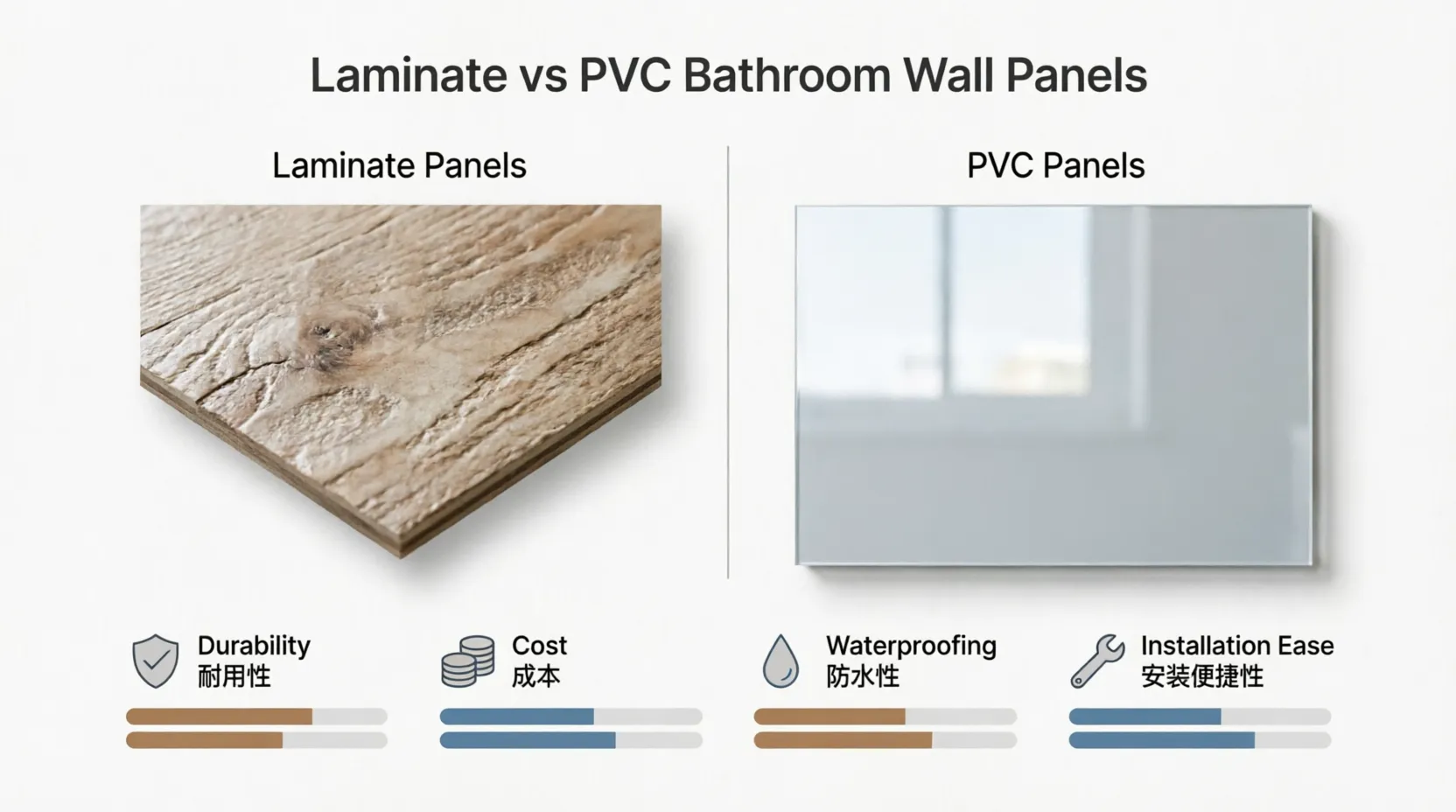
Other shower panel materials are made of lighter-weight, hollow or multi-density PVC sheets, laminate-faced boards and a range of composite materials that make up a greater variety of patterns and textures. Because manufacturers make both composite and PVC products in different ways, it helps to know what a given panel is made of, and what a given manufacturer recommends.
Living With the Material
Acrylic is easy to clean but difficult to disguise, while other materials tend to offer texture and pattern. Any glossy surface shows fingerprints, water spots and dried scale more than a matte, and acrylic shows them all more than a patterned one. Acrylic is not easy on scouring pads, either. Some manufacturers apply a protective coating, and the extent of any such protection can vary greatly, so it is important to speak to the manufacturer about what products are recommended.
Other panel materials tend to be laminated or textured, meaning that marks are hidden. In a family bathroom or a bathroom with hard water, forgiveness is a welcome quality. In any case, soft cloths and gentle cleaners will help maintain the appearance of most panel surfaces.
The Value of Rigid Panels
Rigid panels carry a definite benefit: the ability to span large distances and create an uninterrupted expanse of finish. But they are even more particular about the shape of the surface to which they attach — a slight curve or dip in the wall behind becomes a pronounced warp in the acrylic.
Thin sheets of PVC are flexible, making them good candidates for uneven or pitted plaster, but they can also be dented if a heavy object hits them. Composite panels tend to fall somewhere between the two materials. As a rule of thumb, a panel that is stiff but not unbending requires a flatter, more even surface than one that is inherently flexible.
Water, Seams and the One Thing We Forget
All three materials, but notably acrylic, are resistant to water in their surfaces. However, the weakness in any panel system is likely to be found in the seams, corners and cut edges, particularly those that have been cut for electrical outlets or valves. It is far more important to pay close attention to the recommendations for finishing the joints in your panels than it is to choose between materials.
Acrylic panels are joined with a sanitary silicone or a specific profile while PVC panels use a tongue and groove system that fits at the edges. In either case, the instructions should be followed to the letter, and the edges sealed with a flexible sanitary silicone, along the edges of the tray or the wall. A good place to start looking for fitting advice is the Floorstowalls website, which provides fitting notes for all its panels. Understanding how your panels should be fitted is essential before ordering.
Getting Started and Preparing the Wall
The preparation work for any panel system is necessarily dependent on the wall itself — checking for dampness, removing old paint, filling in any minor imperfections and testing for flatness with a long straight edge. A rigid panel requires a flatter surface than one that is made to be flexible. If the wall is very uneven, battens (strips of timber) should be considered as a base if the system allows it.
Acrylic tends to move with temperature changes and the manufacturer should recommend expansion gaps and a suitable adhesive. The wrong adhesive can leave a visible imprint on the panels. Overall, PVC is lighter and easier to work with, which makes it appealing to DIYers. If laying out the panels for a shower enclosure, the Floorstowalls Shower Panels range can be used as a reference point to estimate the number of joints and their placement.
Budgeting: What Does It Really Cost?
In terms of outright price, acrylic tends to lean towards premium while PVC and laminates tend to be found at a lower price point. However, the difference within both groups can be considerable. In any case, it is necessary to consider the cost of the trims, silicone, tools and time when comparing like-for-like. Warranties are also important. Always bear in mind that most manufacturers will provide figures on the expected life of a product, but a warranty from the manufacturer or a third party can be an indicator of value.
Choosing Based on Preference
A minimalist bathroom with few visible joins and a large expanse of flat surface is a good candidate for acrylic. However, a textured surface and a more natural look suggest another type of panel, as does a rental property or a smaller budget. For a long-term project or one where the surface is likely to be bumped, composite panels can offer more durability and a more substantial feel.
It is always best to ask for a sample and test it before buying, but the visual difference can be difficult to see without the ambient lighting of one’s own bathroom. The tactile difference is easy to see, too: lifting a sample shows that composite boards are heavier than PVC.
Buying With Confidence
It is important to speak to a supplier when considering panel systems, as the combination of panels, trims and sealant are all critical to a successful fit. At the same time, it is a good idea to read independent reviews before choosing a supplier, and the strong values of trust of Floorstowalls is one good resource.
Conclusion
Acrylic has advantages in terms of a clean, glossy appearance that minimises the number of joins, but other panel materials offer more choice in terms of texture and pattern. The question of ease of fitting is more dependent on the individual with the tools to hand, but it is always helpful to know the difference. A practical first step is to request samples of the materials of interest and test them under the same lighting as the bathroom where they will go. It is important to read the fitting and care instructions when the sample arrives.























Sign in to leave a comment.