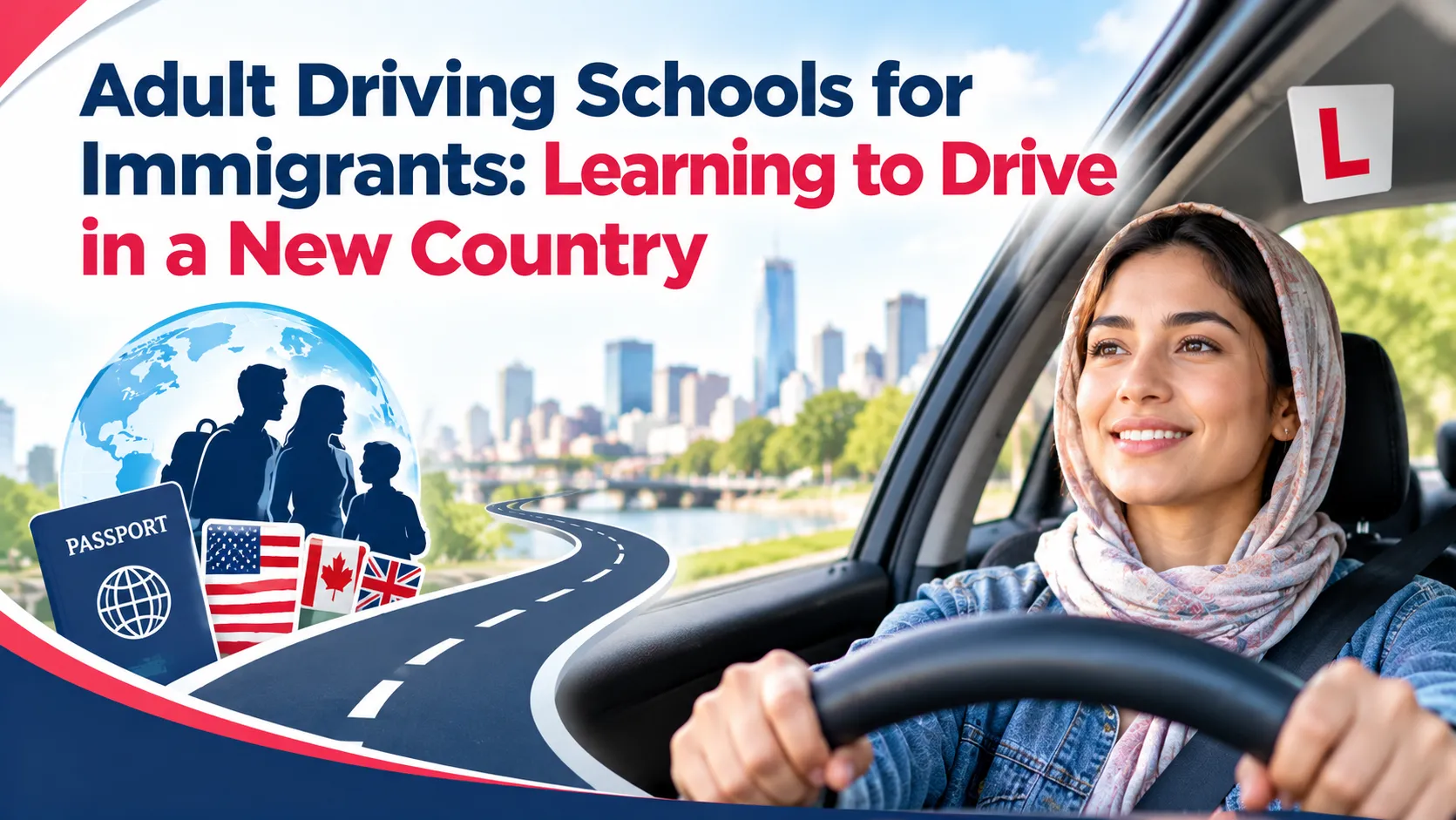

I've taught a fair number of students over the years who drove for decades back home, sometimes through genuinely chaotic traffic, only to feel completely lost the moment they got behind a wheel here. That's exactly why Adult Driving Schools built with immigrant learners in mind matter so much, and honestly, they're often overlooked entirely by generic driving programs that assume every adult student is starting from zero.
Learning to drive in a new country isn't really about learning to drive from scratch most of the time. It's about unlearning certain instincts and relearning specific local rules, and that distinction changes the entire teaching approach.
Why This Group Needs a Different Approach Entirely
Most driving schools assume one of two student types: complete beginners or people simply brushing up after a break. Immigrant learners often fall into neither category cleanly. Someone who drove daily in another country for fifteen years has real skill, real instinct, real muscle memory. What they're missing isn't driving ability. It's familiarity with specific local systems, signage, right-of-way conventions, and sometimes even which side of the road is standard.
I've had students genuinely confused not because they couldn't drive, but because road markings, intersection layouts, or signal timing looked completely different from what they were used to. Treating that student the same way you'd treat a sixteen-year-old who's never touched a wheel wastes everyone's time and, frankly, insults the actual skill they already bring with them.
Right-Hand Drive to Left-Hand Drive Adjustment
For students coming from countries where driving happens on the opposite side of the road, this adjustment deserves real, focused attention rather than a passing mention. It's not just about which side of the car you sit on. It affects instinct around merging, roundabout direction, which way you naturally look first at an intersection, even muscle memory for reaching for the turn signal versus the wipers.
Good Adult Driving Schools working with this specific group spend deliberate time on this transition rather than assuming it'll sort itself out through general practice. Left unaddressed, these instincts can resurface under stress, exactly the moments where you need reliable reactions most.
Language Barriers Deserve Direct, Practical Solutions
This one gets handled poorly by a lot of generic programs. Assuming a student's English is strong enough to fully absorb rapid verbal instruction during an actual driving session isn't fair to the student, and honestly, it's not safe either. Miscommunication at the wrong moment behind the wheel isn't a minor inconvenience.
Instructors experienced with immigrant learners often develop simplified terminology, clear hand signals as backup, and patience around repeating instructions without frustration. Some professional driving schools offer instruction in multiple languages directly, which genuinely changes the learning experience for students more comfortable in their native language, especially during the early sessions when stress is already high just from being in an unfamiliar vehicle and environment.
Understanding Local Sign Systems and Road Culture
Beyond just language, road culture itself varies a lot between countries. Some places have far more aggressive merging norms. Others rely heavily on hand gestures or horn signals that mean something completely different locally than where a student learned originally.
A solid program spends real time explaining not just what a sign means literally, but how local drivers actually behave around it in practice. Technically knowing a yield sign means yield doesn't fully prepare someone for how aggressively or passively local traffic actually yields in real conditions. This kind of cultural context rarely gets covered in a rushed, generic curriculum.
Building Confidence Alongside Skill
A lot of immigrant students carry quiet anxiety that goes beyond typical nervous-beginner jitters. There's often an added layer of self-consciousness tied to being new to the country altogether, worried about standing out, making mistakes in front of strangers, or simply feeling behind compared to peers who've been driving locally for years.
Instructors who understand this dynamic tend to build confidence more deliberately, acknowledging directly that adjusting to a new country's roads is genuinely different from learning to drive for the first time, not a lesser accomplishment or something to feel embarrassed about. That reassurance matters more than people expect going in.
Licensing and Documentation Considerations
This part trips people up constantly, and it's worth addressing directly rather than assuming it'll sort itself out. Requirements around converting a foreign license, or applying fresh depending on your specific immigration status, vary significantly. Some states allow direct license exchange with certain countries. Others require a full new application process regardless of prior driving history abroad.
If you're researching Driving Schools in VA specifically, it's worth confirming current requirements directly with the DMV rather than assuming your home country's license transfers automatically. A good local school will usually be familiar with this process and can point you toward accurate current information rather than outdated assumptions.
Finding the Right Local Provider
If you're located near Northern Virginia, searching driving schools herndon va specifically can help narrow your search toward providers genuinely experienced with a diverse student base, rather than a generic program that hasn't adapted its teaching style for learners coming from different driving backgrounds.
Ask directly whether instructors have specific experience with international or immigrant students. This isn't a small detail. An instructor who's worked with this exact situation repeatedly understands the specific transition points that trip people up, versus one who's only ever taught local teenagers and applies the same generic method to everyone regardless of background.
Cost and Accessibility Matter Here Too
Immigrant students often face additional financial pressure while settling into a new country, so cost genuinely matters beyond just convenience. There are legitimately Affordable Driving Lessons available specifically structured for this situation, sometimes through community organizations or non-profit partnerships that understand the broader challenges of relocating entirely, not just learning to drive.
If you're searching adult driving schools near me while also managing everything else that comes with settling somewhere new, it's worth asking specifically about flexible scheduling and payment options, since rigid packages built for a typical local adult student don't always account for the broader logistical challenges immigrant families are juggling simultaneously.
What About Older Immigrant Learners Specifically?
Worth a direct mention here. Older immigrants adjusting to driving in a new country face a slightly different combination of challenges than younger adult learners, sometimes involving age-related reflex or vision changes stacked on top of the cultural and language adjustment already discussed. A dedicated Program for Seniors that also understands the immigrant experience specifically, rather than treating these as two entirely separate categories, tends to serve this group far better than a generic senior course that assumes an English-speaking, locally-raised background by default.
Final Thoughts
Adult Driving Schools built with real attention to immigrant learners understand something generic programs often miss entirely: this isn't about teaching driving from zero. It's about respecting existing skill while directly addressing the specific gaps, language, local road culture, side-of-road transitions, documentation confusion, that actually create real barriers for this group.
At Drive All Round, working with students adjusting to driving in a new country is something we take seriously, because the challenges here are genuinely different from a typical beginner's, and deserve to be treated that way rather than glossed over. Whether you're comparing broader Driving Schools in VA, searching specifically for driving schools herndon va, looking into professional driving schools with real experience serving diverse students, considering a Program for Seniors that understands this specific transition, need Affordable Driving Lessons that account for the broader realities of settling somewhere new, or are searching adult driving schools near me while juggling everything else that comes with relocating, the right program should meet you where you actually are, skills and all, not treat you like you're starting completely from scratch.
Frequently Asked Questions
1. Do immigrants need a full driving course even if they already know how to drive?
Often not a full beginner course, but targeted instruction still helps significantly. Most immigrant learners already have real driving skill and mainly need guidance on local road rules, signage, and driving culture rather than starting from zero.
2. How do driving schools handle students coming from right-hand drive countries?
Experienced instructors dedicate specific time to this transition, addressing instinctive habits like merge direction and signal reach that don't automatically adjust just from general driving practice.
3. Are there driving schools that teach in languages other than English?
Some professional driving schools do offer multilingual instruction, which can significantly improve comfort and safety during early lessons for students more confident in their native language.
4. Does a foreign driver's license transfer automatically to a U.S. license?
It depends on your state and country of origin. Some states allow direct exchange with certain countries, while others require a completely new application process, so it's best to confirm directly with your state's DMV.
5. Is driving anxiety common among immigrant adult learners?
Yes, and it often includes an added layer of self-consciousness tied to adjusting to an entirely new environment, not just typical beginner nervousness. Instructors familiar with this dynamic tend to build confidence more deliberately.
6. Are there affordable driving lesson options for newly arrived immigrants?
Yes, some providers and community organizations offer more accessible pricing or flexible scheduling specifically designed for immigrant families managing multiple settling-in costs at once.






















Sign in to leave a comment.