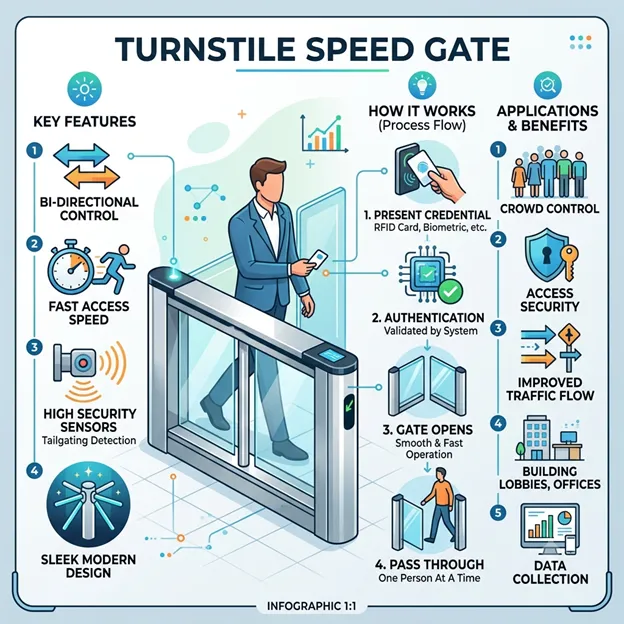

Turnstile Speed Gates are becoming the standard first line of physical security across Saudi Arabia's offices, metro stations, stadiums, and industrial sites, replacing manual guard checkpoints with fast, automated, and auditable entry control. As the Kingdom's giga-projects and smart cities scale under Vision 2030, facility owners are prioritising entry systems that combine speed, durability, and integration with modern identity verification. This guide covers every major turnstile type available today, where each fits best, and what to evaluate before choosing a supplier.
Tripod Turnstile Gates: Reliable Entry Control for High-Traffic Sites
Tripod Turnstile Gates remain one of the most widely deployed entry solutions because of their low cost, mechanical simplicity, and proven reliability in high-traffic environments such as factory gates, staff entrances, and stadium perimeters. Their compact three-arm rotating mechanism provides a clear, low-cost visual and physical barrier that is easy for large workforces to use intuitively, while still integrating with card, QR, or biometric readers for credential verification. Because of their rugged, low-maintenance design, tripod turnstiles are frequently the preferred choice for outdoor industrial sites across the Eastern Province and logistics parks where budget efficiency and mechanical durability matter as much as aesthetics.
Swing Barrier Turnstile Gates: Accessible, ADA-Friendly Passage
Swing Barrier Turnstile Gates use glass or acrylic panels that swing open horizontally, offering a wider, unobstructed passage lane that comfortably accommodates wheelchairs, luggage, trolleys, and pushchairs. This makes them a popular choice for corporate headquarters, hospitals, airports, and shopping malls across Saudi Arabia, where accessibility and a premium visual appearance are as important as security performance. Many models also include a dedicated wide lane specifically configured for accessibility compliance, ensuring facilities meet both security objectives and inclusive-design expectations without compromising on throughput speed during peak entry periods.
Full Height Turnstile Gates: Maximum Security for Outdoor and High-Risk Sites
Full Height Turnstile Gates extend from floor to ceiling height, functioning as a rotating cage that makes climbing over or crawling under physically impossible. This category is typically specified for unmanned or minimally supervised outdoor perimeters — substations, water treatment plants, telecom sites, and secure industrial yards — where the consequence of unauthorised access is severe and constant human supervision is impractical. Built from weather-resistant materials to withstand the Kingdom's extreme heat, dust, and sun exposure, full height turnstiles provide a physical deterrent and access barrier equivalent to a staffed guard post, without the ongoing labour cost.
Flap Barrier Turnstile Gates: Sleek Design Meets Fast Throughput
Favoured in premium corporate lobbies, banks, and modern office towers, Flap Barrier Turnstile Gates use retractable glass or acrylic flaps that open vertically or swing outward within milliseconds of a valid credential scan. Their slim cabinet profile and high-speed operation make them well suited to lobbies where architectural aesthetics matter as much as throughput, while still delivering strong anti-tailgating performance through infrared sensor arrays that detect and block a second person attempting to pass on a single credential. This combination of design and performance has made flap barriers one of the fastest-growing turnstile categories in Riyadh's new commercial developments.
Turnstile Speed Gates Riyadh — Smart City Entry Control
As the capital's skyline transforms with new commercial towers, government ministries, and mixed-use developments, Turnstile Speed Gates Riyadh installations are concentrated in high-rise office lobbies, metro stations, stadiums, and luxury residential compounds. Riyadh's rapid growth as a global business and events destination has placed a premium on entry systems that combine fast throughput with a polished visual appearance, making flap barrier and facial recognition turnstiles particularly popular choices among the city's newest commercial and mixed-use developments.
Standards, Safety, and Compliance for Turnstile Deployments
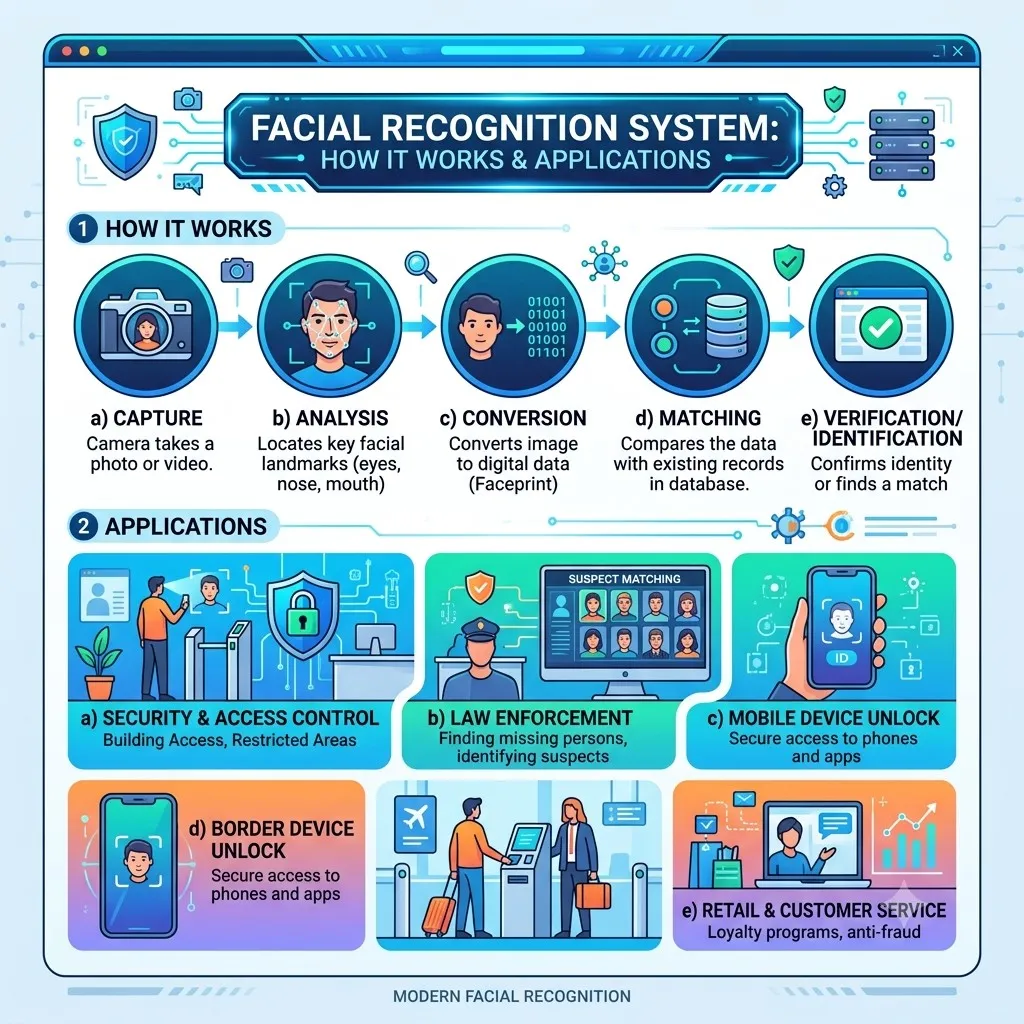
Turnstile installations in Saudi Arabia must account for both physical safety standards and life-safety egress requirements set by the Directorate General of Civil Defense, ensuring gates fail open — releasing automatically — during a fire alarm or power outage so occupants are never trapped during an emergency evacuation. Fire-rated emergency release mechanisms, battery backup for continued operation during power interruptions, and clear signage are standard requirements for any compliant deployment. Facilities integrating biometric credentials must also align enrolment and data-retention practices with the Kingdom's Personal Data Protection Law, ensuring facial or fingerprint templates are encrypted, access-restricted, and retained only as long as operationally necessary.
The Technology Stack Behind Modern Turnstile Systems
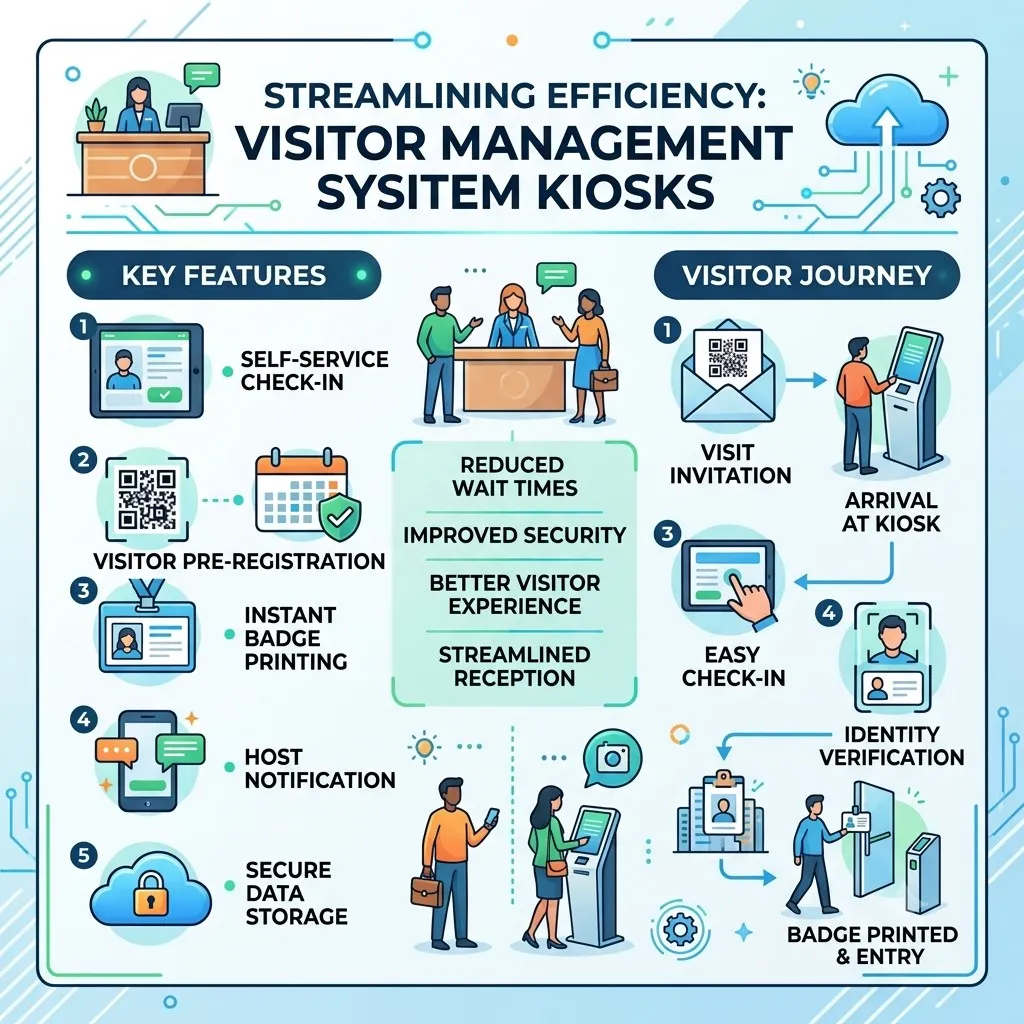
A complete deployment typically combines several layers: the mechanical or glass barrier hardware itself, a credential reader — card, QR, mobile, or biometric — an access-control software platform managing permissions and schedules, and integration middleware connecting the gate to fire alarm panels, visitor-management systems, and HR databases. Infrared sensor arrays prevent tailgating by detecting unauthorised second passage, while battery backup and network redundancy ensure the system keeps operating during power or connectivity interruptions. Together, these layers turn a simple mechanical barrier into an intelligent, self-auditing checkpoint capable of enforcing complex access policies without constant manual supervision.
Return on Investment: Why Facility Owners Are Prioritising Automated Gates
The business case for automated entry control is increasingly clear-cut. Reducing dependence on large manual guard rosters at every entry point delivers measurable labour savings, particularly across multi-shift industrial or campus environments. Faster throughput at peak hours reduces queuing-related productivity loss, while the automated, timestamped audit trail cuts the time security teams spend manually reconciling entry logs after an incident. For large developments managing dozens of entry points — such as metro stations, stadiums, or multi-tower business parks — the combined savings in labour, incident investigation time, and reduced credential fraud typically deliver a strong return within a short operating horizon.
Why Choose an Experienced Turnstile and Speed Gate Partner in Saudi Arabia?
Physical entry control is a long-term infrastructure investment, so vendor track record matters as much as the hardware specification. Look for a provider with documented deployments across government, commercial, and industrial sites in the Kingdom, engineers experienced in both mechanical gate integration and Civil Defense fire-egress compliance, and transparent product documentation covering throughput rates, durability ratings, and warranty terms. Providers offering a full portfolio of gates, barriers, and turnstiles built for Saudi projects bring practical regional experience — including familiarity with local climate durability requirements, Arabic-language control panels, and Civil Defense documentation — that generic international suppliers often lack. Before committing, request site references, ask for a live demonstration of anti-tailgating performance, and confirm emergency fail-open behaviour is certified and tested.
Getting Started: What a Typical Deployment Journey Looks Like
Most organisations move through a similar rollout sequence: a site survey to map entry points and expected peak traffic volumes, selection of gate types matched to each location's throughput and accessibility needs, and a fire-egress compliance review with Civil Defense requirements built in from the design stage. Installation is followed by integration with existing access-control software, HR systems, and visitor-management platforms, along with staff training on managing exceptions, visitor passes, and emergency override procedures. After go-live, periodic maintenance checks and firmware updates keep sensors calibrated and credential readers performing reliably as usage patterns and site conditions evolve over time.
Conclusion
Turnstile Speed Gates have become essential infrastructure for any Saudi facility that needs to move people quickly while keeping entry fully controlled and auditable. From dependable Tripod Turnstile Gates and accessible Swing Barrier Turnstile Gates to high-security Full Height Turnstile Gates and sleek Flap Barrier Turnstile Gates, every environment now has a matching solution. Pairing these gates with Intelligent Facial Recognition Turnstiles, Biometric Turnstiles, and robust Turnstile Access Control software delivers both speed and security at scale. As Turnstile Speed Gates KSA and Turnstile Speed Gates Riyadh adoption accelerates under Vision 2030, organisations that upgrade now secure a lasting operational and safety advantage.





























Sign in to leave a comment.