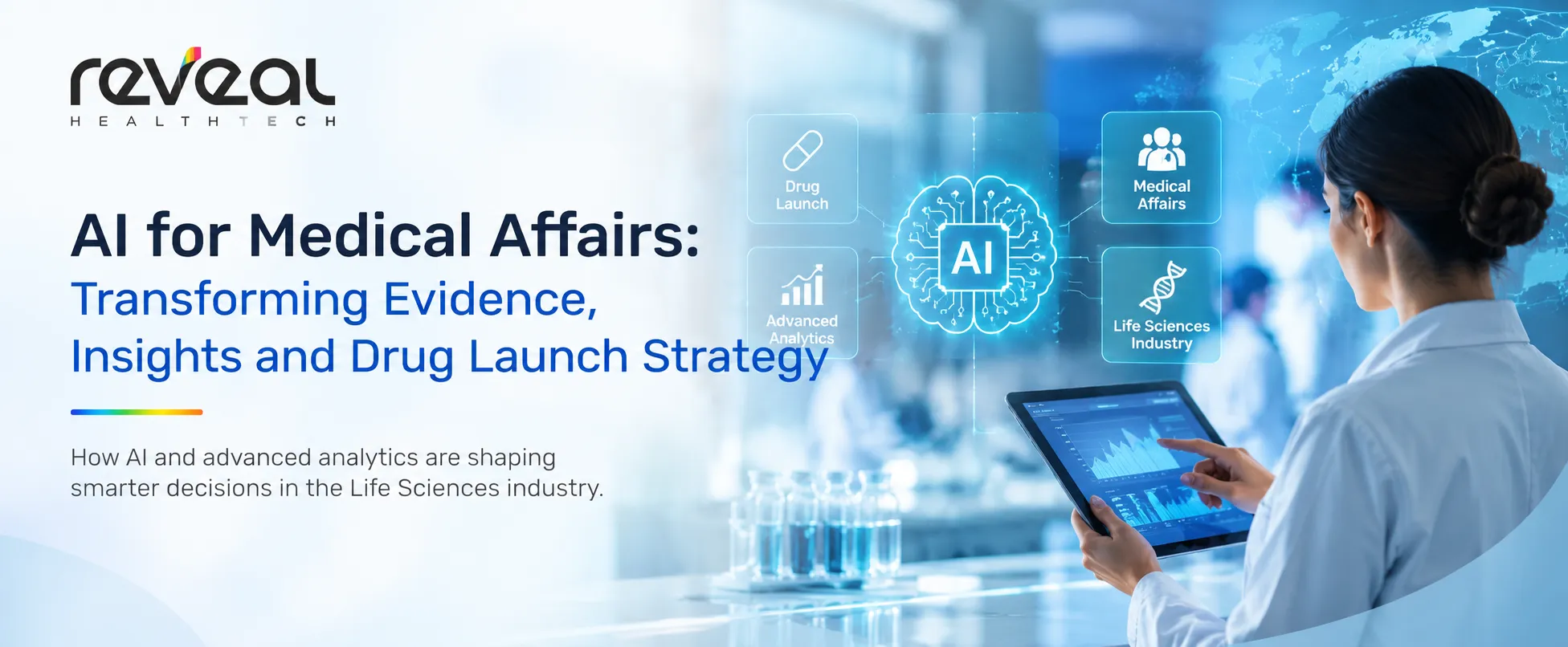

The pharmaceutical Life Sciences industry is generating more data than ever, from clinical research and real-world evidence to healthcare professional interactions and market intelligence. Turning this data into timely, reliable insights has become essential for better decision-making. This is where AI for Medical Affairs is emerging as a powerful capability.
AI can help Medical Affairs teams analyze complex information, identify meaningful patterns, support evidence generation, and prioritize stakeholder needs. Research on AI in Medical Affairs highlights applications across healthcare environment monitoring, medical content generation, real-world data analysis, and strategic decision-making.

What Is AI for Medical Affairs?
AI for Medical Affairs refers to the use of artificial intelligence, machine learning, natural language processing, and generative AI to support Medical Affairs activities.
Instead of replacing medical expertise, AI can augment the work of medical professionals by helping them process large volumes of information faster. Applications can include literature analysis, medical insights management, scientific content support, KOL intelligence, field medical analytics, and real-world evidence analysis.
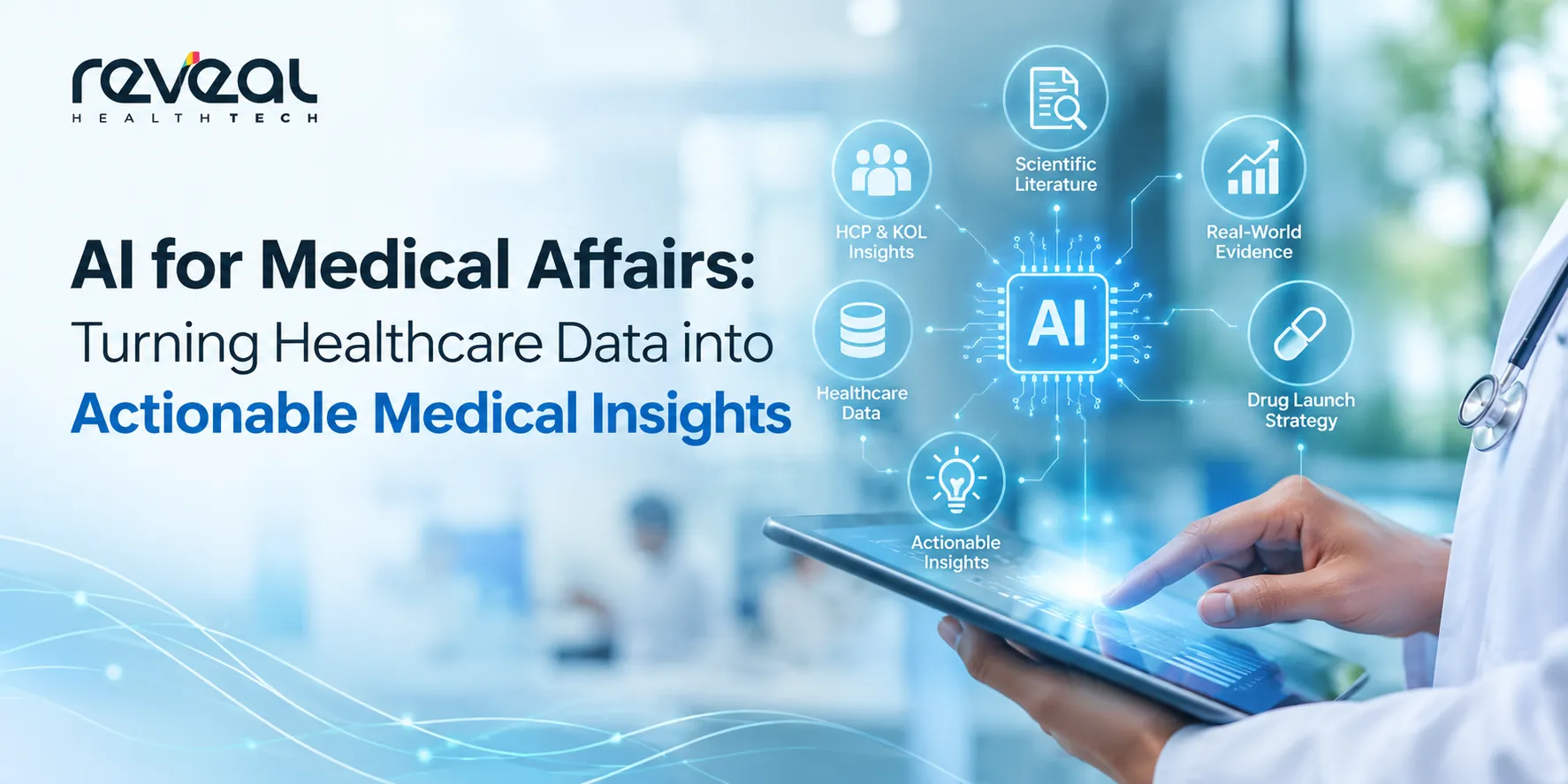
The goal is simple: help Medical Affairs teams move from fragmented information to actionable medical insights.
How Can AI Improve Medical Affairs?
Medical Affairs teams often work with data from multiple sources. Manually reviewing and connecting this information can be time-consuming.
AI can help identify patterns across scientific literature, field insights, stakeholder interactions, and real-world data. It can also support faster information retrieval and prioritization.
For example, an AI-enabled system can help a Medical Affairs team identify frequently discussed clinical topics, emerging evidence gaps, or changing healthcare professional interests. These insights can then inform scientific engagement and evidence-generation strategies.
Advanced analytics can further help teams measure the impact of Medical Affairs activities and connect insights with strategic objectives.
The Role of Advanced Analytics for Drug Launch
Successful pharmaceutical launches depend on decisions made well before a product reaches the market. Advanced analytics for drug launch can help organizations understand patient populations, healthcare professional segments, competitive dynamics, market opportunities, and potential evidence gaps.
When AI and advanced analytics are combined, launch teams can move beyond historical reporting toward more predictive decision-making.
Analytics can support:
- Patient and HCP segmentation
- Demand and market forecasting
- Competitive intelligence
- Evidence gap identification
- Launch readiness monitoring
- KOL prioritization
- Real-world data analysis
- Post-launch performance measurement
This creates a more connected approach to launch planning, where medical, commercial, and market access teams can work from more consistent insights.
Why Does AI Matter for the Life Sciences Industry?
The Life Sciences industry operates in a highly regulated and evidence-driven environment. Decisions need to be supported by credible information, while patient privacy, data security, transparency, and regulatory requirements remain critical.
For this reason, AI adoption in Medical Affairs requires more than implementing a new technology. Organizations need appropriate governance, human oversight, data quality controls, validation processes, and clear accountability. Research also emphasizes transparency, privacy, regulatory considerations, and explainability when applying AI to Medical Affairs.
Building an AI-Enabled Medical Affairs Strategy
A practical approach begins with clearly defined business and medical questions. Organizations can then identify relevant data sources, select suitable AI and analytics capabilities, establish governance standards, and measure outcomes.
Reveal Health Tech helps Life Sciences organizations apply AI and advanced analytics to complex healthcare data, supporting more informed decisions across the pharmaceutical value chain.
Ultimately, AI for Medical Affairs is not simply about automation. Its greater value lies in helping experts find relevant evidence, recognize emerging patterns, prioritize opportunities, and make faster, better-informed decisions.
As pharmaceutical organizations continue to embrace data-driven operating models, the combination of AI, advanced analytics, and medical expertise will become increasingly important for improving Medical Affairs effectiveness and strengthening drug launch strategies.




























Sign in to leave a comment.