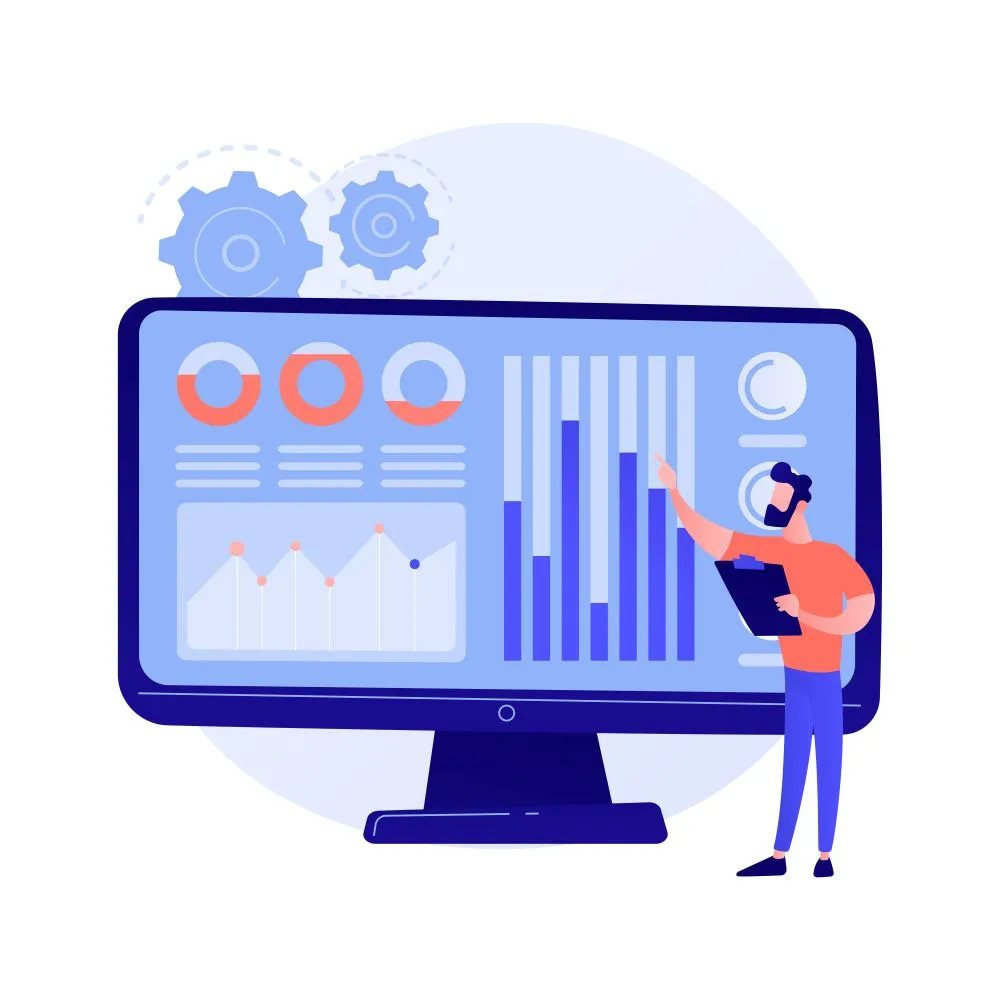

Financial planning & analysis (FP&A) has always been the function that tells a business where it is going and whether it can afford the journey. For years that work has lived in spreadsheets, email threads and month-end scrambles. Now AI FP&A is entering the picture, and finance teams are asking a fair question: what actually changes?
The goals stay the same, but the way the work gets done shifts a lot. Here is a clear look at both approaches.
How Traditional FP&A Works
In a traditional setup, analysts spend much of their time collecting and preparing data. Numbers are pulled from accounting systems, CRMs and spreadsheets, then cleaned and stitched together by hand. Budgets are built in large Excel models with linked tabs and formulas that only one or two people fully understand.
Forecasts are usually updated quarterly or monthly, because each refresh is slow. When leadership asks a what-if question, such as "what happens if sales drop 15%?", the analyst often has to rebuild part of the model and come back days later.
This approach works, but it has clear limits. It is time-consuming, prone to formula errors, hard to scale and dependent on individual people. Analysts end up spending most of their week on data gathering and formatting rather than on analysis.
How AI FP&A Works
AI FP&A keeps the same discipline (budgeting, forecasting, variance analysis, scenario planning) but automates much of the mechanical work around it. Modern AI FP&A software and any capable AI FP&A platform typically bring together a few core capabilities.
Faster model building. AI can turn guided business inputs into projections and connected financial statements, so you are not starting from a blank sheet each cycle.
Smarter assumptions. Based on your industry, size and growth stage, AI can suggest starting assumptions for revenue drivers and costs, which you then review and adjust.
Continuous forecasting. Because updates are quicker, teams can move from a static annual plan toward rolling forecasts that reflect what is happening now.
Instant scenarios. Best, base and downside cases can be compared side by side without rebuilding the model.
Plain-language insights. This is where generative AI for FP&A stands out. Instead of only showing a variance, it can explain what is driving it, which makes reporting far easier to share with non-finance colleagues.
Where FP&A Automation Software Fits
FP&A automation software handles the repetitive work that eats up analyst time: consolidating data, refreshing forecasts, formatting reports and rerunning scenarios. Automation on its own follows fixed rules. AI adds a layer on top by suggesting assumptions, drafting commentary and highlighting risks. Together they turn a slow, manual cycle into a faster, more repeatable one.
The Key Differences at a Glance
Speed: Traditional FP&A takes days or weeks per cycle. AI FP&A can produce a working model in minutes.
Effort: Traditional work is manual and repetitive. AI and automation handle much of the data structuring and first-draft analysis.
Forecast cadence: Traditional teams update periodically. AI-assisted teams can refresh far more often.
Scenario planning: Traditional what-ifs are slow and limited. AI makes them quick and routine.
Analyst time: Traditional analysts spend most of their time preparing numbers. AI frees them to interpret and advise.
Risk: Traditional models risk hidden formula errors. AI models risk unchecked assumptions, so transparency matters.
What Changes for the Finance Team
The biggest shift is in the analyst's role. When routine model building and reporting take less time, finance professionals can focus on challenging assumptions, advising leaders and connecting numbers to strategy.
Speed also changes the conversation. If a forecast can be refreshed in minutes, finance stops delivering numbers weeks late and becomes a partner in real-time decisions.
Skills shift too. Analysts still need solid finance fundamentals, but they also need to review AI-generated assumptions critically. The job moves from building every number to validating and interpreting them.
What Does Not Change
AI does not remove the need for judgment. It cannot know that a key customer is about to leave, that a supplier is raising prices or that leadership plans a new product launch. Business context still comes from people.
Trust and transparency remain essential. Good AI FP&A keeps assumptions visible so teams can see what the model is using before they act on it. Finance leaders should also keep clear review processes, especially for board reporting, audits or any transaction-specific work where professional review is required.
A Practical Way to Start
You do not need to overhaul your whole finance function at once. Pick one repetitive, time-heavy task, such as building a 5-year projection or running scenario comparisons, and test an AI-assisted workflow on it. Compare the time saved and the quality of the output against your current process, then expand from there.
Try AI FP&A With VedaOne
If you want to see the difference yourself, VedaOne is an AI FP&A platform built to make the shift easy. Add your business inputs once, review the AI-assisted assumptions and generate projections, a P&L, balance sheet and cash flow in one connected workflow. You can compare scenarios, view DCF and market-multiple valuation and read plain-language insights, all without starting from a blank spreadsheet.
Start with the free AI valuation tool for a quick estimate, or start your free 14-day trial (no credit card required) and build your first financial model in about 10 minutes.
Start your free trial at vedaone.ai
Traditional FP&A built the foundation. AI helps finance teams build on it faster.
























Sign in to leave a comment.