

A decade ago, mentioning artificial intelligence in a hospital hallway would have earned you a few polite nods and not much else. Today, radiologists are reviewing scans flagged by algorithms before they even open the images themselves, hospital administrators are using predictive software to figure out which patients might be readmitted, and drug developers are running molecular simulations that would have taken years of lab work in a fraction of the time. The shift has been fast, and honestly, a little disorienting for people trying to keep up.
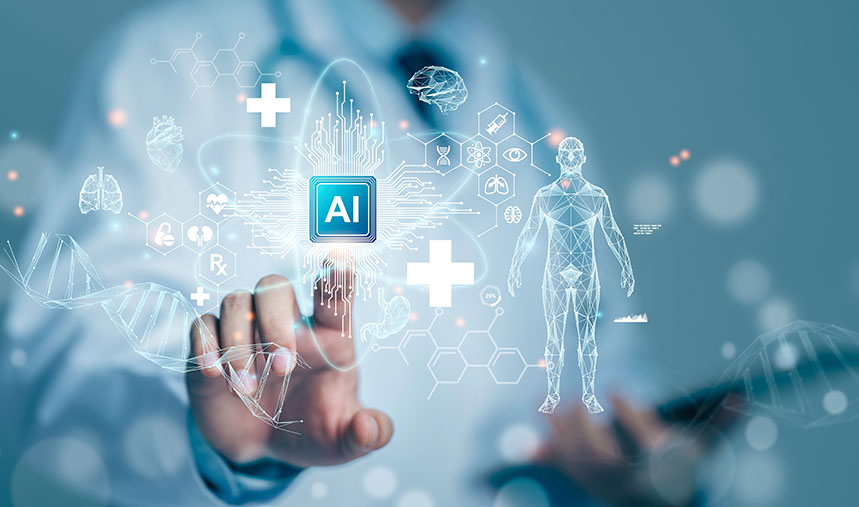
If you have been researching this space, you have probably noticed that the number of AI healthcare companies has exploded over the past few years. Some are massive tech firms that added a health division almost as an afterthought. Others are scrappy startups built entirely around one narrow problem, like detecting diabetic retinopathy from eye scans or predicting sepsis hours before symptoms appear. Understanding this landscape matters whether you are a hospital administrator evaluating vendors, an investor trying to separate substance from hype, or simply a patient curious about what is actually happening behind the scenes of your care.
Why Healthcare Became AI's Favorite Testing Ground
Healthcare generates an enormous amount of data. Every lab result, imaging scan, prescription, and clinical note adds to a mountain of information that human clinicians simply cannot process at scale. That combination of data abundance and life-or-death stakes made healthcare an obvious, if difficult, target for machine learning applications.
There is also a practical financial angle. Healthcare systems worldwide are under constant pressure to cut costs while improving outcomes, and administrators are willing to experiment with tools that promise to do both. This appetite for efficiency has pulled in enormous amounts of venture capital, with new companies launching what feels like every few months, each claiming to solve a piece of the puzzle that traditional software never touched.
The Main Categories Worth Understanding
Rather than thinking of this as one giant industry, it helps to break it into a few distinct buckets, since the technology, regulatory requirements, and business models differ quite a bit between them.
Diagnostic imaging and pattern recognition. This is probably the most mature category. Companies here train models on massive datasets of X-rays, MRIs, CT scans, and pathology slides to spot patterns that might be missed or take longer for a human eye to catch. Early cancer detection, stroke identification, and fracture spotting are common applications. These tools generally work alongside radiologists rather than replacing them, flagging areas of concern for closer review.
Clinical decision support. These platforms sit inside electronic health record systems and nudge clinicians toward better decisions in real time, whether that means flagging a dangerous drug interaction or suggesting additional tests based on a patient's symptoms and history.
Administrative and operational tools. Not every application is glamorous. A huge amount of AI investment in healthcare goes toward unglamorous but genuinely useful things like automating insurance claims processing, predicting hospital bed demand, and reducing the paperwork burden that contributes heavily to clinician burnout.
Drug discovery and development. Pharmaceutical research has traditionally been slow and expensive, often taking over a decade to bring a single drug to market. AI models that can predict how molecules will behave, identify promising compounds, and simulate clinical trial outcomes are compressing timelines in ways that were unimaginable even five years ago.
Remote monitoring and virtual care. Wearables and connected devices generate continuous streams of patient data, and AI is increasingly used to interpret that data, alerting care teams when something looks off long before a patient would notice symptoms themselves.
For anyone trying to compare specific players across these categories, there are useful roundups such as this overview of leading healthcare AI companies that break down what different organizations are actually building rather than just repeating marketing language.
The Regulatory Reality Nobody Talks About Enough
Here is something that surprises a lot of people new to this space. Unlike a typical software product, AI tools used for diagnosis or treatment decisions often need to go through a genuine regulatory approval process before they can be used in clinical settings. In the United States, this generally falls under the FDA's oversight of software as a medical device, and the agency has been actively working to build a framework specifically suited to AI and machine learning tools, since these systems can behave differently than traditional software because they are capable of learning and adapting over time.
Anyone evaluating a healthcare AI vendor seriously should understand how that company's product interacts with this regulatory pathway, because a tool that has cleared meaningful validation is a very different proposition than one still operating in an experimental gray zone.
This is not just bureaucratic box checking either. Algorithms trained on biased or limited datasets can produce genuinely harmful outcomes, particularly for populations underrepresented in the original training data. Federal research bodies have taken this seriously enough to fund entire initiatives focused specifically on making sure AI tools in medicine are built on data that reflects diverse patient populations and are evaluated with appropriate scientific rigor before widespread clinical use.
Questions Worth Asking Before Trusting Any AI Health Tool or Vendor
If you are evaluating an AI healthcare company, whether as a buyer, investor, or curious patient, a few practical questions tend to separate the serious players from the ones riding a hype wave.
How was the model validated, and on what population? A tool trained primarily on data from one demographic group may perform poorly on others, and reputable companies should be transparent about this rather than defensive.
Is there a human still in the loop? The strongest applications right now augment clinical judgment rather than replace it entirely. Be cautious of any company implying full autonomy in high stakes decisions.
What happens when the model is wrong? Every AI system makes mistakes. Companies that have thought seriously about error rates, false positives, and fallback protocols are generally more trustworthy than those that gloss over this reality.
How is patient data being protected? Healthcare data is uniquely sensitive, and any company handling it should be able to clearly explain its privacy and security practices, not just point to a generic compliance badge.
Where Things Seem to Be Heading
A few trends are becoming hard to ignore. Multimodal AI systems, which combine imaging, genetic data, clinical notes, and even voice or behavioral signals into a single analysis, are attracting significant research attention, including dedicated funding initiatives from federal health research agencies aimed at pushing this kind of integrated approach forward. Personalized medicine is also becoming less of a buzzword and more of a practical reality, with treatment recommendations increasingly tailored to an individual's genetic makeup and health history rather than population averages.
There is also a noticeable shift toward smaller, more specialized companies rather than one dominant player trying to do everything. Healthcare is simply too fragmented, with too many different specialties, regulatory environments, and clinical workflows, for a single generalized AI product to genuinely serve every need well.
At the same time, clinician trust remains the biggest bottleneck. The most technically impressive algorithm is worthless if doctors do not trust its output enough to act on it, and building that trust takes years of consistent, validated performance, not flashy demos.
A Grounded Way to Think About This Space
It is easy to get swept up in headlines about AI revolutionizing medicine overnight, but the reality on the ground is more incremental and, frankly, more interesting. Real progress is happening in specific, measurable ways: faster diagnoses in certain imaging categories, meaningfully reduced administrative burden in some hospital systems, and genuinely accelerated timelines in early stage drug research. The companies making lasting contributions tend to be the ones focused on solving one problem exceptionally well and proving it with real clinical evidence, rather than those promising to reinvent healthcare as a whole. Keeping that distinction in mind will serve you well whether you are choosing a vendor, making an investment decision, or simply trying to understand what is actually happening the next time your doctor mentions that a computer helped read your scan.
























Sign in to leave a comment.