
Key Takeaway
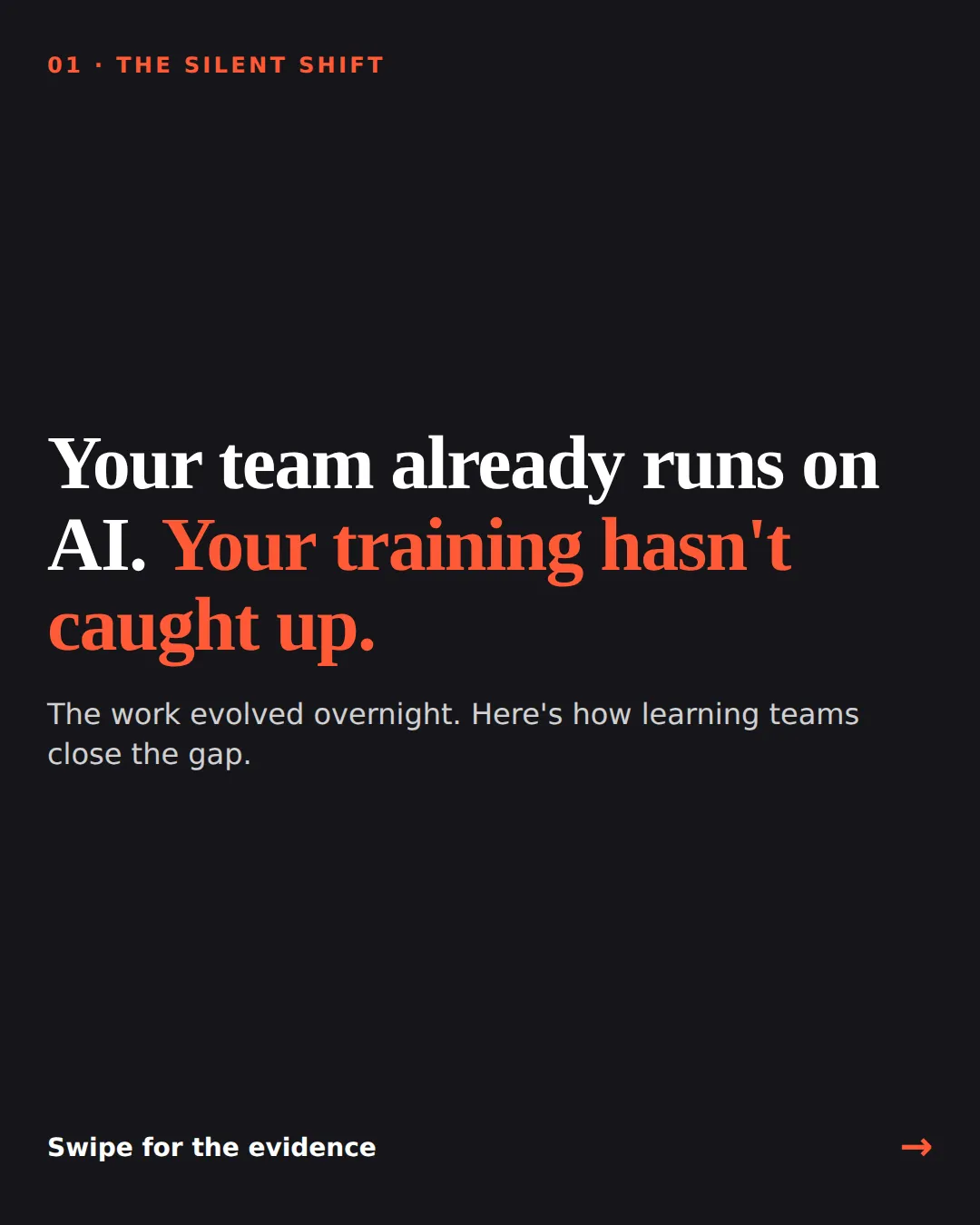
AI is already changing how people work every day. Most training still treats it like a new tool to learn. The teams that win will stop teaching features and start training better judgment, faster decisions, and real performance.
AI Just Changed Your Job. Most Training Hasn’t Noticed
You open your laptop, and AI is already there. It drafts the email. It summarizes the meeting. It answers the customer question before you finish typing. This is not a future scenario. It is an everyday morning for millions of people.
Yet a lot of Learning and Development programs still look the same as they did three years ago: a course on “AI basics,” a few sample prompts, and a completion certificate. That approach is already outdated.
A major Microsoft Research study examined 200,000 real conversations with Microsoft Copilot and matched them to actual work activities. The findings are clear. AI performs best on information work: writing, editing, explaining, gathering facts, answering questions, and preparing materials. These tasks sit inside almost every job, not just technical ones.
The practical question for L&D is no longer “Should we teach AI?” It is “How do we help people work well with it?”
AI Handles the Routine. Humans Must Own the Judgment
The research draws a useful line. Sometimes AI acts as a helper. Other times it takes over parts of the task. Training has to match that reality.
Most current programs treat AI as one skill to master. That is too simple. Better questions look like this:
- Which parts of this role should people hand to AI?
- Which parts still need human judgment?
- Where does speed create new risk?
- What decision skills become more important once the routine work disappears?
The real skill shift is cognitive. People need to know when to trust the output and when to challenge it.
You Are Probably Measuring the Wrong Things
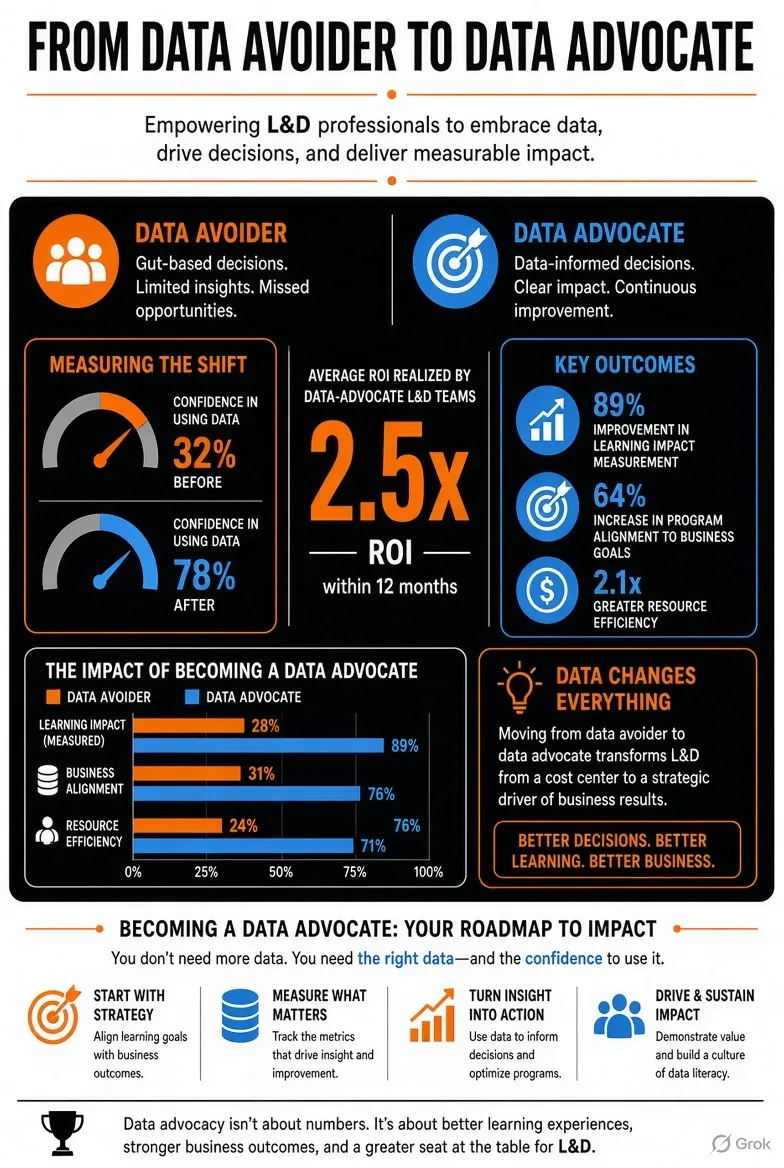
Many AI training initiatives still track completion rates, satisfaction scores, or time spent in modules. Those numbers feel safe. They rarely show whether work improved.
The Microsoft study measured something different: task success, how much of the activity AI could handle, how often people used it, and how widely it applied across jobs. L&D should do the same. Track decision quality, fewer errors, better escalation choices, faster output that still meets standards, and how well people judge risk.
If training does not change work outcomes, it is not training. It is activity.
Expertise Is More Important, Not Less
AI can give junior people access to knowledge that once took years to build. That is powerful. It is also dangerous. Without enough foundational knowledge, people cannot spot weak answers or incomplete reasoning. AI then multiplies mistakes instead of reducing them.
This creates a clear priority. Keep building domain knowledge, critical thinking, and the ability to evaluate output. Tool skills matter. Judgment skills matter more.
Where AI Still Needs a Human in the Loop
The study also showed clear limits. AI struggles with physical tasks, highly contextual decisions, certain types of analysis, and situations that need interpretation beyond the given information.
People need practice recognizing those limits. They need to know when to stop, when to double-check, and when to escalate. Responsible use is less about rules and more about calibrated judgment.
Four Shifts That Actually Move the Needle
- Design around real work, not generic tools.
Map AI to the specific information tasks and high-risk decisions in each role. Training becomes useful the moment it matches the daily workflow. - Replace awareness sessions with practice.
People do not need another slide deck. They need scenarios, timed decisions, and practice choosing what to delegate and what to keep. Measure how decision quality changes afterward. - Update what “good” looks like.
Add human-AI collaboration, clear prompting, output checking, escalation judgment, and risk calibration to role expectations and leadership models. These are no longer optional. - Change L&D’s own contribution.
AI can already explain procedures, draft materials, and create basic content. If the team’s main value is producing slides, that value is shrinking. The bigger opportunity is diagnosing performance gaps, designing practice environments, building measurement systems, and helping the organization redesign work.
What 2026 Data Is Telling Us
Recent surveys show the conversation has moved past early panic. Around 87% of L&D teams now use AI in some form, yet many still operate with fragmented approaches and little strategic alignment. Teams with higher AI fluency report less fear of job loss and spend more time on impact and stakeholder conversations instead of pure administration.
At the same time, McKinsey’s latest global survey found that 80% of respondents say AI has improved their individual productivity. The gap between personal gains and organization-wide results remains real. The teams closing that gap are the ones redesigning workflows and focusing on judgment skills, not just tool features.
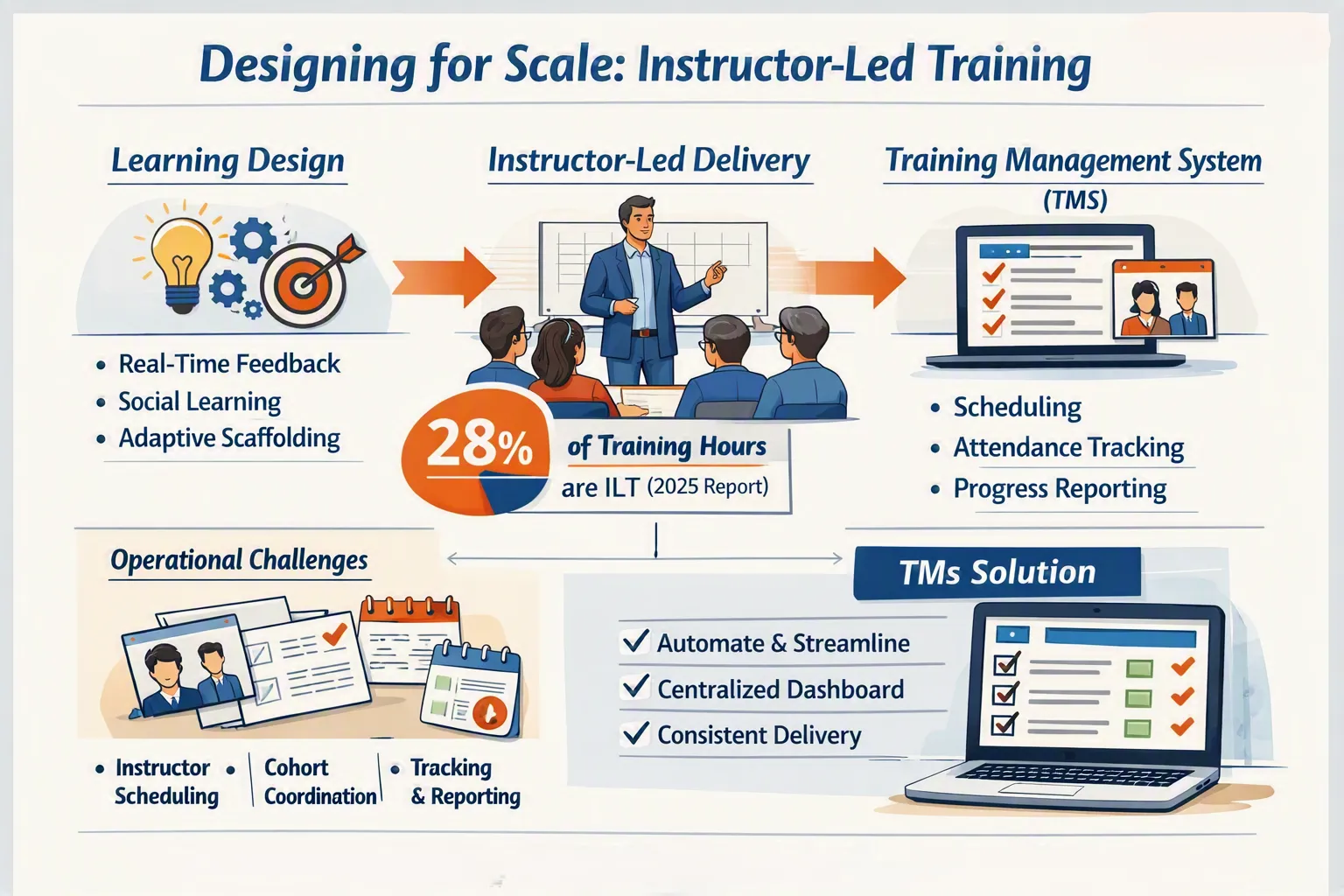
This is also where practical systems still matter. Organizations continue to need reliable ways to schedule and deliver live sessions. A solid Training management system (LMS) keeps Instructor-led training (ILT) organized while AI takes on more of the information work. Pairing it with a flexible Learning management system (TMS) lets teams combine self-paced content, live practice, and AI-supported reinforcement without forcing everyone into one rigid format.
“The greatest danger in times of turbulence is not the turbulence; it is to act with yesterday’s logic.”
— Peter Drucker
From Content Delivery to Performance Support
The Microsoft research does not predict mass job loss. It shows overlap between AI capability and everyday work activities. That overlap is enough to change task composition even when job titles stay the same.
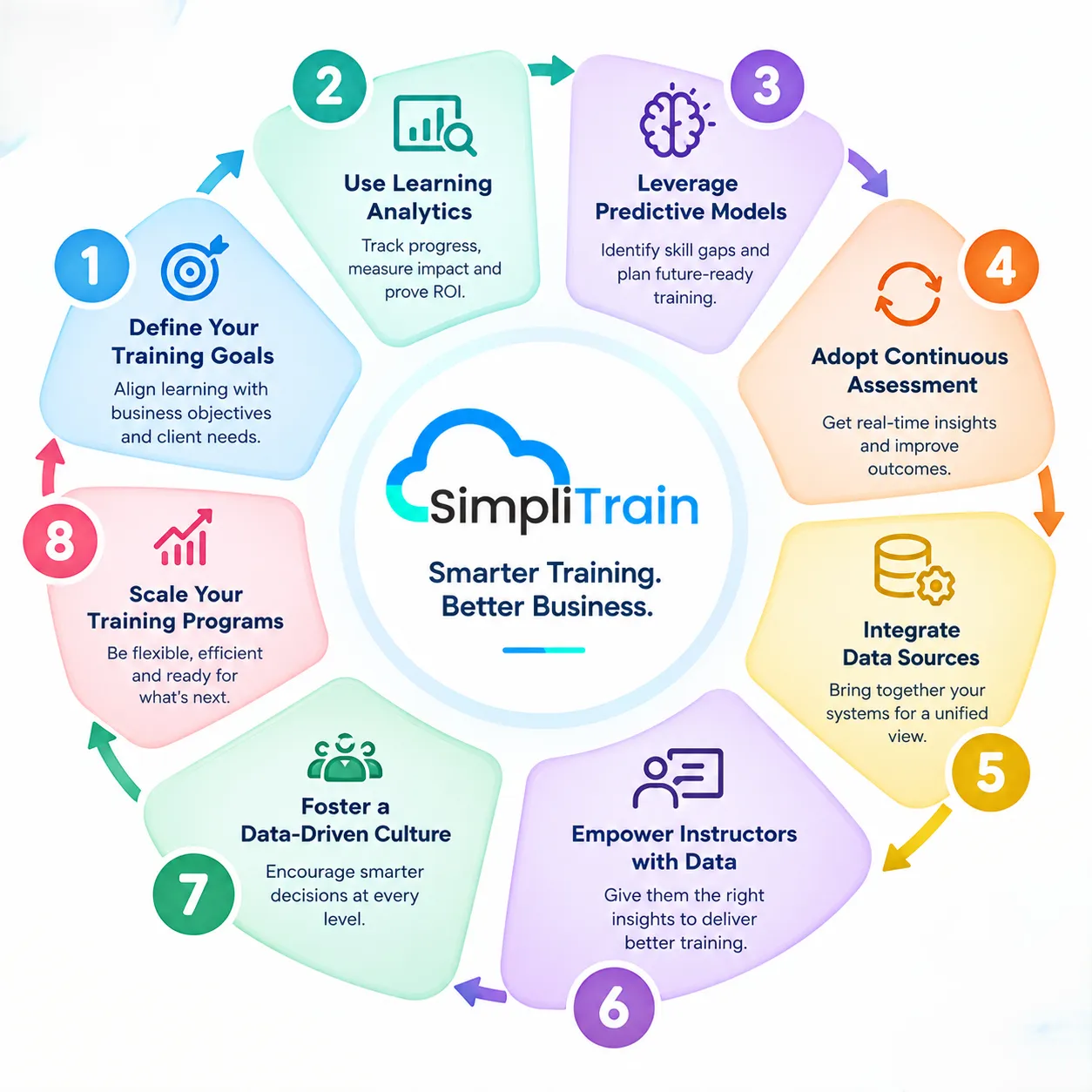
Technology usually reshapes how work is done more than it eliminates entire roles. The organizations that benefit most redesign early. For L&D, that means treating AI as a catalyst for better work design, measuring performance instead of participation, and building judgment rather than just knowledge.
AI is not replacing learning. It is raising the standard of what effective learning must deliver. The teams that help people think, decide, and perform well alongside AI will set the pace.
FAQ
How is AI already changing daily work?
Research shows it is most effective on information tasks: writing, explaining, gathering facts, and communicating. These activities appear across almost every occupation.
Is teaching AI tool skills still useful?
Yes, but it is incomplete. People also need domain knowledge, critical evaluation, and clear judgment about when to use the tool and when to override it.
What should we measure instead of completion rates?
Decision quality, reduction in errors or rework, better risk judgment, and speed that still meets quality standards. These show whether training improved actual work.
Where does AI still need human oversight?
Physical tasks, highly contextual decisions, nuanced interpretation, and situations that require knowledge beyond the immediate prompt.
How can L&D stay relevant as AI creates more content?
Move from content production toward diagnosing performance gaps, designing practice and simulation, building measurement systems, and helping the organization redesign work around AI.
AI is already part of the workday. The only real question left is whether learning will keep pace with the work it is supposed to support.























Sign in to leave a comment.