

Transforming Everyday Video Footage Into Real-Time Intelligence and Actionable Insights
CCTV cameras are widespread in the modern world. They are used in retail stores, offices, warehouses, and manufacturing facilities. However, conventional CCTV equipment usually has a passive function, recording and storing video for later review. In order to obtain valuable information, an operator needs to look through hours of video and identify the necessary fragments.
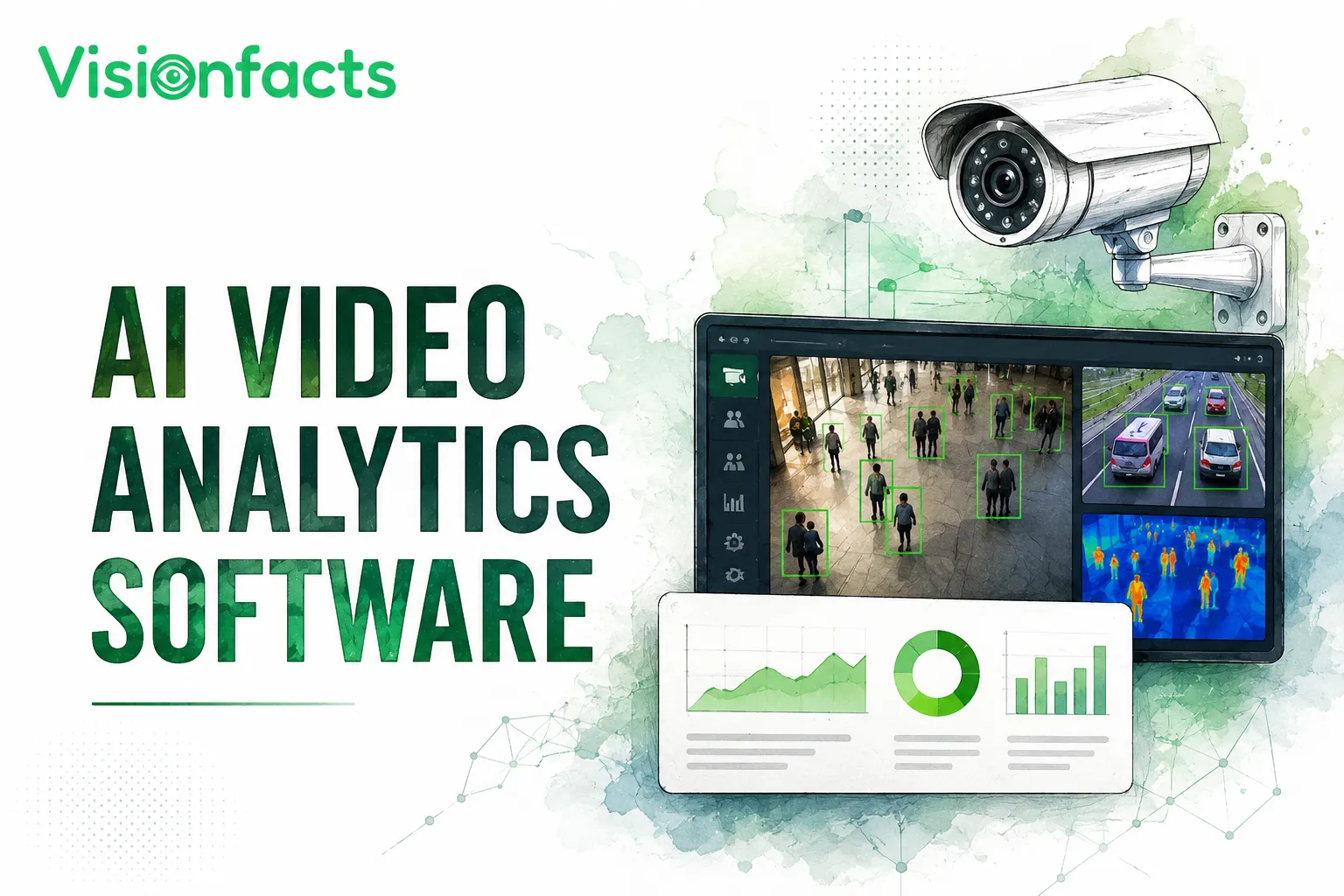
Meanwhile, AI video analytics software can transform ordinary CCTV cameras into smart devices capable of performing active tasks. In particular, developers utilise artificial intelligence and computer vision to enable the software to process video and identify specific objects or activities within the camera’s field of view. Thus, a computer or a network video recorder can actively support human operators.
From Passive Recording to Active Detection
Conventional CCTV systems record video 24/7 in a completely passive manner. The recorded data is typically useless in itself and has to be reviewed by humans in order to extract relevant information.
By contrast, video analytics can process the video images and identify particular objects or activities. For instance, an AI program can recognize unauthorized entry into a warehouse and notify operators about it. Developers can equip manufacturing facilities with such technology to detect pre-set unsafe activities.
In effect, video analytics shifts the focus from passive recording to active object detection.
What Can AI Video Analytics Software Detect?
Depending on the software, different options can be available. Some can include:
- Intrusion detection for restricted or sensitive areas
- Loitering detection if someone stays in a particular area for too long
- Counting people at entrances, in stores and public buildings
- Calculating densities of crowds or occupants based on how full an area is
- Detecting PPE such as hard hats and vests
- Smoke and fire detection based on visible indications
- Vehicle detection for traffic and parking monitoring
- Detecting use of cell phones in certain areas
This means one camera system can serve multiple purposes for monitoring and security.
Real-Time Alerts Make the Difference
One of the benefits of video analytics powered by AI is connected to the possibility to set off real-time alerts.
Let’s say there are fifty-five video cameras in a facility. It may be impossible for a security guard to watch all video feeds on all monitors to spot all crucial events. AI-enabled systems track several video feeds simultaneously, recognising particular patterns that require human intervention. The security guards should review such suspicious events to determine the necessary response. Thus, AI is helpful, serving as an assistant, rather than replacing people.
Existing CCTV Can Become More Intelligent
When an organisation wants to introduce video analytics, they might hesitate to invest in new equipment.
Some video analytics software can work with compatible IP cameras, video surveillance feeds, or systems. In this case, existing hardware can become more intelligent. However, there is a list of factors to consider. The location of a camera, its lighting, quality, field-of-view angle, and connection stability are important in terms of analytics.
Beyond Security: Creating Business Insights
Beyond finding and stopping security threats, Video Analytics has the potential to provide business-critical insights
For example, Retailers can measure foot traffic and analyse traffic patterns, warehouses can observe restricted areas, and manufacturers can look into operational and process improvement, as well as safety and security issues.
Trend analysis becomes another powerful application: Instead of just analysing what takes at a single moment in time, these tools can track trends as they emerge. Rather than having scores of cameras sitting there and doing nothing more than providing security, businesses can treat them as another set of sensors to help run the business.
Why Are Businesses Turning to Smart CCTV Cameras
The main attraction of these technologies is that it enables their existing CCTV surveillance systems to do a lot more than just provide raw footage for security purposes.
AI video analytics software helps security personnel quickly identify activity of interest while reducing the effort required to view hundreds of hours of footage looking for that tiny fraction of interesting stuff that can drive revenue and business growth.
In short, Analytics does important work, but it's definitely not a total replacement for human analysis, decision-making, and action. However, it can make it much easier for these teams to zero in on the things that matter most.
CCTV Cameras: Time to Turn Yours Into Something More Intelligent
Your CCTV cameras are indeed most likely collecting and storing all kinds of valuable information every single day
But without the right tools, that data is just sitting there, wasting space and potential. That's why you should consider turning to AI video analytics solutions to transform this data into actionable insights and security alerts. If you would like to learn more about how your business can leverage the power of AI video analytics to detect and react to important events across your camera network so you can achieve more security, safety and business benefits, contact us today.
Frequently Asked Questions
1. What is AI video analytics software?
AI video analytics software utilises artificial intelligence and computer vision to analyse video feeds and recognise specific objects, activities or events of interest.
2. Can AI video analytics be used with existing CCTV cameras?
Depending on the platform, it may be possible to integrate with existing CCTV or IP camera infrastructure. Specifics of the cameras and their location, as well as required video quality and other factors, should be considered during the preparation stage.
3. In which industries can AI video analytics be applied?
Industries and businesses that have physical locations and video surveillance infrastructure in place, such as retail, manufacturing, warehouses, offices, transportation, commercial enterprises and other similar settings.
4. Will AI video analytics software replace the need for human monitoring?
In most cases, it will not. It may actually reduce the need to monitor every single camera feed around the clock, but operators will still be needed to review the video and confirm alerts generated by the system.






















Sign in to leave a comment.