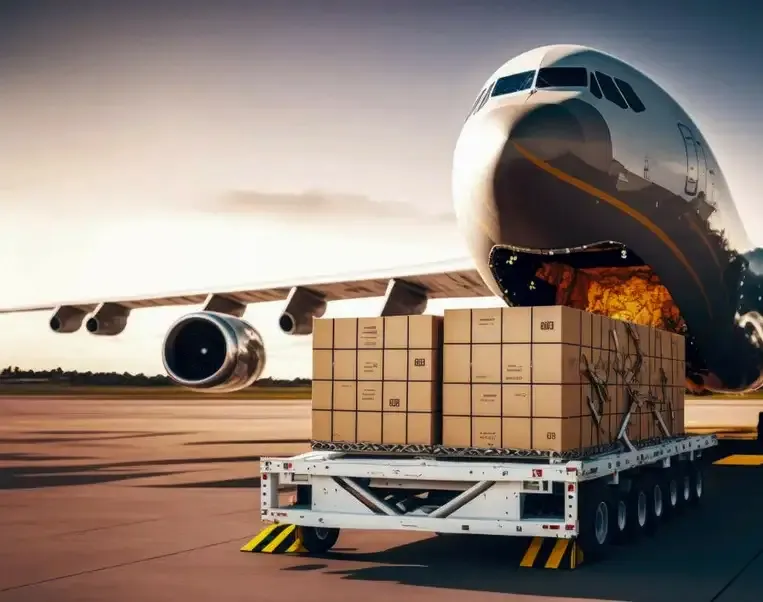

Every shipment has three basic ways to move: by air, by sea, or over land. Most businesses default to whatever method they used last time, without really weighing whether it's still the right fit for the current shipment. That habit gets expensive fast, either in wasted freight costs or missed deadlines.
Here's a practical way to think through the decision.

Start with the actual deadline, not the general urgency. Air freight is fast, often a matter of days between major hubs, but it comes at a real premium per kilogram. It makes sense for high-value goods, time-sensitive orders, or situations where a delay costs more than the freight premium itself. If the shipment has flexibility of a few weeks, that premium is usually money left on the table.
Consider volume before cost per unit. Ocean freight is the default for large-volume shipments precisely because the cost per unit drops dramatically at scale, even though the total transit time is longer. For businesses moving full container loads or bulk goods where the timeline has some breathing room, sea freight out of a hub like Jebel Ali is almost always the more sensible economic choice.
Don't overlook land transport for regional moves. If cargo is moving within the Middle East rather than internationally, land transport can outperform both air and sea on cost and simplicity, no port handling, no flight scheduling, just point-to-point delivery across the region.
Factor in what happens after arrival. A shipment isn't done moving once it clears customs. Whether it needs warehousing, further distribution, or last-mile delivery changes which method makes sense holistically, not just the initial leg. Freighbrid Logistics handles this as part of its broader multimodal approach out of Dubai, combining freight forwarding with warehouse management and customs clearance so the whole chain is coordinated rather than handled by separate, disconnected vendors.
The real mistake most businesses make
It's rarely picking the "wrong" method outright. It's defaulting to habit instead of reassessing each shipment on its own terms, deadline, volume, value, and what happens after it lands. A logistics partner who asks the right questions upfront usually saves more in avoided rush fees and wasted freight spend than switching providers for a marginally cheaper quote ever would.
Learn more: https://freighbridlogistics.com/



























Sign in to leave a comment.