

The Airbus A320 is one of the most recognized single-aisle aircraft in commercial aviation. Since entering service in 1988, the A320 has become a key aircraft for airlines operating short- and medium-haul routes. Its combination of operational flexibility, passenger capacity, advanced flight-control technology, and efficient performance has helped establish the A320 Family as a major platform in the global commercial aviation market.
Understanding the Airbus A320
The A320 was developed as part of Airbus' single-aisle aircraft family and introduced several important innovations to commercial aviation. Most notably, it was the first commercial aircraft to use full digital fly-by-wire flight controls, replacing conventional mechanical control inputs with electronic signals. This technology remains an important part of the A320's design philosophy.
The aircraft is well suited to airlines that require a balance between passenger capacity and route flexibility. The A320ceo typically accommodates approximately 140–170 passengers in a two-class configuration, with a maximum seating capacity of 180. Depending on configuration and model, the aircraft can support a broad range of airline operating requirements.
A320ceo and A320neo
The Airbus A320 is available in two major generations: the A320ceo (Current Engine Option) and A320neo (New Engine Option).
The A320ceo established the platform's reputation for reliability and commonality, while the A320neo introduced newer engines, aerodynamic improvements, and other efficiency-focused technologies. Airbus states that the A320neo Family achieves at least a 20% reduction in fuel burn and CO₂ emissions per seat compared with previous-generation single-aisle aircraft.
The A320neo can accommodate up to 194 passengers and has a published range of approximately 3,400 nautical miles, depending on configuration and operating conditions.
Why Airlines Use the A320
One of the biggest advantages of the A320 platform is its operational versatility. Airlines can use the aircraft for domestic routes, regional connections, and international short- to medium-haul services. Its common cockpit and family-wide design philosophy can also support greater operational flexibility for carriers operating multiple A320 Family variants.
Passenger experience is another important consideration. Modern A320 Family aircraft can feature updated cabin designs, larger overhead storage options, LED lighting, improved connectivity, and other features intended to make travel more comfortable.
Aircraft Parts and Maintenance Support
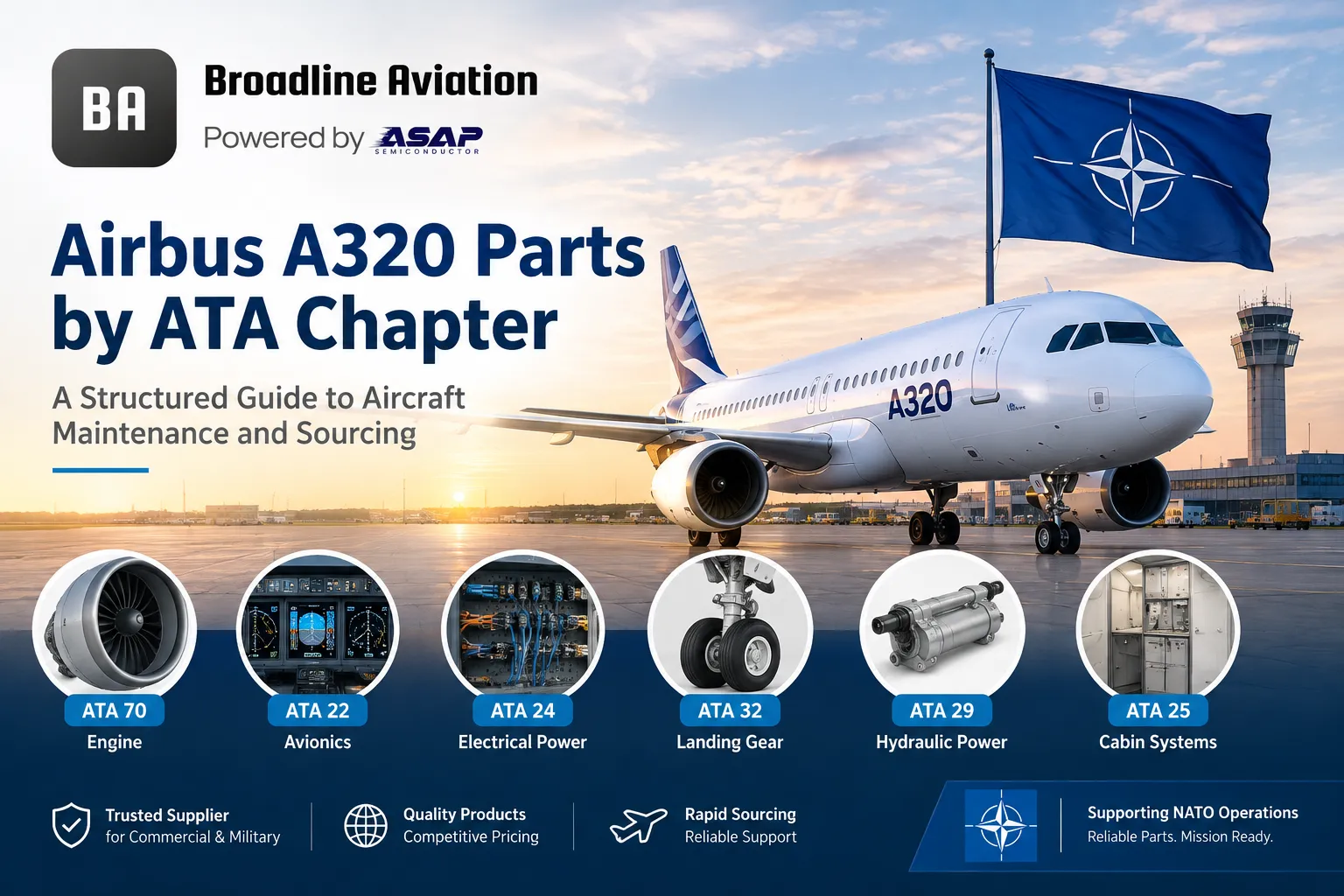
Maintaining an Airbus A320 requires access to dependable aircraft components and replacement parts. Airlines, maintenance organizations, repair stations, and aviation procurement teams may require components for systems throughout the aircraft, including landing gear, electrical systems, avionics, cabin equipment, flight controls, and other assemblies.
Reliable sourcing is particularly important when maintenance schedules are time-sensitive. Aviation buyers typically need accurate part identification, appropriate documentation, quality assurance, and responsive sourcing support when procuring replacement components.
The A320's Continuing Role in Commercial Aviation
The A320 remains an important platform because of its combination of capacity, efficiency, technology, and commonality. Airbus describes the A320 Family as its leading single-aisle aircraft family, covering a broad range of airline requirements and continuing to evolve through newer technologies.
For organizations involved in aircraft maintenance and procurement, understanding the A320 platform can help simplify component identification and sourcing. Broadline Aviation supports aviation procurement requirements by providing access to aircraft parts and components for commercial and other aviation applications. Buyers seeking Airbus A320-related components can explore available parts and submit sourcing requirements through the relevant catalog and RFQ channels.


























Sign in to leave a comment.