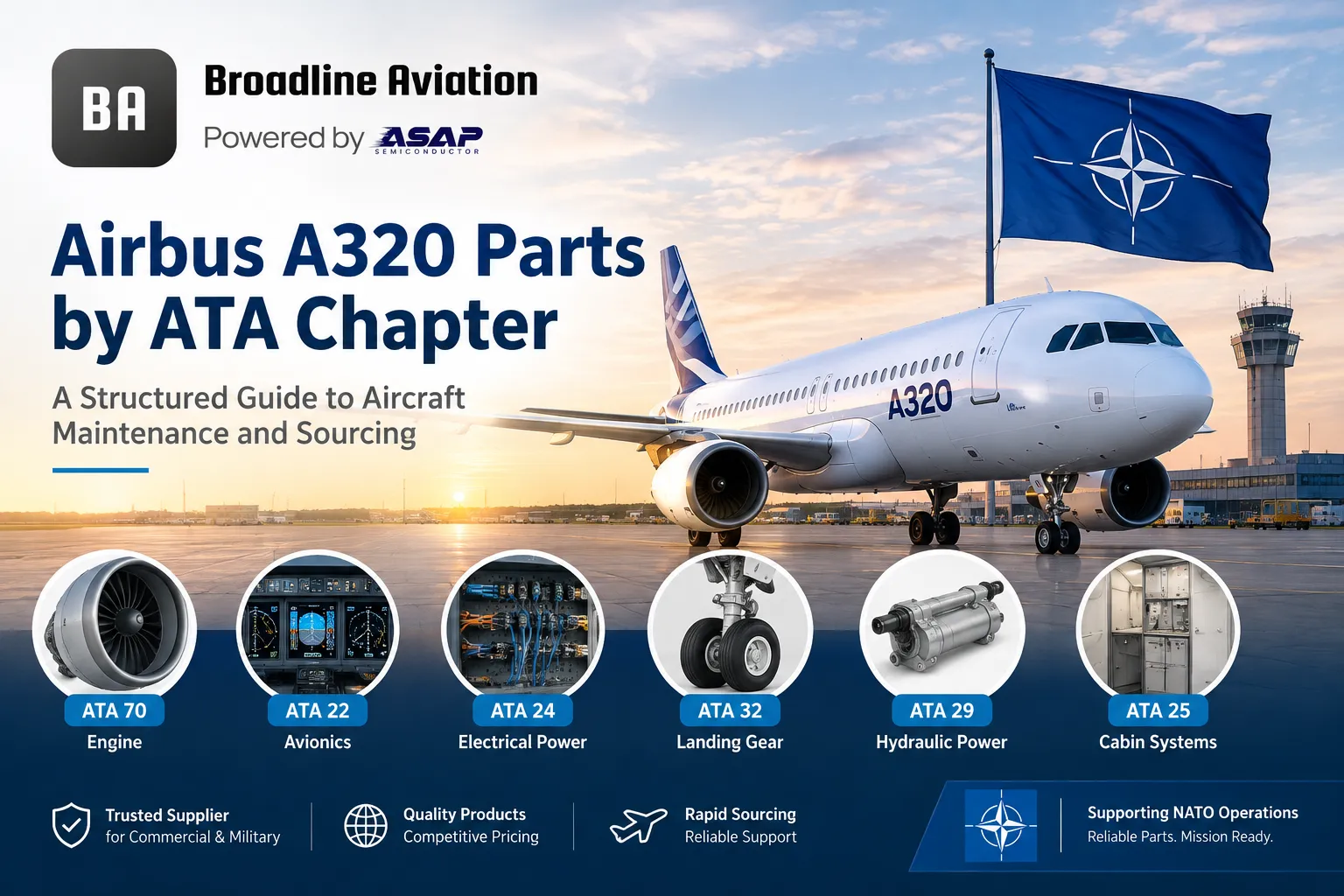

The Airbus A320 family is widely used in commercial aviation, making reliable maintenance support and aircraft component sourcing essential for operators, MRO providers, and aviation professionals. With numerous systems, assemblies, and replacement components, organizing parts by ATA chapter helps maintenance teams locate relevant information and streamline procurement.
For organizations sourcing Airbus A320 aircraft parts, understanding ATA chapter classifications can make the process more structured, from identifying components to requesting quotations from aviation suppliers.
Understanding ATA Chapters in Airbus A320 Maintenance
ATA chapters provide a standardized framework for organizing aircraft technical information. Each chapter generally corresponds to a particular aircraft system or maintenance area, such as air conditioning, electrical power, flight controls, or landing gear.
The Airbus A320 incorporates a range of interconnected systems that require appropriate inspection, servicing, and component replacement. Using ATA chapter classifications allows maintenance personnel to narrow their search according to the system involved.
For example, teams working on aircraft electrical systems may focus on relevant electrical ATA chapters, while landing gear maintenance requires a different set of components and technical references. This organization supports more efficient parts identification and technical documentation review.
Why Airbus A320 Parts Sourcing Requires Accuracy
Aircraft component procurement involves more than simply matching a part name to a product listing. Maintenance teams must consider part numbers, technical specifications, applicable aircraft configurations, and supplier documentation.
An incorrect or incompatible component can create delays in maintenance operations and require additional verification. Therefore, buyers should provide accurate part information and consult applicable aircraft maintenance documentation before ordering.
Working with an aviation parts supplier that supports structured parts searches can help procurement teams manage sourcing requests more efficiently. It is also important to verify traceability, certification requirements, and applicable installation approvals according to the operator's maintenance procedures.
Exploring Airbus A320 Parts by ATA Chapter
A structured ATA chapter directory can support maintenance planning and procurement activities by helping users identify parts according to their intended aircraft system. For instance, ATA 24 relates to electrical power, ATA 27 to flight controls, ATA 28 to fuel, ATA 29 to hydraulic power, and ATA 32 to landing gear.
The Illustrated Parts Catalog (IPC) provides additional information about assemblies and individual components. Combining ATA chapter references with IPC information can help buyers research requirements more precisely and communicate relevant details to suppliers.
Broadline Aviation offers an Airbus A320 parts-by-ATA-chapter resource where aviation professionals can explore categorized component listings and submit sourcing requests. Buyers can use the available information as a starting point for identifying parts that match their maintenance or procurement needs.
Best Practices for Sourcing A320 Aircraft Components
Before submitting an RFQ, procurement teams should gather essential information, including:
- Aircraft model and applicable configuration.
- Manufacturer or aircraft part number.
- Component description and required quantity.
- Relevant ATA chapter or technical reference.
- Required certification and delivery specifications.
Providing complete information helps suppliers review requests and determine appropriate sourcing options. All components should be evaluated against approved technical documentation and applicable airworthiness requirements before installation.
Conclusion
ATA chapter-based organization offers a practical approach to Airbus A320 parts research. By connecting aircraft systems, IPC references, and accurate part numbers, aviation professionals can make procurement workflows more organized and support maintenance planning.
Whether sourcing flight-control components, electrical parts, landing gear assemblies, or other aircraft hardware, a reliable parts directory can be a useful starting point. Explore the Broadline Aviation Airbus A320 ATA Chapters page to research available listings and submit an RFQ for your requirements.
Frequently Asked Questions (FAQs)
1. What are ATA chapters in Airbus A320 aircraft?
ATA chapters are standardized classifications used to organize aircraft systems and related technical information. They help maintenance and procurement teams locate information associated with specific aircraft systems.
2. Why are ATA chapters important for A320 parts sourcing?
ATA chapters help buyers narrow their search to a particular aircraft system. When combined with the part number and IPC references, they can support more organized component identification.
3. What information is needed to request Airbus A320 parts?
Useful information includes the aircraft model, part number, component description, quantity, and any applicable technical or documentation requirements. Additional details may be needed depending on the component.
4. How does an IPC help with Airbus A320 parts identification?
An Illustrated Parts Catalog provides information about component assemblies and their individual parts. It can help users investigate the relationship between a part and its installation within an aircraft assembly.
5. Where can I research Airbus A320 parts by ATA chapter?
You can visit the Broadline Aviation Airbus A320 ATA Chapters resource to explore the categorized parts directory and submit a request for quotation.




























Sign in to leave a comment.