

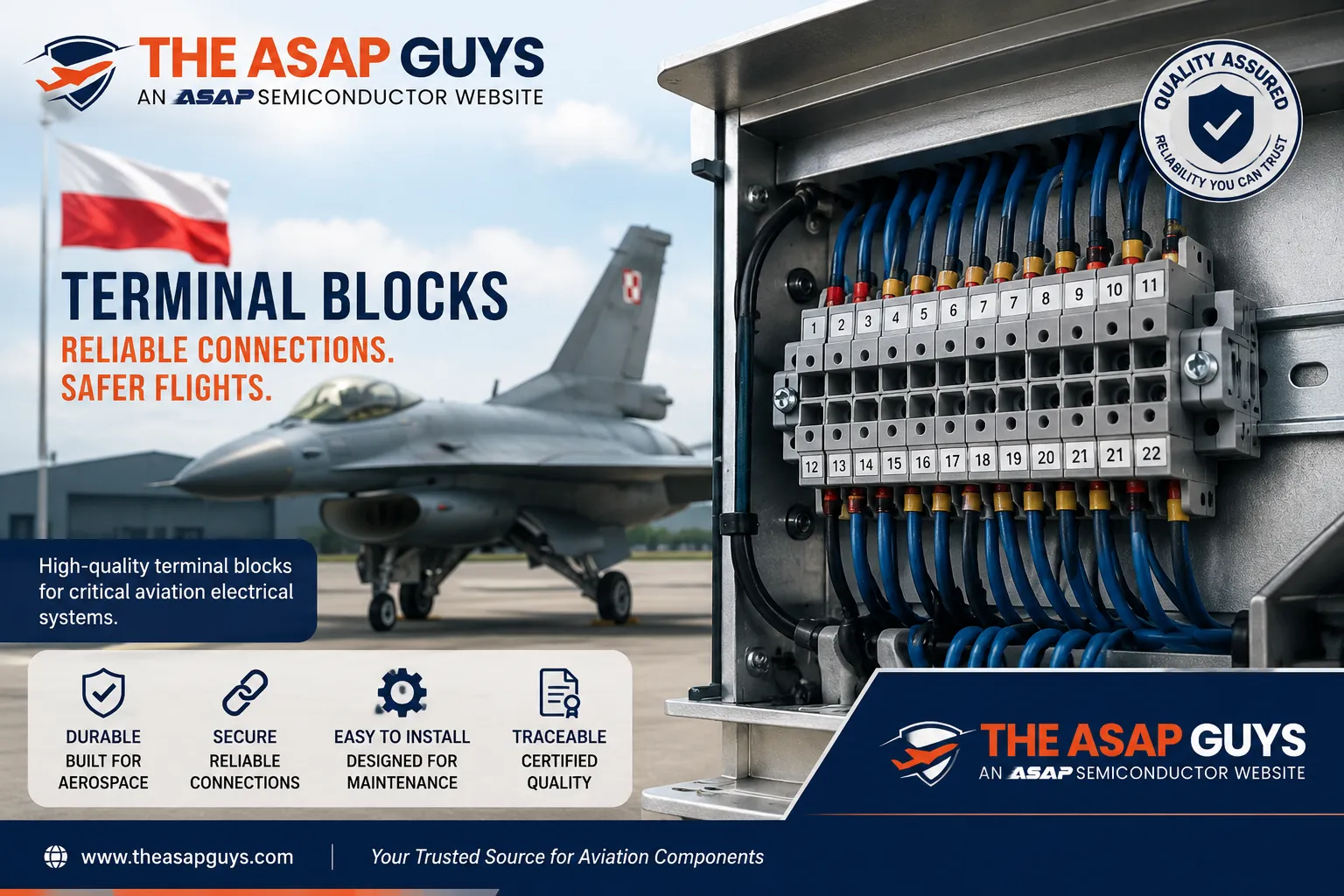
Modern aircraft depend on complex electrical wiring systems to support avionics, communication equipment, lighting, navigation, instrumentation, and power distribution. Within these systems, aircraft terminal blocks provide an organized method for connecting, distributing, and terminating electrical conductors.
For maintenance teams and aviation procurement professionals, selecting the correct terminal block is not simply a matter of matching appearance. Electrical specifications, aircraft application, environmental conditions, installation requirements, and traceability all need to be considered.
What Is an Aircraft Terminal Block?
An aircraft terminal block is an electrical connection device used to terminate and organize multiple wires within an aircraft electrical system. Terminal strips and blocks can help create structured connection points, making wiring easier to maintain and inspect.
The FAA's AC 43.13-1B guidance explains that aircraft electrical junctions may use approved devices such as terminal blocks, solderless terminals, connectors, and other termination devices. It also emphasizes protecting electrical junctions from short circuits and physical damage.
Why Terminal Blocks Matter in Aircraft
Aircraft electrical systems must operate reliably despite vibration, temperature changes, moisture, maintenance activity, and limited installation space. A properly selected terminal block can contribute to organized wiring and dependable electrical connections.
According to FAA guidance, terminal selection should consider factors including current rating, wire size, conductor compatibility, stud size, insulation compatibility, and application environment.
These considerations are particularly important in aircraft because an unsuitable electrical component can affect system performance or create maintenance concerns.
Common Applications of Aircraft Terminal Blocks
Terminal blocks can be found in various aircraft electrical and electronic applications, including:
- Power distribution systems
- Avionics equipment
- Communication systems
- Navigation equipment
- Lighting circuits
- Instrumentation
- Control systems
- Electrical junctions and panels
The exact application depends on the aircraft design, wiring architecture, and approved maintenance documentation.
Choosing the Right Aviation Terminal Block
When sourcing an aircraft terminal block, procurement teams should identify the exact part number and manufacturer whenever possible. Additional information such as NSN, CAGE Code, aircraft platform, quantity, and required condition can make sourcing more precise.
The environmental requirements should also be evaluated. Aircraft wiring may be exposed to vibration, moisture, temperature extremes, chemicals, and confined installation spaces. FAA maintenance guidance specifically addresses protecting aircraft wiring from substances such as fuel, oil, and water as well as abrasion damage.
For this reason, replacing a specialized aircraft terminal block with a visually similar commercial component is not an appropriate substitute unless the replacement has been properly approved for the application.
Aircraft Terminal Block Procurement and Traceability
Reliable sourcing is an important part of aviation maintenance. The ASAP Guys' terminal block catalog provides access to numerous aircraft terminal block part numbers and manufacturer references, with RFQ options for procurement teams. The catalog currently lists 1,290 terminal-block parts and 132 manufacturers.
The company also states that its sourcing process includes supplier vetting, testing, inspection, and document verification for applicable inventory.
Explore aircraft terminal blocks and request a quote to research available part numbers and sourcing options.
Maintenance and Inspection Considerations
Terminal blocks should be inspected according to the applicable aircraft maintenance documentation and approved procedures. FAA guidance notes that terminal strips should be checked for conditions such as loose connections, contamination, and foreign metallic objects because these conditions can contribute to arcing or system failures.
This reinforces the importance of proper installation, inspection, and documentation throughout an aircraft component's service life.
Conclusion
Aircraft terminal blocks may be small components, but they play an important role in maintaining organized and dependable electrical connections. Selecting the correct part requires attention to electrical ratings, physical compatibility, environmental requirements, manufacturer information, and aviation documentation.
For MRO organizations, distributors, and aviation procurement teams, using an established aircraft-parts catalog can simplify the process of identifying terminal block part numbers and submitting RFQs. Ultimately, accurate identification and verification should remain the foundation of every aircraft electrical component purchase.

























Sign in to leave a comment.