

Airless spray painting forces paint through a small tip at very high pressure, which breaks it into a fine spray without compressed air. Robotic coating systems pair this method with programmable arms, so every part gets the same coat, pass after pass. Together, they are changing how factories, fabrication shops, and large project teams handle painting.
What Is Airless Spray Painting?
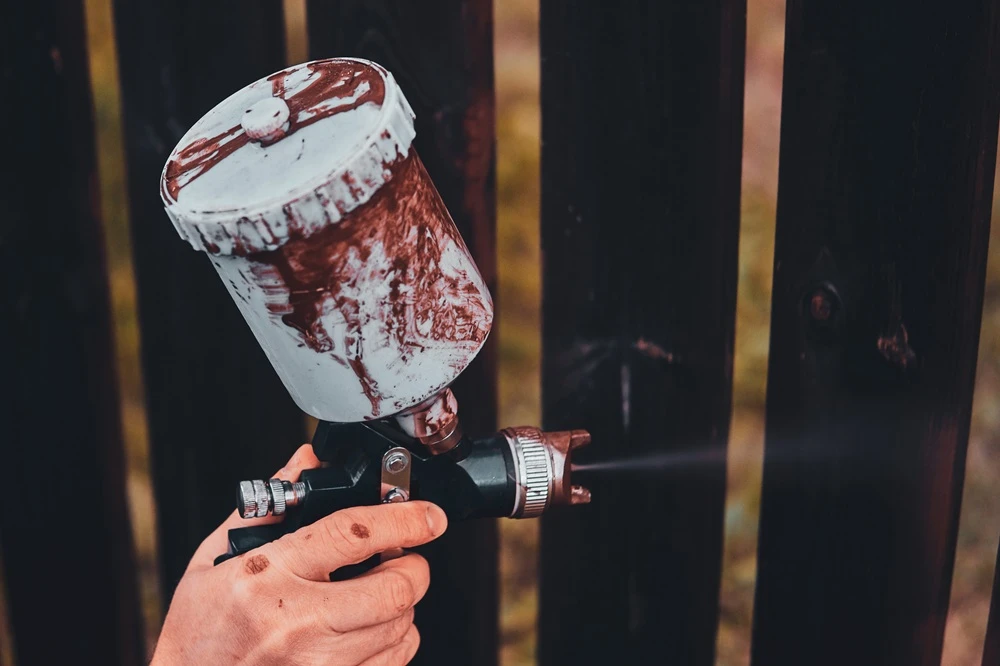
An airless sprayer uses a pump to push paint through a hardened nozzle at pressures that often run into thousands of PSI. The paint atomizes as it leaves the tip, so no air is needed to carry it.
This makes it a good fit for thick coatings such as primers, epoxies, and protective paints, and for covering large surfaces quickly. A skilled operator can coat steel structures, tanks, pipes, and walls far faster than with a brush or roller.
The catch is that results depend heavily on the person holding the gun. Hand speed, distance, and overlap all change the finish, and that is where automation comes in.
Why Manufacturers Are Moving Toward Automation
Manual spraying has three long-standing problems: inconsistent quality, operator fatigue, and exposure to fumes and overspray. Skilled painters are also getting harder to find in many regions.
Robotic coating systems address these problems directly. A robot repeats the same path at the same speed and distance every time, so the coating thickness stays uniform from the first part to the thousandth. Workers move from the spray booth to supervision and programming, which is safer and often more productive.
How Robotic Coating Systems Work
A typical automated setup has four main parts:
- Robotic arm: A multi-axis arm follows a programmed path around the part.
- Airless spray gun and pump: These deliver a steady flow of paint at controlled pressure.
- Motion and control software: Operators set the path, speed, and spray pattern, often by teaching the robot or loading a digital program.
- Sensors and safety systems: These detect part position, monitor flow, and keep people away from moving equipment.
Some setups also use conveyors, turntables, or vision systems, so the robot can adjust when parts differ slightly in size or position. Once a program is tested, it can run again and again with very little variation.
Key Benefits of Robotic Airless Coating
Consistent finish. Uniform film thickness means fewer runs, thin spots, and rework. Coatings also tend to last longer when they are applied evenly.
Less wasted paint. Airless spraying generally transfers more paint to the surface than conventional air spraying, and a robot avoids the overspray caused by uneven hand movement. Over a year of production, that saving adds up.
Faster cycle times. Robots do not tire, and they can run across shifts. That helps shops meet tight deadlines without sacrificing quality.
Safer workplaces. Removing people from high-fume, high-pressure spray zones lowers health risks and can help with compliance.
Better data. Modern systems record paint usage, cycle time, and settings, which makes quality audits and cost tracking much easier.
Where Robotic Coating Systems Are Used
Automated airless coating is now common in:
- Structural steel and fabrication
- Heavy machinery and agricultural equipment
- Pipes, tanks, and pressure vessels
- Automotive components and trailers
- Furniture and metal enclosures
- Shipbuilding and marine parts
It works best where parts are repeatable and the volume justifies the setup. Even so, more flexible robots are making small-batch work practical too.
Challenges to Plan For
Automation is not a magic switch. Buyers should think through a few things before investing:
- Upfront cost: Robots, controls, and safety enclosures require capital. Most companies calculate payback from labor savings, paint savings, and lower rework.
- Programming and changeovers: Each new part may need a new path. Offline programming and teach-by-demonstration tools reduce this burden.
- Paint compatibility: Viscosity, pot life, and filtration must suit the pump and tip. Skipping this step causes clogs and uneven spray.
- Maintenance: High-pressure components wear. Regular tip changes, filter checks, and pump servicing keep quality steady.
- Training: Teams need people who understand both coatings and robotics.
How to Choose the Right System
Start with the parts you paint, not the machine. Consider size, shape, and daily volume. Then match those to the coating type, the required film thickness, and the space available on your floor.
Ask suppliers about integration support, spare parts availability, training, and after-sales service. A trial run with your own parts and paint will tell you more than any brochure. It is also wise to plan for growth, since your product range will likely change.
The Future of Coating Automation
Expect coating robots to become easier to program, more adaptable, and more connected. Vision systems that scan a part and generate a spray path automatically are already emerging. Collaborative robots are opening automation to smaller workshops. Data from spray lines is also being used to predict maintenance and reduce material waste.
The trend points in one direction: painting is becoming a controlled, measurable process rather than a purely manual craft, though skilled painters remain valuable as programmers and quality supervisors.
Final Thoughts
Airless spray painting already offers speed and strong coverage. Adding robotics brings repeatability, safety, and cost control on top. For businesses that paint at volume, moving toward automation is increasingly a practical decision rather than a futuristic one. If you are comparing equipment options, suppliers such as Dyson Paintes can help you look at pumps, guns, and system configurations that suit your production needs.
Frequently Asked Questions
1. What is the difference between airless and conventional spray painting?
Conventional spraying uses compressed air to atomize paint, while airless spraying uses high fluid pressure through a small tip. Airless is usually faster and better for thick coatings and large areas, and it produces less mist than air spraying.
2. Are robotic coating systems worth it for small businesses?
They can be, if you paint repeatable parts in steady volumes. Compact and collaborative robots have lowered the entry cost. Compare the price against your labor, paint waste, and rework costs to estimate payback.
3. Can robots handle different paint types?
Yes, within limits. Robots can spray primers, epoxies, polyurethanes, and many industrial coatings, provided the pump, hoses, and tips are matched to the paint's viscosity and chemistry. Always check the coating manufacturer's guidance first.






















Sign in to leave a comment.