

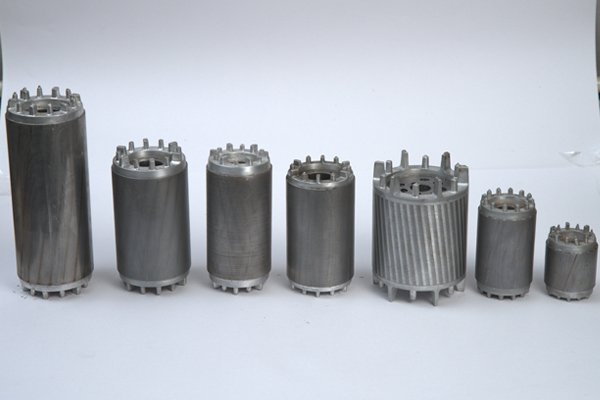
Aluminium alloy casting has become an important manufacturing process for industries that require components that are lightweight, durable, corrosion-resistant, and dimensionally reliable. From automotive components and industrial machinery to electrical equipment and consumer products, aluminium castings are used in applications where performance and production efficiency are equally important.
As manufacturers continue to search for ways to reduce component weight while maintaining strength and functionality, aluminium alloys have emerged as a practical material choice. Understanding the casting process, material advantages, applications, and quality considerations can help businesses select the right solution for their production requirements.
What Is Aluminium Alloy Casting? 🔧
Aluminium alloy casting is a manufacturing process in which molten aluminium alloy is poured or injected into a specially designed mould. Once the material cools and solidifies, it takes the shape of the mould and forms the required component.
Different casting techniques can be selected depending on component geometry, production volume, surface requirements, and dimensional tolerances. Common methods include sand casting, gravity die casting, permanent mould casting, and pressure die casting.
The flexibility of aluminium alloys allows manufacturers to produce both relatively simple parts and complex components with intricate geometries.
Why Choose Aluminium Alloys? ⚙️
One of the biggest advantages of aluminium is its low density. Aluminium components can significantly reduce weight compared with many traditional metallic materials. This characteristic is particularly valuable in automotive and transportation applications, where lower component weight can contribute to overall system efficiency.
Aluminium alloys also provide good corrosion resistance. A naturally occurring oxide layer forms on the surface of aluminium, helping protect the material from environmental exposure.
Other advantages include:
- Excellent strength-to-weight characteristics
- Good thermal conductivity
- Good electrical conductivity
- Machinability after casting
- Compatibility with different finishing processes
- Recyclability
- Suitability for complex component designs
These characteristics make aluminium alloy casting suitable for a broad range of industrial applications.
The Aluminium Casting Process 🔥
The casting process begins with selecting an appropriate aluminium alloy based on the component's intended application. The alloy is then melted under controlled conditions.
The molten metal is introduced into the mould. Careful control of temperature, filling speed, and solidification is important because these factors can influence the final quality of the casting.
After solidification, the casting is removed from the mould. Additional operations may include trimming, machining, drilling, grinding, surface treatment, inspection, and finishing.
Modern manufacturing environments may also use simulation and process monitoring to identify potential problems before production begins.
Applications Across Industries 🚗
Aluminium alloy castings are used in numerous industries.
In the automotive sector, they can be used for housings, brackets, structural components, transmission parts, and other lightweight components.
In electrical and electronics manufacturing, aluminium castings can be used for enclosures, heat-dissipation components, housings, and structural parts.
The industrial machinery sector also uses aluminium cast components for pump bodies, motor housings, equipment frames, and mechanical assemblies.
Other applications include:
- Aerospace equipment
- Renewable energy systems
- Robotics
- Medical equipment
- Consumer appliances
- Transportation systems
The ability to customize alloy composition and casting methods makes aluminium suitable for both specialized and high-volume manufacturing.
Quality Control Matters 🔍
Consistent quality is essential when manufacturing aluminium alloy components. Casting defects such as porosity, shrinkage, inclusions, cracks, and dimensional variation can affect component performance.
Manufacturers can use visual inspection, dimensional measurement, non-destructive testing, metallurgical analysis, and other quality-control methods to verify components.
Good process control begins before casting itself. Proper mould design, alloy selection, melting practices, temperature management, and controlled solidification all contribute to consistent results.
Choosing the Right Aluminium Casting Manufacturer 🤝
Selecting a manufacturing partner requires more than comparing prices. Companies should consider technical expertise, production capabilities, quality systems, equipment, material knowledge, and experience with similar components.
A capable manufacturer should understand the complete production cycle—from design and tooling through casting, machining, inspection, and delivery.
Clear communication is also important. Providing accurate drawings, material specifications, tolerances, expected quantities, and application requirements allows the manufacturer to recommend an appropriate process.

The Future of Aluminium Alloy Casting 🚀
The demand for lightweight and efficient components continues to influence modern manufacturing. Advances in casting simulation, automation, digital inspection, and process monitoring are helping manufacturers improve consistency and productivity.
Recycling is another important consideration. Aluminium can be recycled repeatedly, making material recovery and efficient production increasingly relevant to manufacturers seeking to reduce waste.
Conclusion
Aluminium alloy casting combines lightweight material properties with flexible manufacturing possibilities. Its applications range from automotive and electrical components to industrial machinery and advanced engineering systems.
For businesses looking for durable, lightweight, and manufacturable metal components, aluminium alloy casting can provide a practical production route. With appropriate alloy selection, mould design, process control, and quality inspection, manufacturers can produce reliable components that meet demanding industrial requirements. 🏭🔩



















Sign in to leave a comment.