
The Strategic Inflection Point: Navigating Growth and Complexity in the Amorphous Core Transformers Market
1. Market Reality: A Sector at the Crossroads of Efficiency and Economics
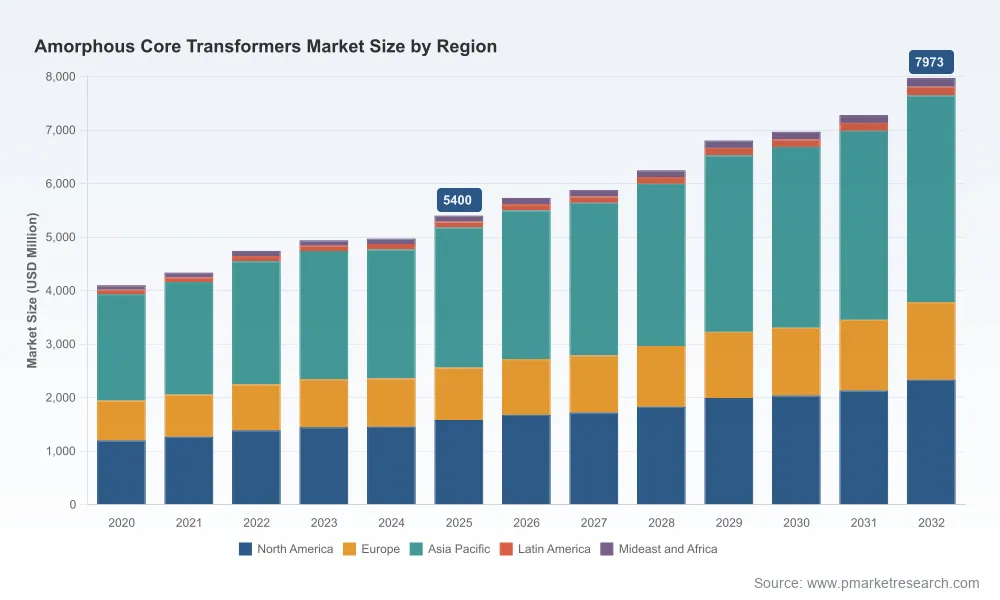
The global amorphous core transformers market has matured into a critical component of the broader electrical distribution infrastructure, valued at approximately $5.4 billion in 2025 and projected to reach nearly $8.0 billion by 2032. This trajectory reflects a compound annual growth rate of 5.8 percent over the forecast period, signaling steady but not explosive expansion. The market’s growth is neither uniform nor accidental; it is being shaped by a confluence of regulatory mandates, technological maturation, and shifting demand patterns across utility, industrial, and commercial sectors. While the absolute numbers suggest a healthy market, the underlying dynamics reveal a sector navigating structural tensions that will define competitive positioning in the years ahead.
Amorphous Metal Cores Market
One of the most pressing challenges facing industry participants is the tension between efficiency mandates and material economics. Amorphous core transformers offer significant reductions in no-load losses compared to traditional silicon steel alternatives, making them indispensable for grid modernization and energy conservation initiatives. Yet the premium associated with amorphous ribbon production, coupled with supply concentration, introduces cost volatility that can strain project economics, particularly in price-sensitive utility procurement cycles. Manufacturers and buyers alike must contend with the reality that efficiency gains do not automatically translate into uniform margin expansion; they require careful alignment of product design, sourcing strategy, and application-specific value propositions.
A second challenge lies in the fragmented nature of demand and the evolving regulatory patchwork across regions. While certain jurisdictions have accelerated adoption through stringent efficiency standards, others remain in transitional phases, creating uneven market pull. This divergence complicates capacity planning, product standardization, and go-to-market strategies for multinational players. Companies must balance the need for globally scalable offerings with the flexibility to adapt to localized technical requirements, compliance timelines, and procurement preferences. The result is a market where scale advantages exist but are tempered by the need for regional agility and application-specific engineering.
Amorphous Metal Sheets Market
A third inflection point emerges from the intersection of digitalization and transformer functionality. As distribution networks increasingly incorporate smart monitoring, predictive maintenance, and grid-edge intelligence, the transformer is no longer a passive component but a node in a broader data ecosystem. This shift raises expectations around integration capability, lifecycle service, and performance visibility. Suppliers that treat amorphous core technology as a standalone product proposition risk falling behind competitors who embed efficiency gains within broader digital and service frameworks. The market is gradually rewarding those who can articulate total cost of ownership and operational resilience, not merely core material efficiency.
2. Core Drivers Propelling Market Evolution
Technological Innovation and Material-Level Progress
Advancements in amorphous alloy processing and core manufacturing techniques continue to refine the performance envelope of these transformers. Improvements in ribbon uniformity, cutting precision, and core assembly methods have reduced residual losses and enhanced thermal stability, expanding the viability of amorphous cores in higher-capacity and more demanding applications. Alongside these material gains, selective adoption of digital monitoring and condition-assessment tools is enabling operators to validate efficiency claims in real operating conditions, strengthening the case for amorphous solutions in loss-sensitive deployments. The technological trajectory is not about reinventing the transformer but about incrementally widening the range of applications where amorphous cores deliver measurable economic and operational value.
Policy and Regulatory Catalysts
Regulatory frameworks remain among the most decisive forces shaping demand. In the United States, the Department of Energy finalized Energy Conservation Standards for Distribution Transformers in April 2024, establishing an extended compliance pathway through 2029 to 2034 with a reduced amorphous material requirement estimated at roughly 25 percent of the market. This phased approach reflects a pragmatic balance between efficiency objectives and material availability constraints, giving manufacturers and utilities a predictable transition window. In Europe, Ecodesign and related efficiency standards continue to incentivize amorphous core adoption for specific distribution transformer classes, reinforcing the technology’s role in meeting decarbonization and loss-reduction targets.
China’s GB 20052 standard mandates Tier 3 efficiency for distribution transformers, accelerating large-scale amorphous core installations across utility and industrial networks. This regulatory push, combined with ongoing grid expansion and loss-reduction programs, has created a substantial demand pool that manufacturers are actively addressing. At the standards level, IEEE C57.133 discussions in early 2025 addressed amorphous core considerations for transformer design, signaling continued technical harmonization efforts that will influence product specifications and interoperability expectations. Collectively, these policy and standards developments are not merely compliance triggers; they are reshaping the baseline expectations for distribution transformer efficiency across major markets.
Demand-Side Shifts in Utility and Industrial Behavior
Demand patterns are being reconfigured by broader energy system trends. Utilities are prioritizing loss reduction, grid reliability, and asset longevity as they manage aging infrastructure and integrate distributed energy resources. Amorphous core transformers align with these objectives by lowering no-load losses and reducing thermal stress over extended operating cycles. In industrial settings, energy cost sensitivity and sustainability commitments are driving evaluation of high-efficiency distribution equipment, particularly in facilities with continuous operations and large transformer fleets. Commercial and institutional buyers are also increasingly factoring efficiency performance into procurement decisions, supported by benchmarking programs and internal carbon or energy management targets.
These demand-side shifts are not uniform, but they are trending toward greater scrutiny of total cost of ownership. Buyers are more willing to evaluate higher upfront costs when lifecycle savings, regulatory compliance, and operational resilience can be clearly demonstrated. This behavioral change is expanding the addressable market for amorphous core solutions beyond niche efficiency applications into mainstream distribution upgrades, particularly where loss reduction and service continuity carry strategic importance.
Supply Chain and Cost Structure Realities
The supply chain for amorphous core transformers is characterized by concentrated material sourcing and diverse manufacturing footprints. Amorphous ribbon supply remains concentrated, with Hitachi Metals, operating under the Metglas brand, as the dominant global producer. This concentration creates both reliability and vulnerability: it ensures a degree of material quality consistency, but it also means that supply disruptions, pricing shifts, or capacity constraints can ripple through downstream manufacturing schedules. Manufacturers are responding by diversifying assembly capabilities, investing in core production know-how where feasible, and strengthening supplier relationships to mitigate exposure.
Cost structures are further influenced by regional labor dynamics, logistics, and the economics of dry-type versus oil-immersed configurations. Oil-immersed designs continue to represent the larger revenue share in many deployment contexts, reflecting established utility preferences and high-capacity application needs, while dry-type solutions are gaining relevance in indoor, urban, and environmentally sensitive installations. The interplay between material costs, manufacturing scale, and application mix means that margin management requires disciplined product positioning and careful attention to where amorphous cores deliver the strongest economic justification.
3. Competitive Landscape: Positioning, Differentiation, and Evolution
The amorphous core transformers market features a diverse set of participants spanning global industrial conglomerates, regional specialists, and focused manufacturers. This breadth reflects the market’s dual nature: it is large enough to attract major energy equipment players seeking to integrate amorphous solutions into broader portfolios, yet specialized enough to sustain niche manufacturers with strong regional relationships and application expertise. The competitive field is not defined by a single dominant paradigm; rather, it is shaped by the interaction of product breadth, regional reach, material access, and service orientation.
Global players such as ABB, Eaton, Siemens, Schneider Electric, and Hitachi Industrial Equipment Systems typically embed amorphous core transformers within wider distribution and utility portfolios. Their strategic positioning often emphasizes integration, digital monitoring capabilities, and the ability to serve multinational utility and industrial customers with consistent engineering standards and Lifecycle support. For these companies, amorphous core technology is a component of a broader value proposition that includes grid reliability, smart distribution, and standardized compliance documentation. Differentiation frequently comes from portfolio breadth, digital service integration, and the capacity to deliver across multiple voltage classes and application types.
Regional and application-focused manufacturers bring a different set of advantages. Companies such as Central Maloney, Howard Industries, Powerstar, Velatron Technologies, Kyte Powertech, and Vijai Electricals often compete on localized service, application-specific design, and responsiveness to utility or industrial procurement cycles. In North America, firms like Central Maloney and Howard Industries have established roles in supplying amorphous core liquid-immersed distribution transformers for utility applications, leveraging regional manufacturing presence and customer relationships. In Europe, Powerstar and Kyte Powertech have emphasized low-loss core transformers with documented industrial applications, positioning around efficiency outcomes and case-based validation. In India, CG Power and Industrial Solutions, Zetwerk, and Vijai Electricals contribute to a growing domestic and export-facing supply base, often aligning with national efficiency programs and cost-conscious procurement environments.
Asian manufacturers, particularly from Japan, South Korea, and China, illustrate the market’s technological and geographic diversity. Hitachi Industrial Equipment Systems, Toshiba, Rishe Kogyo, Hyosung Heavy Industries, and Daelim Electric bring varying degrees of core technology specialization, high-voltage capability, and application targeting. Hitachi’s ST-Eo18P series and broader distribution focus exemplify product-line specificity, while Hyosung’s high-efficiency amorphous core distribution transformers up to 72 kV class highlight capability expansion into higher voltage utility applications. Chinese manufacturers such as Shandong Dachi Electric and Wuxi Yadoo Electromechanical reflect the maturing domestic supply ecosystem, with product lines targeting distribution and high-overload applications, alongside custom amorphous metal core and assembly capabilities. The presence of multiple manufacturers across these regions indicates a market that is simultaneously global and deeply regional, with competitive advantage often derived from aligning product capability with local standards, procurement practices, and service expectations.
Recent activity underscores the market’s ongoing visibility and commercial engagement. Mangal Electricals exhibited at the IEEE PES T&D Conference in May 2026 with a dedicated amorphous core exhibition presence, signaling continued industry-facing promotion and networking. Shandong Dachi Electric participated in the EP China Show with an online exhibition presence for amorphous core transformers, reflecting adaptive engagement models in a dynamic trade environment. Wuxi Yadoo Electromechanical highlighted pioneering amorphous core technologies in a Chinese transformer core industry overview, pointing to continued technical development and positioning within the regional supply chain. These developments, while incremental, illustrate how manufacturers are maintaining market presence through exhibitions, technical communication, and application-focused engagement.
Market concentration remains moderate, with the top three participants accounting for roughly 26 percent of revenue and the top five approaching 33 percent. This concentration level suggests a market that is not dominated by a small handful of players, but is also not so fragmented that scale and coordination become irrelevant. The structure leaves room for both consolidation and specialization, depending on how companies choose to compete. Some may pursue portfolio integration and geographic expansion to capture broader share, while others may deepen application expertise, service models, or regional manufacturing efficiency. The evolving trend is likely to be a mix of both paths, with the most resilient players being those that can combine technical credibility with commercial flexibility.
4. Future Outlook: Trends Shaping the Next Three to Five Years
Trend 1: Efficiency Standards as a Stabilizing Demand Floor, Not a Uniform Growth Engine
Regulatory momentum will continue to provide a baseline of demand for amorphous core transformers, but the pace and shape of growth will vary by region and application. The U.S. compliance pathway extending into the late 2020s and early 2030s, coupled with reduced amorphous material requirements, suggests a measured adoption curve rather than a sudden surge. In markets with stricter mandates and active grid modernization programs, demand may accelerate more visibly. For commercial strategy, this means that efficiency standards should be treated as a structural support for the market, while growth differentiation will come from application targeting, service integration, and the ability to demonstrate measurable loss reduction in specific operating contexts.
Trend 2: Material Supply Dynamics Will Shape Product Roadmaps and Pricing Strategies
Given the concentrated nature of amorphous ribbon supply, material availability and cost will remain a strategic variable. Companies that depend heavily on external ribbon sourcing may face periodic pressure on margins or lead times, while those with stronger supplier partnerships, selective in-house core capabilities, or design flexibility to optimize material usage may gain resilience. Over the next few years, expect continued attention to supply chain robustness, including dual-sourcing exploration, inventory discipline, and design adjustments that preserve efficiency benefits without over-reliance on premium material volumes. Pricing strategies will likely become more nuanced, reflecting application value, voltage class, and the balance between dry-type and oil-immersed configurations.
Trend 3: Integration of Efficiency with Digital and Service Models Will Redefine Competitive Value
As distribution networks evolve, the transformer’s role is expanding from a loss-efficient component to part of a monitored, managed asset base. This does not require every transformer to become a smart device, but it does increase the value of manufacturers who can pair amorphous core efficiency with monitoring compatibility, documentation clarity, and service responsiveness. Expect growing emphasis on lifecycle value propositions, including installation support, performance verification, and maintenance planning. Competitive differentiation will increasingly hinge on how effectively suppliers can connect core technology to operational outcomes that matter to utilities and industrial buyers, such as reduced losses, improved reliability, and easier compliance demonstration.
These trends carry both opportunity and risk. The opportunity lies in aligning product strategy with regulatory direction, supply chain realism, and rising buyer expectations for total value. The risk lies in overindexing on efficiency alone without addressing cost, service, or application fit, or in underestimating the impact of material supply constraints and regional regulatory variation. Companies that navigate these tensions with disciplined segmentation and clear value communication will be better positioned to capture durable share in a market that is growing but increasingly discerning.
PW Consulting Automotive & Machinery Research Center
5. Strategic Implications for Decision Makers
For manufacturers and product leaders, the immediate priority is to sharpen application segmentation and align product roadmaps with where amorphous cores deliver the clearest economic and operational justification. This means mapping voltage classes, deployment environments, and loss-sensitivity profiles to specific product configurations, and ensuring that efficiency claims are supported by credible documentation and, where relevant, digital monitoring compatibility. Equally important is supply chain resilience: strengthening relationships with core material suppliers, evaluating design flexibility to manage material intensity, and building manufacturing agility to respond to regional demand variations. Companies that can combine technical precision with commercial adaptability will be better equipped to compete across both utility and industrial segments.
For investors and strategic planners, the market presents a profile of steady growth with identifiable structural drivers, but also with concentration risks and regulatory variability that warrant careful due diligence. The moderate concentration level suggests that competitive dynamics will remain pluralistic, with opportunities for both scaled players and focused specialists. Investment theses should account for the interplay between regulatory timelines, material supply dynamics, and the shift toward lifecycle value propositions. It is also prudent to monitor regional demand divergence, as markets with active efficiency mandates and grid modernization programs may offer stronger near-term pull, while others may follow more gradual adoption curves. Understanding which manufacturers have credible application expertise, service capability, and supply chain robustness will be central to evaluating long-term positioning.
For procurement leaders and utility decision makers, the focus should be on total cost of ownership and compliance alignment rather than upfront price alone. Amorphous core transformers can deliver meaningful loss reduction and operational benefits, but the value case depends on application context, load profiles, and the credibility of performance documentation. Procurement strategies should incorporate clear efficiency targets, lifecycle cost modeling, and supplier evaluation criteria that include service responsiveness, monitoring compatibility, and compliance support. Where applicable, aligning procurement cycles with regulatory timelines can help ensure that equipment selection supports both immediate operational goals and longer-term efficiency obligations.
For organizations seeking a deeper, segment-level view of market size, regional dynamics, application splits, and company-level positioning, a comprehensive research report can provide the structured detail needed to refine strategy, benchmark competitors, and assess entry or expansion opportunities. Access to granular segmentation data and tailored analytical frameworks can help translate the broader trends outlined here into specific planning assumptions, sourcing decisions, and investment prioritization. For decision makers navigating a market defined by efficiency mandates, material supply realities, and evolving value expectations, timely and detailed market intelligence is a practical asset for reducing uncertainty and sharpening execution.
For detailed analysis of this topic, please visit the official page: Amorphous Core Transformers Market
Lacy Lee
Senior Marketing Manager
[email protected]
PW Consulting: www.pmarketresearch.com




















Sign in to leave a comment.