
Hold up a product at a party and start reading its features aloud. Count how many people are still listening by the third bullet.
Now change the room. It's full of mothers, many with a baby or toddler on one arm, and nobody came for a briefing.
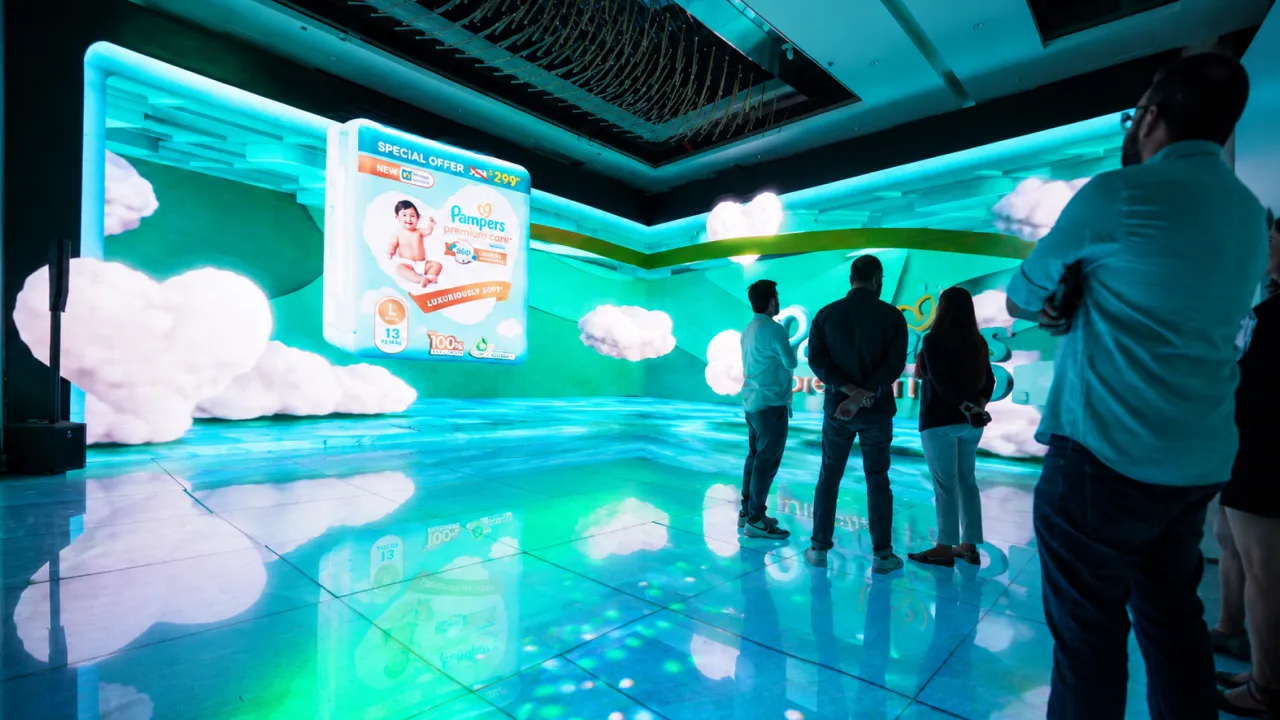
That was the setting for the Pampers premium line launch, set to be one of P&G's largest. It's also the position every product team ends up in sooner or later: the information is accurate, the audience is distracted, and the brand still needs to be remembered. Anamorphic 3D illusion software for product experiences gives that information somewhere better to live than a slide. It becomes a scene people can stand inside.
Why Product Information Gets Lost at Launch Events
Specs are true and forgettable. The things that make a premium product feel premium are often hard to see from across a room.
Then come the complications:
- The audience is mid-conversation, and often mid-toddler
- The brand has a look to protect (here, teal, white and gold)
- The client wants features communicated and the room to feel luxurious
There's evidence that live experiences help here. About 65% of consumers say live experiences help them understand products better than any other channel, according to a Seeker roundup.
Case Study: How the Pampers Premium Launch Turned Features Into a Room
The brief was to leave a lasting impression on mother influencers and their babies, while balancing key product features with the brand's luxurious look. It had two goals:
- A mother-baby experience that delighted mothers and held children's attention
- Massive 3D anamorphic displays for visibility, impact and recall
The full project is here: Pampers premium launch event.
Anamorphic Content Creation: The Story Was Built Before Any Pixel Was Rendered
Before a single 3D object existed, the team worked through:
- Brainstorming and research
- Mood boards
- Multiple rounds of storyboards
- 3D elements woven into the narrative
- Themes, scripts, voice-over talent and music chosen for mothers and children
- Visualisation tools, including AI-assisted ones, to test looks early
The content had two audiences at once, which is harder than it sounds. Mothers read a room for taste and trust. Children read it for movement and surprise.
The 3D Anamorphic LED Screen Setup: A Room That Felt Like a Museum
The team proposed massive LED displays: wall screens of 30 by 15 and a floor screen of 30 by 30. Together they created an immersive room reminiscent of a Van Gogh museum experience.
Using wall and floor together matters. The floor lets objects appear to rest on the ground, which is one of the strongest cues that something is real. Behind it sat a complex 3D pipeline built for the anamorphic illusion, with perspective pushed hard.
Where It Gets Hard: Sync, Calibration and Alignment
The team ran into three technical problems. Here they are in plain language:
- Synchronisation. When walls and floor run on separate processors, the same frame must land on all of them at the same instant. A small lag splits the object into pieces.
- Calibration. Colour and brightness must match across panels, or the seams show.
- Alignment. The distortion is tied mathematically to the viewing spot. A small error shows up as a bend in the object.
It's unglamorous work, and it's the reason the room looked easy. Three questions to ask any vendor:
- Do you preview in a digital copy of our LED setup?
- How do you test sync across processors?
- How much on-site calibration time are you planning?
From Spec Sheet to Scene: How Product Claims Become Visuals
Here's one way to translate claims into visual treatments. These are illustrations, not the Pampers script.
| Claim | Visual treatment | Why it works |
| Softness, gentleness | Slow, weightless motion; soft light drifting toward the viewer | The body reads gentleness through speed |
| Protection | A form that wraps or surrounds at room scale | Scale makes the claim physical |
| Capacity, performance | Cross-sections that pop out of the screen | The inside becomes visible |
| Premium craft | Close material detail on a giant surface, in brand gold | Detail rewards a closer look |
The Result: Goosebump Moments and a Room Nobody Wanted to Leave
The content synchronised with the LED displays, and the anamorphic illusion became the highlight of the event. Mothers and children were enchanted, the Pampers team was delighted, and attendees were reluctant to leave the space.
Anyone who has watched guests linger after an event ends knows how rare that is.
Looking for Examples of Experiential Marketing That Helped B2B Brands? Product Education Is the Common Thread
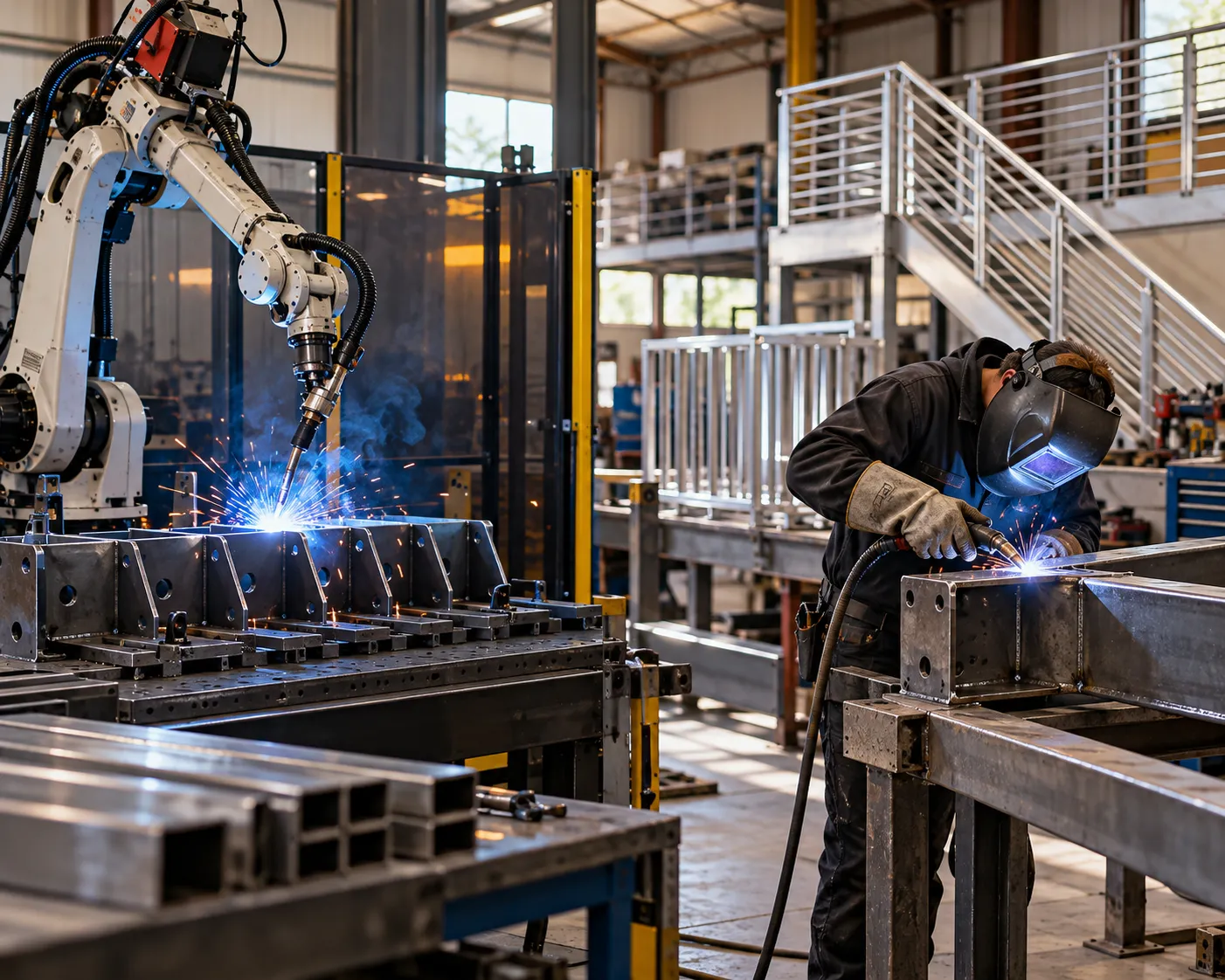
B2B products are harder to explain than a diaper: machines, materials, hardware with software inside. The buyers are technical, but they're also human, and they also tune out spec sheets.
Here the same method applies. A hidden mechanism can seem to float in front of the screen. A process can unfold at room scale. The aim stays the same as in the Pampers room: make the invisible visible, and let the claim be seen.
Tips for Brands to Create Memorable Interactive Installations
- Write the scene like a film, not a brochure.
- Give each feature one visual idea. Two ideas per scene blur both.
- Lock the brand palette early. The look is part of the claim.
- Think about eye level. Children see from a different height than adults. If the viewing spot is set for an adult's eyes, a toddler sees a different picture.
- Test sync on the real hardware, early.
- Add one small action. A touch, a wave or a scan gives people a way in.
What Do Retail Brands Gain From Immersive Marketing Activation? Lessons for 3D Anamorphic Advertising
Retail launches face the same problem as event launches: a premium product has to justify itself in seconds. Industry roundups suggest 85% of consumers are more likely to buy after taking part in a brand experience.
Retail brands also gain assets that travel. The same scenes can run on 3D anamorphic billboards, as the Pampers case shows. See IIC's retail experiential marketing approach for more.
Space matters too. You need room for the LED walls and floor, clear sightlines, a control position and safe guest flow. If the floor LED will be walked on, confirm its load rating. If not, plan the barrier.
FAQs About Anamorphic 3D Illusion Software for Product Experiences
Can it explain a complex product?
Yes, if each scene carries one idea. The software makes it feel physical, and the script makes it clear.
How long should the content run?
Short loops (two to four minutes) usually work best for event crowds.
Does it only work for premium launches?
No. It works wherever a product's value is hard to see.
Turn Your Product Story Into a Room People Remember
If your best feature can't be seen from three metres away, it needs a different stage.
IIC Lab (Ink In Caps) is a Mumbai-based MarTech and immersive technology agency. It turns product information into anamorphic content creation that audiences feel, from the first mood board to the last calibration. Send us your product sheet. We'll send back a room.
Contact IIC Lab






















Sign in to leave a comment.