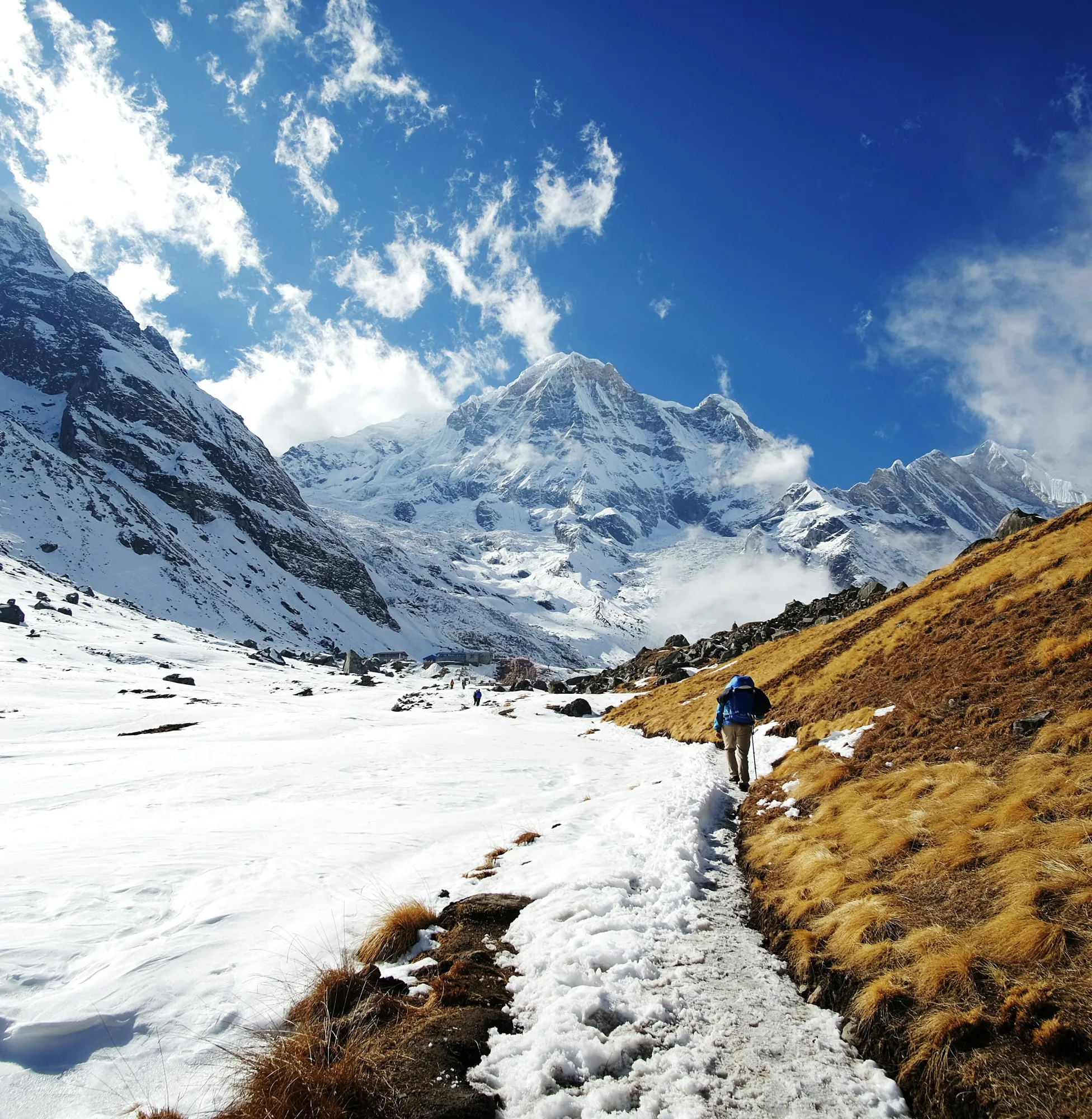

The paperwork for the Annapurna Base Camp trek is shorter than most people expect. There are two permits, ACAP and TIMS, and one rule that matters more than either: foreign trekkers must walk with a licensed guide. Here is how that works in practice, and what it means for your budget and your days on the trail.
The two permits
ACAP is the Annapurna Conservation Area Permit. The route runs through the conservation area, so you need it to walk the trail. TIMS, the Trekkers' Information Management System card, is the second. Those two cover the legal side of the trek, and that is the whole list.
On the 12-day itinerary from 5k Treks, the team arranges both permits and the fees are part of the price, so you don't have to handle the paperwork yourself. If you book with another operator, check that the permit fees appear in the inclusions. Your Nepal entry visa is a separate matter, and no trek package covers it.
Is a guide mandatory for the Annapurna Base Camp trek in 2026?
Yes. Since 1 April 2023, the Nepal Tourism Board has required every foreign trekker to hire a licensed, government-certified guide. Solo trekking is officially not permitted. The stated aims are trekker safety and support for the local economy.
That also settles the question many people type into a search box, whether you can do the trek without a guide. For foreign visitors, you can't. Strong fitness or earlier trekking experience does not change the rule.
What the guide does day to day
Annapurna Base Camp sits at 4,130 m, and the altitude risk is moderate. It is lower than Everest Base Camp, but headaches and nausea can still appear once you pass Deurali at 3,230 m. Your guide watches for the signs every day, which helps when you are tired and inclined to say you feel fine.
The route needs attention too. Between Deurali and Machhapuchhre Base Camp, the Hinku Cave sector has seasonal avalanche exposure, so guides start early on that stretch and follow local advisories. A daily briefing and a GPX track back up the navigation, and the guide hands out purification tablets for your water.
Porters come with the arrangement, one for every two trekkers. They carry your duffel, usually 10 to 12 kg, so you walk with a 5 to 7 kg daypack holding water, layers and a camera.
What is covered and what is not
On the 12-day package, the price includes the guide and porters, TIMS and permit fees, hotel and teahouse stays, meals during the trek, airport transfers, land transport and a duffel bag. A few things are yours to pay for. Tips for the guide, porter and driver are not included, and neither are lunches and dinners in Kathmandu, international flights, personal gear and medicines, or extra nights if you arrive early or leave late. Hot showers, charging and Wi-Fi on the trail cost a few dollars each.
Insurance is the item people forget. Your own travel insurance has to cover high-altitude trekking and helicopter evacuation, and the package does not supply it. Read the policy wording for both before you travel.
Why the rule suits this trail
The route passes through Gurung and Magar villages, and Ghandruk, on day 3, is the first. A local guide helps you read the customs there. Dress modestly in the villages, ask before taking someone's photo and keep your voice down near monasteries and shrines. The guide rule also keeps work in these communities, which is part of the reason it exists.
Before you book
Four questions settle most of the planning. Are ACAP, TIMS and the permit fees in the price? Does your insurance cover altitude and helicopter evacuation? Is there cash set aside for tips? Is your visa sorted? After that, choose a season: March to May for the rhododendrons, or October and November for the clearest skies.
The paperwork is the least interesting part of the Annapurna Base Camp trek. Once an operator has the permits in hand and you have accepted the guide rule, what remains is the walk: five days up through villages and forest to 4,130 m, and a night with Annapurna I in front of you.


















Sign in to leave a comment.