

Someone tells you they make $28 an hour. Another person says they earn $2,300 every two weeks. A third knows only the amount on the most recent paycheck.
All three may be trying to answer the same question: How much do I actually earn in a year?
The math is usually simple once you know how often you are paid. The part that causes confusion is choosing the right number of pay periods and deciding which earnings should be included.
Annual income is useful for more than curiosity. You may need it while filling out a rental application, comparing jobs, applying for a loan, planning a budget, or checking whether the income shown on payroll records makes sense.
What Does Annual Income Mean?
Annual income is the amount you earn over a year.
For an employee with a fixed salary, that number may already be obvious. If your salary is $62,000, your basic annual income is $62,000.
Hourly and variable-pay workers have to do a little more math.
Regular wages are only one part of the picture. Depending on the job, annual earnings might also include overtime, commissions, bonuses, tips, or shift premiums.
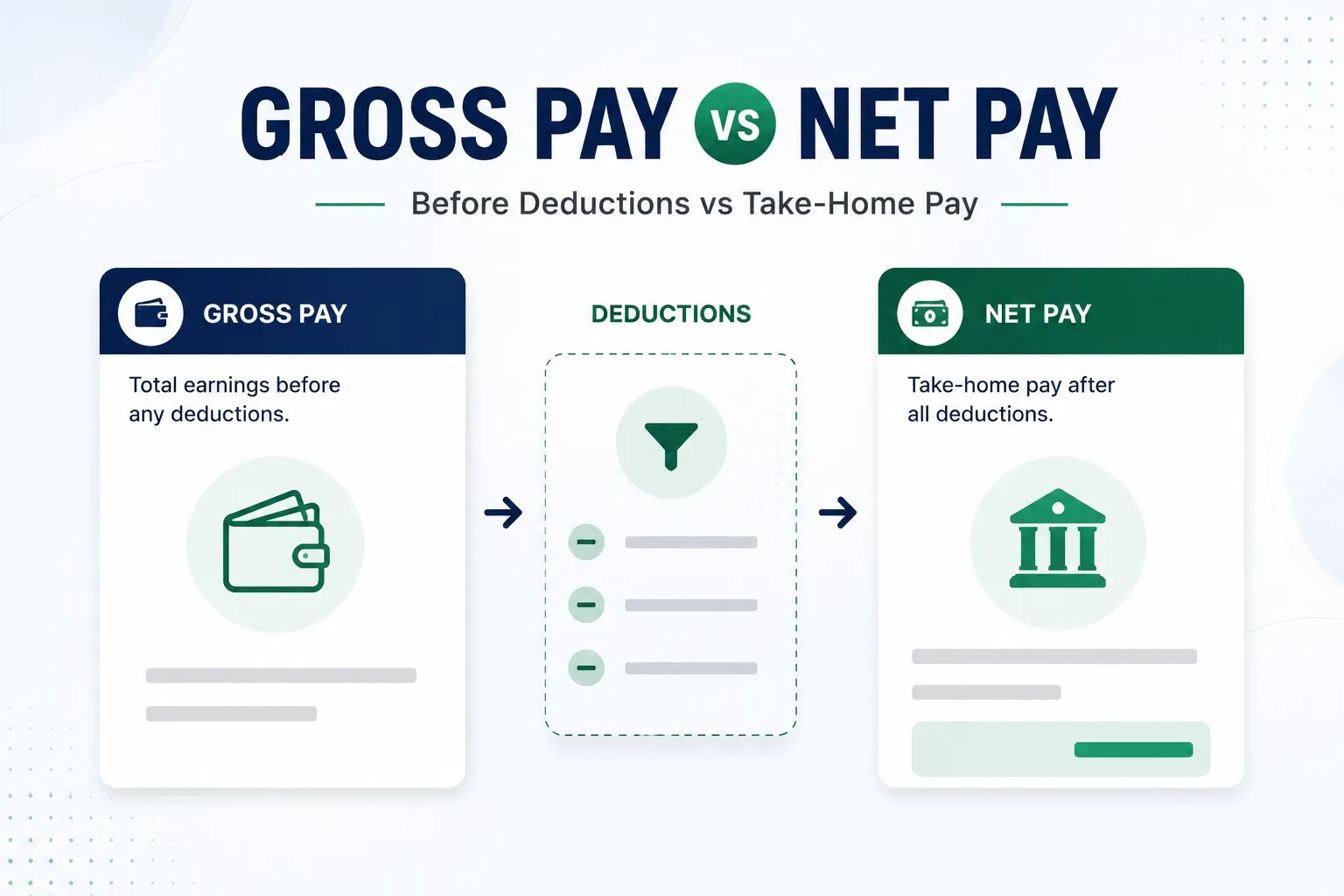
The important question is whether you are calculating gross income or take-home income.
Gross income is what you earn before payroll deductions. Net income is what remains after taxes, insurance, retirement contributions, and other deductions.
If those numbers are easy to mix up, this explanation of gross pay vs net pay shows where the difference comes from.
Turning an Hourly Wage Into Annual Income
Start with the hours you normally work.
Say your rate is $25 an hour and you regularly work 40 hours each week.
A typical calculation looks like this:
$25 × 40 hours = $1,000 per week
Then:
$1,000 × 52 weeks = $52,000 per year
That gives you an estimated gross annual income of $52,000.
This works well for someone whose schedule stays fairly steady. It becomes less accurate if you work seasonal hours, take unpaid time off, or have a schedule that changes significantly from week to week.
If you are comparing salary and hourly compensation in both directions, the ePaystubs salary to hourly calculator is useful for that comparison.
Weekly Pay Is Straightforward
A person receiving $1,100 each week can estimate annual earnings by multiplying that amount by 52.
$1,100 × 52 = $57,200
That is the basic annual estimate.
If one particular paycheck included an unusual amount of overtime, do not use that check as your normal weekly figure. A few typical pay periods usually give you a better starting point.
Biweekly Pay Is Where Mistakes Often Happen
Biweekly means every two weeks.
That normally works out to 26 pay periods in a year.
For someone earning $2,000 every two weeks:
$2,000 × 26 = $52,000
One common mistake is multiplying biweekly pay by 24. That calculation belongs to a semimonthly schedule.
They sound similar, but they are not the same.
If you are not sure which schedule your employer uses, the ePaystubs guide to weekly, biweekly, semimonthly, and monthly pay periods breaks down the difference.
Semimonthly Pay Uses 24 Checks
Semimonthly employees are generally paid twice per month.
That produces 24 regular pay periods during the year.
A worker receiving $2,600 each pay period would calculate:
$2,600 × 24 = $62,400
This is why checking your actual payroll schedule matters before estimating yearly income. Using the wrong multiplier can change the result by thousands of dollars.
Monthly Pay Is Even Simpler
Monthly pay is multiplied by 12.
If your monthly gross pay is $4,750:
$4,750 × 12 = $57,000
For someone with a fixed monthly salary, that may be all the calculation needed.
For others, the base salary is only part of their total earnings.
What About Overtime, Bonuses and Commission?
This is where a simple annual salary estimate can become misleading.
Imagine your regular wages produce $48,000 per year. During the same year, you expect roughly $4,500 in commissions and $2,000 in overtime.
Your estimated annual income becomes:
$48,000 + $4,500 + $2,000 = $54,500
A predictable annual bonus can be included the same way.
Be more careful with income that is uncertain. A commission earned last year may not repeat this year. The same is true for overtime if your employer changes schedules.
For budgeting, it can be smarter to separate guaranteed income from variable earnings.
Can You Calculate Annual Income From a Pay Stub?
Yes.
A recent pay stub can give you several useful clues, including gross pay, hours worked, hourly rate, overtime earnings, the pay period, and year-to-date totals.
If the paycheck represents a normal pay period, you can multiply the gross amount by the appropriate number of yearly pay periods.
You can also look at YTD earnings to see what you have actually earned so far.
That number is especially useful later in the year. The guide to what YTD means on a pay stub explains how year-to-date earnings differ from a projected annual figure.
Why Annual Income Matters for Proof of Income
Income often has to be documented, not just stated.
A landlord may ask for recent payroll records before approving an apartment. A lender may want to compare the income on an application with current earnings. Employees may need records when applying for financing or another income-based service.
In those situations, the numbers need to reflect real payroll information.
Employers and business owners who need to create pay stubs for legitimate payroll records can use the ePaystubs online pay stub generator with actual wage, tax, employer, employee, and deduction information.
A Realistic Example
Consider an employee who receives $1,850 every two weeks.
Their base annual pay is:
$1,850 × 26 = $48,100
During the year, they also expect around $1,900 in overtime and a $1,000 bonus.
That changes the estimate to:
$48,100 + $1,900 + $1,000 = $51,000
If the overtime disappears later in the year, the final number could be lower. That is why annual income calculators are best viewed as estimates unless the compensation is fixed.
The Number Is Only as Good as the Inputs
Annual income calculations do not need to be complicated.
The biggest errors usually come from using net pay instead of gross pay, mixing up biweekly and semimonthly schedules, or treating an unusually large paycheck as normal income.
Start with a representative gross-pay figure. Confirm how often you are paid. Then add regular overtime, commissions, bonuses, or other earnings only when they genuinely belong in the estimate.
And when payroll documentation is needed, businesses can prepare legitimate pay stubs online through ePaystubs.net using the employee's actual payroll details.
That gives you both the annual estimate and the records needed to understand where the number came from.





























Sign in to leave a comment.