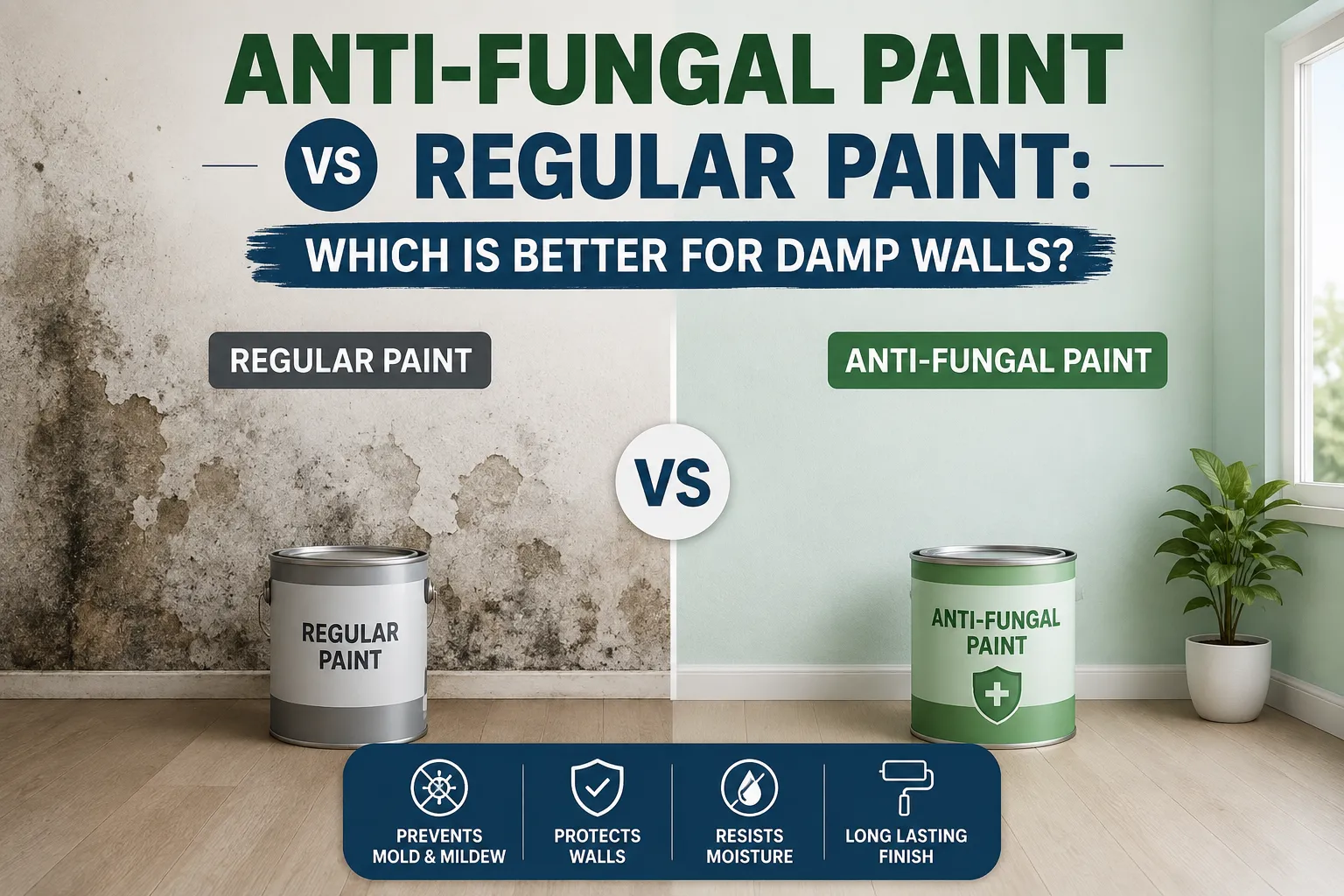

Damp walls are more than an eyesore. Persistent moisture can lead to peeling paint, musty odors, discoloration, and fungal or mold growth. For homes, offices, commercial buildings, and other properties exposed to humidity, choosing the right wall coating can make a significant difference.
This is where anti fungal paint offers an advantage over conventional wall paint. But is it always the better choice? Understanding how each type performs in damp conditions can help property owners, facility managers, contractors, and businesses make a more informed decision.
What Is Anti-Fungal Paint?
Anti-fungal paint is a specially formulated coating designed to resist the growth of fungi, mold, and mildew on painted surfaces. It typically contains additives that help inhibit microbial growth when conditions are favorable for it.
Unlike standard decorative paint, anti-fungal coatings are designed with moisture-prone environments in mind. They can be particularly useful in areas such as bathrooms, basements, kitchens, laundry rooms, warehouses, and other spaces where humidity levels may be high.
However, anti-fungal paint should not be viewed as a replacement for fixing the source of dampness. Leaks, plumbing problems, condensation, or water infiltration should be addressed first.
Anti-Fungal Paint vs Regular Paint: Key Differences
The main difference is how each coating is designed to perform in environments where moisture and fungal growth are concerns.
| Feature | Anti-Fungal Paint | Regular Paint |
Resistance to fungal growth
| Designed to inhibit fungal growth | Generally not specifically formulated for this |
| Damp environments | Better suited | May deteriorate faster |
| Mold and mildew protection | Provides added protection | Limited protection |
| Moisture-prone areas | Recommended for suitable applications | Better for relatively dry areas |
| Maintenance | Can help reduce fungal-related maintenance | May require more frequent repainting in damp conditions |
| Primary purpose | Protection plus decoration | Primarily decoration and surface finish |
The right choice ultimately depends on the wall condition, moisture level, location, and type of paint being considered.
Why Choose Anti-Fungal Paint for Damp Walls?
For walls that regularly experience humidity or moisture, anti-fungal paint can provide several practical benefits.
Helps Inhibit Mold and Mildew Growth
Damp surfaces can create favorable conditions for mold and mildew. Anti-fungal formulations are designed to make the painted surface less conducive to fungal growth.
This can be particularly useful in areas with poor ventilation or consistently high humidity.
Supports Longer-Lasting Wall Finishes
Moisture can contribute to bubbling, peeling, staining, and deterioration of paint. Using a coating appropriate for the environment can help maintain the appearance and performance of the wall finish.
Suitable for High-Humidity Areas
Anti-fungal coatings can be considered for locations such as:
- Bathrooms and washrooms
- Kitchens
- Basements
- Laundry areas
- Commercial kitchens
- Healthcare and care facilities
- Storage areas
- Industrial and commercial buildings
- Rooms with recurring condensation
For businesses, preventing recurring surface problems can also reduce cleaning, maintenance, and repainting requirements.
When Is Regular Paint a Better Choice?
Regular paint is not necessarily a poor option. In dry, well-ventilated areas with little exposure to moisture, conventional interior paint may provide an effective and economical decorative finish.
For example, a dry office meeting room with good ventilation may not need specialized anti-fungal protection. Likewise, a bedroom or living area without a history of condensation or dampness may be adequately served by standard paint.
The key is to match the coating to the environment rather than automatically choosing the most specialized product.
Can Anti-Fungal Paint Fix Damp Walls?
No. Anti-fungal paint can help protect a painted surface from fungal growth, but it cannot fix the underlying cause of dampness.
Before painting, identify and correct the moisture source. Common causes include:
- Plumbing leaks
- Roof or gutter problems
- Water seepage
- Poor exterior waterproofing
- Rising damp
- Condensation
- Poor ventilation
- Cracks allowing water infiltration
Painting over an actively damp wall can lead to poor adhesion and recurring problems, even when high-quality anti-fungal coatings are used.
How to Apply Anti-Fungal Coatings Correctly
Proper surface preparation is just as important as selecting the right product.
Identify the Moisture Source
Inspect the wall for leaks, seepage, condensation, or other sources of moisture. Resolve these issues before beginning the painting process.
Clean the Surface
Remove dirt, loose paint, mildew, and other contaminants according to the coating manufacturer's recommendations. The surface should be properly prepared before application.
Allow the Wall to Dry
Applying paint to a wet or excessively damp surface can compromise adhesion and finish quality. Allow sufficient drying time based on the wall condition and product instructions.
Apply the Recommended Primer
A suitable primer can improve adhesion and create a more consistent surface. Use a primer compatible with the selected anti-fungal coating.
Apply the Coating
Follow the manufacturer's instructions regarding coverage, number of coats, drying time, ventilation, and application method.
How to Choose the Right Paint for Damp Areas
Before selecting a coating, consider:
- Moisture exposure: How frequently does the wall become damp?
- Humidity: Is the room consistently humid?
- Ventilation: Does moisture have an effective way to escape?
- Surface condition: Is there existing mold, peeling, or water damage?
- Location: Is the surface residential, commercial, industrial, or institutional?
- Product specifications: Does the coating provide the performance characteristics required for the application?
- Maintenance requirements: How frequently will the surface need cleaning or repainting?
For serious or recurring dampness, consult a qualified building professional or coating specialist rather than relying on paint alone.
Conclusion
Choosing between anti-fungal paint and regular paint depends largely on the environment and condition of the wall. Regular paint can work well in dry areas, while anti-fungal coatings offer an additional layer of protection in spaces where humidity and fungal growth are recurring concerns.
If you are dealing with damp walls, start by identifying the moisture source before repainting. Once the underlying issue has been addressed, selecting a suitable anti-fungal coating can help protect the surface and maintain a cleaner, more durable finish.
For more guidance, explore resources on waterproofing solutions, damp-wall treatment, moisture-resistant coatings, and interior wall protection before choosing the right coating for your project.
Frequently Asked Questions
Is Anti-Fungal Paint Good for Damp Walls?
Yes, anti-fungal paint can be suitable for damp-prone walls because it is formulated to help inhibit fungal and mildew growth. However, the underlying source of moisture should be fixed first.
Can Regular Paint Prevent Mold?
Regular paint is generally not specifically formulated to prevent mold. In consistently damp environments, a suitable anti-fungal coating may provide better protection.
Does Anti-Fungal Paint Stop Dampness?
No. Anti-fungal paint does not eliminate water seepage, leaks, rising damp, or condensation. The underlying moisture problem must be addressed separately.
Where Should Anti-Fungal Coatings Be Used?
They can be considered for bathrooms, kitchens, basements, laundry areas, commercial facilities, warehouses, and other locations exposed to high humidity or moisture.
How Long Does Anti-Fungal Paint Last?
Its service life depends on the product, surface preparation, environmental conditions, application quality, and maintenance. Always follow the manufacturer's recommended application and maintenance instructions.


























Sign in to leave a comment.