Architects Woking: Why the Same Extension Costs Different on Every Street

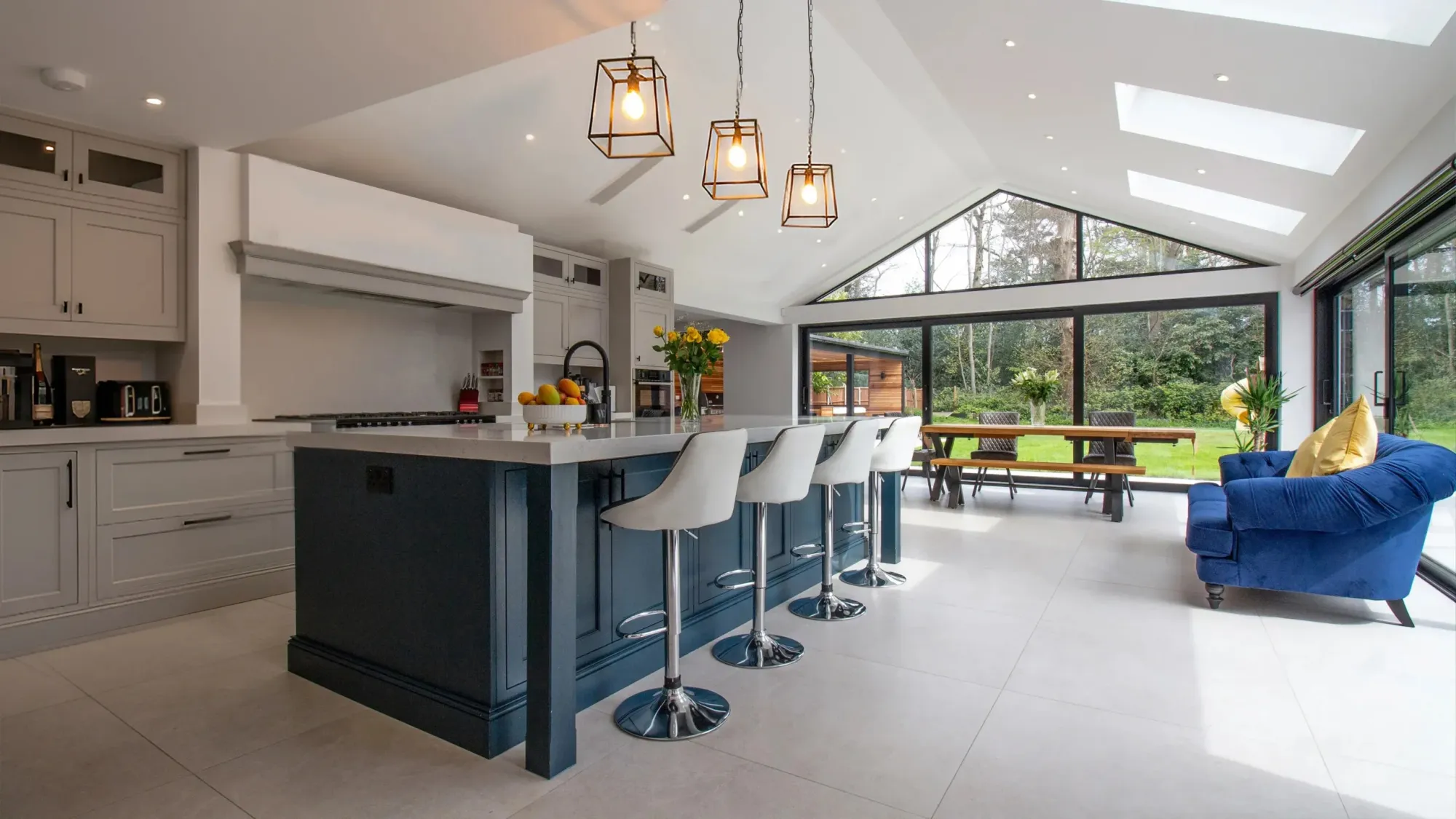
A rear extension on a 1930s semi in St Johns is a known quantity. The same footprint on an Edwardian villa in Horsell is a completely different job.
That's the thing about Woking: it spans so many build dates that one brief produces different answers street by street.
The short video below gives a real feel for the town's range of homes and what suits each, worth a few minutes before you plan. See it from architects Woking homeowners trust, then read on for how your particular Woking home shapes the project.
Woking isn't one place, it's several
Woking grew in waves, and its housing shows it. The town, across GU21 and GU22, has a wider range of property than almost anywhere in this part of Surrey, from Victorian and Edwardian villas to interwar semis, post-war estates and brand-new builds.
That variety is the key insight. There's no single "Woking extension". A detached house in Hook Heath, a semi in St Johns, a villa in Horsell and a terrace in Old Woking each call for a different approach, a different budget, and sometimes a different planning route.
So the first and most useful step is simply to place your home in the right category. The video helps you see those categories; the sections below explain what each one means for extending.
The interwar semis of St Johns and Knaphill
Across St Johns, Knaphill and the wider suburban belt, the 1930s semi dominates. These are the most straightforward Woking homes to extend, and the most predictable.
A rear extension on one of these is, as local builders put it, a known quantity. The cavity walls, the standard foundations and the hipped roofs mean a single-storey rear extension or a hip-to-gable loft behaves exactly as expected. Recent Woking applications bear this out, with single-storey rear extensions and rear dormers going through regularly on these streets.
For these homes, the project is rarely about whether it can be done, but how ambitious to be, and many fall within permitted development, keeping the fast route open.
The Edwardian villas of Horsell
Move to Horsell and the picture changes. Here you find larger Edwardian and Victorian villas, with solid walls rather than cavity, deeper foundations, and often a conservation area overhead.
The same rear extension that's routine in St Johns becomes a more involved job on a Horsell villa. Solid-wall construction needs different detailing, the foundations go deeper, and if the property sits in a conservation area, permitted development is restricted and a full planning application with sympathetic design is usually required.
These are rewarding homes to extend, with the proportions and character to carry an ambitious scheme, but they reward a design that respects the period rather than a standard rear box.
Old Woking and the conservation question
Old Woking, the original village settlement southeast of the modern centre, is its own case again. It carries a conservation area, and the older cottages and houses there need careful handling.
Anywhere in Woking, the conservation status of your specific street is the single most important early check. Most of the suburban stock sits outside designated areas and keeps permitted development rights, where a rear extension up to 3 metres on a semi, or 6 metres through the prior approval route, is often achievable without a full application. Inside Old Woking's conservation area, assume a full application and a character-led design.
The commuter-belt value equation
One thing unites every Woking home: the numbers favour extending. Woking is a high-value Waterloo commuter town, with detached homes reaching £1 million to £1.5 million and semis around £610,000.
At those values, the cost of moving up, with stamp duty climbing into five figures, is brutal. A detached Horsell home trading up could lose tens of thousands in tax alone. Against that, extending keeps the money in the property as space and value, which is exactly why extensions are one of the most financially rational choices for established Woking homeowners.
Extension Architecture, a RIBA-chartered London and Surrey practice with in-house structural engineering, works across Woking and the wider Surrey commuter belt, matching the right scheme to each of the town's very different house types.
The Woking takeaway
What makes Woking unusual is also what makes local knowledge matter here more than most. The town's sheer range means a generic answer is almost always the wrong one, because your build date, your wall construction and your conservation status change everything.
So before anything, identify which Woking you're in: the predictable interwar semi, the solid-walled Edwardian villa, the conservation-area cottage, or the modern build. Watch the video to see the range, then get a read on your specific home. In a town this varied, that single piece of clarity is what turns a Woking extension from a guess into a plan.








Sign in to leave a comment.