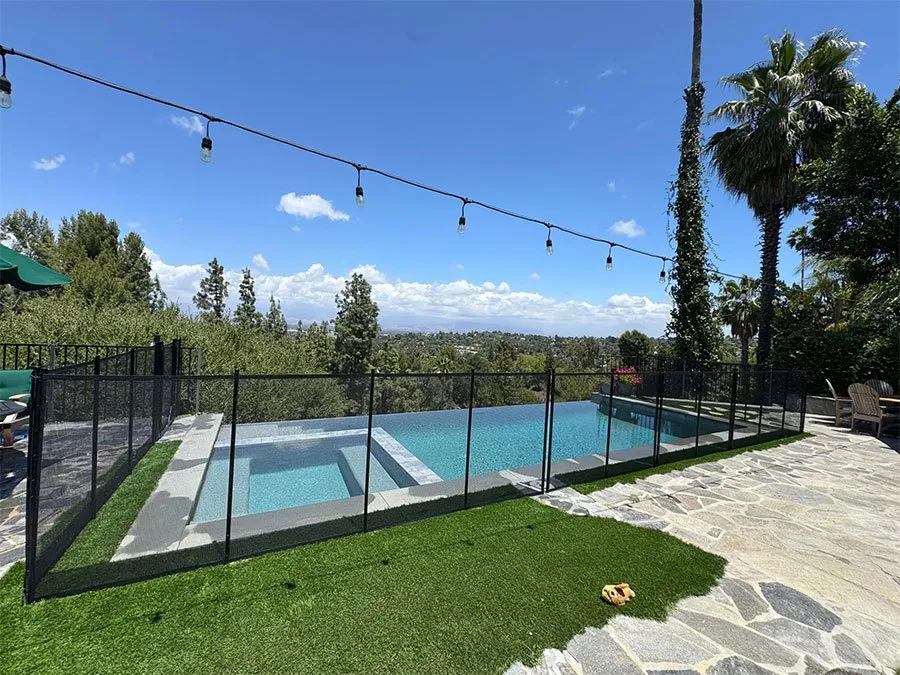


Modern outdoor living design increasingly prioritizes seamless transitions between indoor and outdoor spaces, often centering on custom swimming pools and high-end hardscaping. However, integrating an open water feature into a residential landscape introduces significant safety liabilities, particularly for households with young children and pets. Achieving an ideal balance between architectural aesthetics and uncompromising child safety requires a sophisticated approach to barrier design. Rather than treating safety as an afterthought, integrating a professionally engineered barrier ensures that pool areas remain secure without detracting from property value or visual appeal.
1. The Intersection of Residential Architecture and Aquatic Risk Management
Designing a residential outdoor sanctuary demands careful risk mitigation strategies. Open water represents a perpetual hazard for toddlers who lack an understanding of water depth or emergency response. While visual alarms and perimeter motion sensors offer secondary alerts, physical isolation remains the only method capable of physically preventing unauthorized access to the pool deck. Installing a dedicated Pool fence creates an uninterrupted physical boundary that separates living areas from water hazards, establishing a passive safety net that functions continuously around the clock.
2. Architectural Criteria for Selecting the Best pool fence
When property owners and landscape architects evaluate safety systems, several technical specifications dictate performance. The Best pool fence must deliver exceptional tensile strength, impact resistance, and climate durability without creating a visually claustrophobic environment. Transparent mesh barriers have largely superseded traditional wood or wrought-iron structures because they eliminate climbing footholds while maintaining line-of-sight visibility across the yard. This visual transparency allows supervisors to monitor the pool deck easily from surrounding patio spaces or indoor living areas.
3. Structural Physics of High-Tension Removable Mesh Barriers
The operational efficacy of modern mesh fencing relies on lateral wall tension and material strength. Woven from high-density polyester threads coated in protective marine-grade PVC, premium mesh panels withstand high lateral forces without sagging or tearing. The fabric is suspended between reinforced T6 aluminum poles, which are inserted deep into core-drilled deck sleeves. When interconnected at the top border with stainless steel spring latches, the entire system absorbs impact energy smoothly and springs back into alignment, ensuring that toddlers cannot push under or pull down the perimeter.
4. Technical Specifications of Non-Conductive Anchoring Systems
Anchoring a safety barrier into high-end patio materials—such as travertine, flagstone, poured concrete, or pavers—requires specialized core-drilling hardware. Systems developed by Guardian Pool Fence utilize non-conductive, high-impact deck sleeves inserted into precisely drilled holes. For delicate stone surfaces, poles engineered with half-inch stainless steel pins allow for smaller 5/8-inch drill profiles, protecting custom stonework from cracking or chipping. When the barrier is temporarily dismantled for adult events, color-matched deck caps fit flush into the sleeve openings to maintain a smooth, hazard-free deck surface.
5. Access Control Engineering: Automated Self-Closing Gate Dynamics
A safety barrier is only as effective as its access point. Manual gates frequently introduce human error when guests or family members neglect to latch them securely. To eliminate this vulnerability, a high-security Pool fence incorporates a self-closing, self-latching gate framework equipped with adjustable tension hinges and magnetic latches such as the MagnaLatch. Designed without top horizontal crossbars, these gate frames eliminate leverage footholds for climbing children. High-positioned release mechanisms and key-lockable cylinders ensure that only authorized adults can open the pool perimeter.
6. Surface Adaptation across Natural Stone, Composite Decking, and Turf
Modern backyards feature diverse ground surfaces that demand flexible installation techniques. Professional installers adapt barrier layouts to navigate complex curves, stepped terraces, composite wood decking, and synthetic turf. When mounting onto elevated wood or composite structures, specialized backing plates and under-deck sleeve adapters distribute lateral tension across structural floor joists. On artificial lawn surfaces, discreet concrete footings poured beneath the turf provide a rigid foundation, ensuring the barrier remains taut across every landscape variation.
7. Regulatory Compliance, Insurance Mitigations, and Property Valuation
Installing a certified pool isolation barrier is often a mandatory requirement under municipal building codes, home insurance policies, and foster care or adoption licensing boards. Systems that meet or exceed ASTM F2286 standards ensure rapid regulatory compliance while protecting homeowners from severe legal liabilities. Furthermore, because removable mesh systems can be unlatched and stored away in minutes, they preserve maximum property resale flexibility, appealing equally to families with young children and buyers seeking open outdoor entertaining spaces.
Frequently Asked Questions
Q1: How does a removable mesh pool fence resist UV damage and color fading over time?
High-grade mesh fabrics are treated with advanced UV inhibitors and anti-fungal coatings during the manufacturing process. These chemical inhibitors prevent the polyester threads from oxidizing, fading, or becoming brittle under intense solar exposure. Combined with powder-coated marine-grade aluminum poles, the entire assembly maintains its tensile strength and rich color finish through years of exposure to direct sunlight, rain, and pool chemicals.
Q2: What is the benefit of a 5-foot fence height over a standard 4-foot height?
While a 4-foot height meets the minimum requirements for many local building codes, opting for a 5-foot barrier provides a significantly higher level of protection against older, more agile toddlers. The extra foot of height moves the top latching hardware well beyond a young child's reach and eliminates the ability to grab the top border for leverage, making it virtually impossible for children to scale the perimeter.


























Sign in to leave a comment.