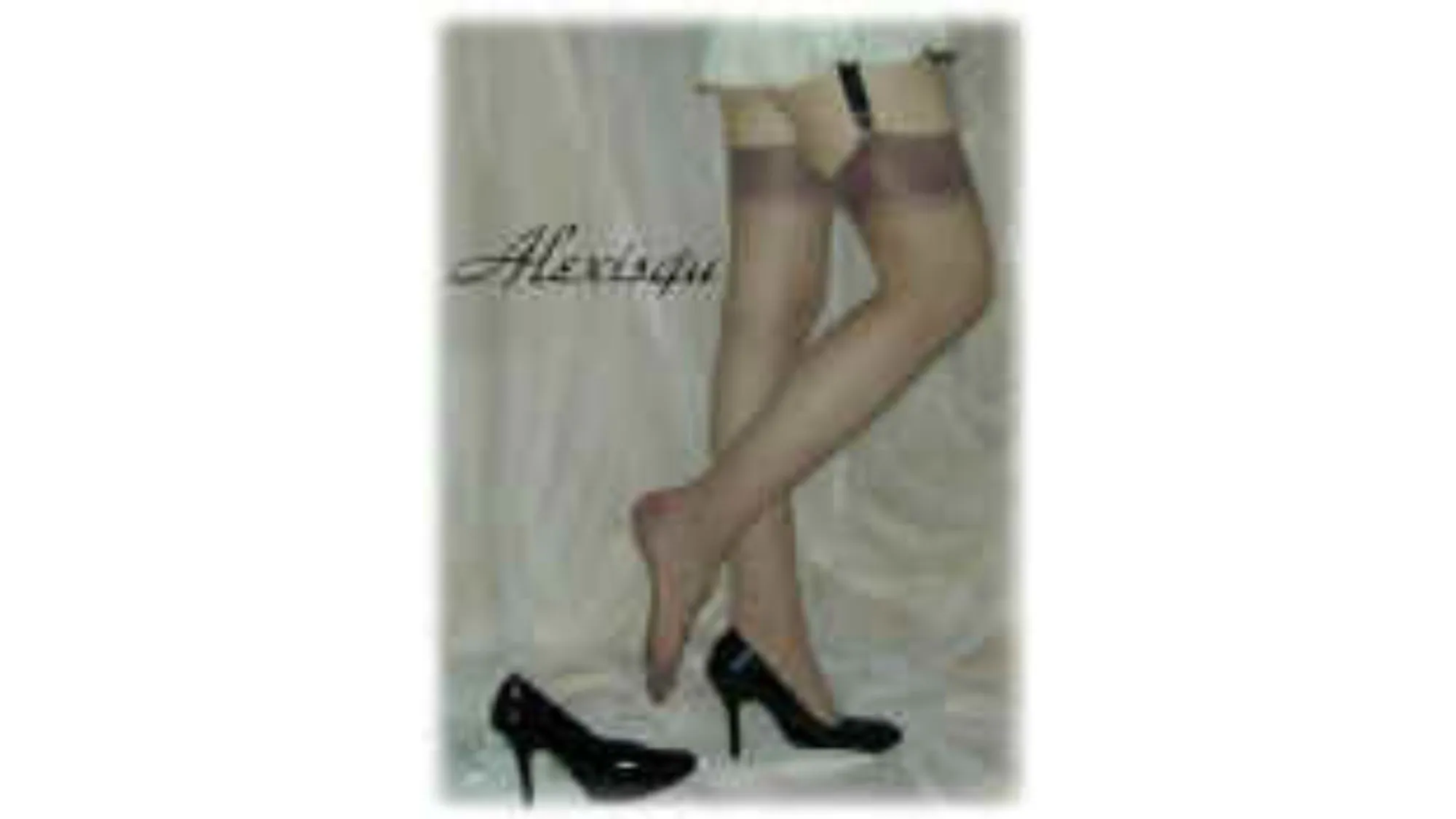

Hold a pair of fully fashioned stockings up to a window and look beside the seam. You will spot tiny loops running in a neat line down the leg. Those are fashion marks, and they are the signature of a nearly lost craft.
How Did Fully Fashioned Stockings Actually Get Made?
The knitting happened flat, in sheets. Workers cut the panels to size, then sewed a seam up the back to join the two sides. As the machine dropped stitches over the calf, the leg narrowed toward the ankle, and the fashion marks appeared. It was shaping by stitch rather than by stretch.
A seamed stocking from a circular machine works differently. It is knit in one continuous piece, then given a false seam for looks. Same silhouette from across the room. Very different stocking up close.
Few places mattered more to this trade than Reading, Pennsylvania. According to a historical marker in nearby Wyomissing, Berkshire Knitting Mills grew there into the largest stocking manufacturer in the world during the 1920s. Not bad for a town better known for its railroad.
Why Did Almost Everyone Stop Making Them?
Hanes tells part of that story. The history notes on the ALEXIS4U page for vintage Hanes stockings say the brand pioneered seamless manufacturing in the 1950s, and back seam production nearly vanished soon after. Then pantyhose finished the job.
Reading felt every bit of it. A Pennsylvania marker on the region's hosiery history says the full fashioned industry collapsed as seamless plants in the southern United States and overseas undercut it. The Rosedale Knitting Mill in nearby Laureldale shut for good in 1952 during a union strike.
So what survives? Old stock, mostly, and a small circle of people who refuse to let the seam die.
The shop spent years searching for its Hanes pairs and believes some of them are the last of their kind. That scarcity is why a pair kept in tissue paper in a climate controlled store feels like finding something that should not exist anymore.
What Should You Check Before Buying a Pair?
Treat it like inspecting a used watch. Here is a short checklist:
- Fashion marks beside the seam, not a printed line
- Flat knit, 100% nylon, 15 denier or finer
- A heavier, doubled welt with period printing
- A shaped heel such as Cuban, Manhattan with a keyhole, or stiletto
- Factory style packing, folded in tissue
The Hanes line gives you three clear reference points. The 415 is a 15 denier ultra dress sheer with reinforced heel and toe. The 530 is a 30 denier day sheer, also with reinforced heel and toe. The 715 is a 15 denier dress sheer with a nude heel and a reinforced toe. All are flat knit, all are 100% nylon, and none are reproductions.
Price is the next hurdle. A Cuban heel pair at ALEXIS4U lists at $39.99 right now. That sounds steep until you learn it is knit at 51 gauge in 100% nylon, with narrowing marks you can count.
Color options help, too. Current fully fashioned shades include Black, Barely Black, Barely There, Chocolate, Dark Taupe, and Gray, in sizes XS to XL, plus a Natural pair with a black seam.
Is the Care Routine Really That Fussy?
Not fussy, just careful. Wash each pair gently by hand after wearing, squeeze rather than wring, and dry it over a smooth rod folded in a towel. Skip direct sun and heat. And keep sharp jewelry well clear of the nylon.
When you put them on, straighten the seam first and fasten the garters to the top of the welt. A crooked seam is the quickest way to spoil the look. Silk deserves extra care still. The Charleston silk pairs by Cervin are 15 denier, need a garter belt, and list at $89.99.
See the full lineup on the vintage Hanes stockings page and the fully fashioned stockings page.
Try one pair, straighten that seam, and decide for yourself.



















Sign in to leave a comment.